What is the Stonehenge-like structure in Lake Michigan?

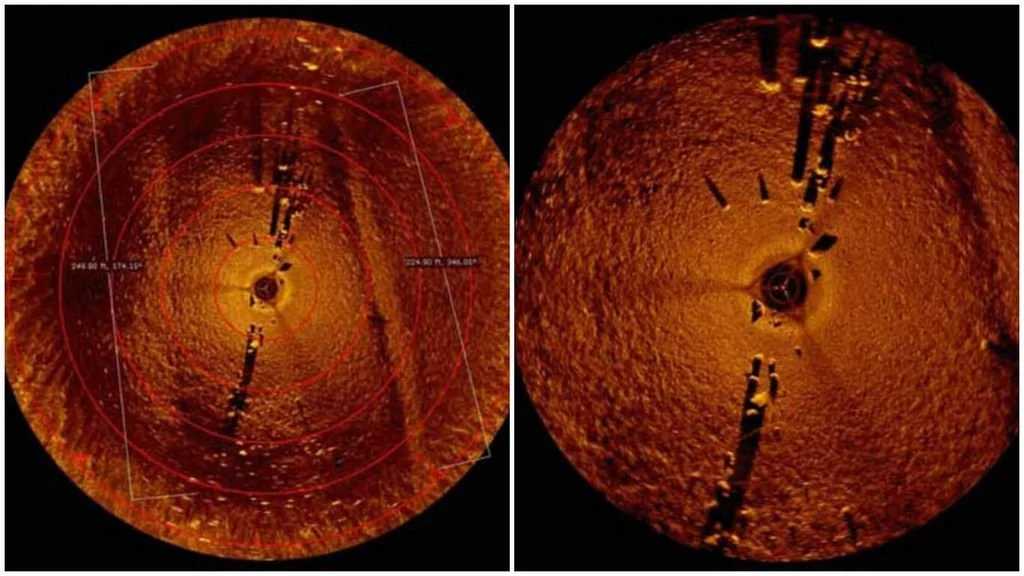
Does an mini-Stonehenge stand underwater in Grand Traverse Bay, part of Lake Michigan? In 2007, looking for shipwrecks in this area, which was a busy 19th- and 20th-century maritime trade route, Mark Holley, professor of underwater archaeology at Northwestern Michigan University, first came across a rock that he said bears a prehistoric carving of a mastodon. On further investigation, he discovered a Stonehenge-like arrangement of ancient stones. There’s an outer ring of stones, about 40 feet in diameter, and an inner ring about 20 feet in diameter, both made of local granite. They stand 40 feet below the water’s surface, and the stones are some 9,000 years old. At that time, said Holley, the lake bed was dry. One theory is that it's a smaller version of a prehistoric hunting structure found under Lake Huron, erected to herd caribou. (via ArtNet)
Napoleon's brother Joseph left France and spent fifteen years living in New Jersey
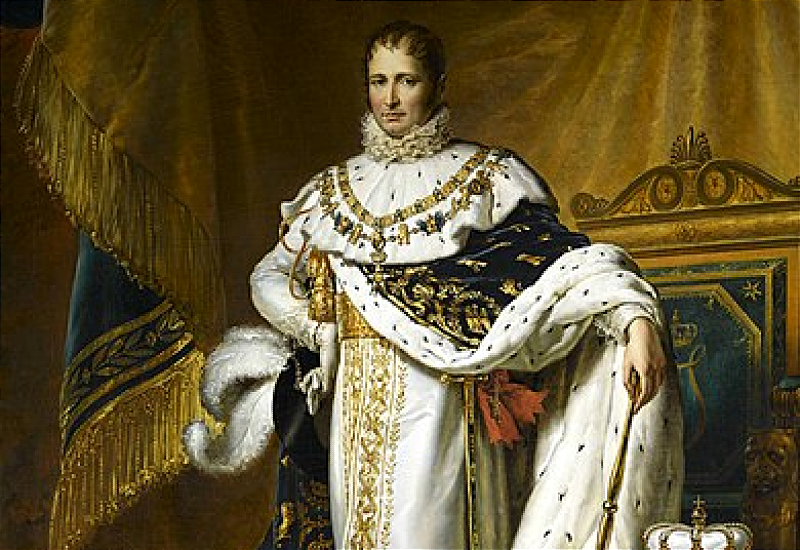
Bonaparte trained as a lawyer. In that role and as a politician and diplomat, he served in the Council of Five Hundred and as the French ambassador to the Papal States. He was later crowned the king of Naples and Sicily after his brother conquered the region, and following that he became the king of Spain. Later, Bonaparte travelled to the United States onboard the Commerce under the name of M. Bouchard and arrived on 15 July 1815. Between 1817–1832, Bonaparte lived primarily in the United States (where he sold the jewels he had taken from Spain). He first settled in New York City and Philadelphia, where his house became the centre of activity for French emigres. In 1823, he was elected as a member to the American Philosophical Society. Later he purchased an estate, called Point Breeze, in Bordentown, New Jersey. (via Wikipedia)
Russian company says it has used brain implants to turn pigeons into surveillance drones
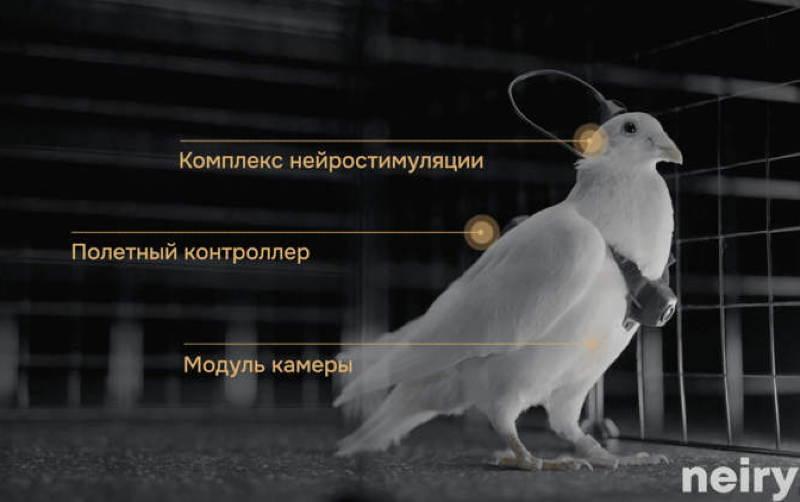
Modern drones are efficient and versatile, but Moscow-based startup Neiry believes pigeons are superior because of their greater range, endurance, and ability to access hard-to-reach locations. They don’t require batteries, can fly in different weather conditions, and they are easily replaceable. But how does one control a pigeon as they would a drone? Neiry claims to have developed brain implants that allow its staff to remotely control the birds, effectively turning them into biodrones. Small electrodes are inserted into the bird’s brain through its skull and connected to a stimulator mounted on its head. The birds are also equipped with a solar backpack that houses a controller and other electronics, as well as a chest-mounted camera for surveillance purposes. The controller receives a pre-loaded flight task similar to those used in aerial drones, while the stimulator sends impulses that make the birds turn left or right. (via Oddity Central)
Hi everyone! Mathew Ingram here. I am able to continue writing this newsletter in part because of your financial help and support, which you can do either through my Patreon or by upgrading your subscription to a monthly contribution. I enjoy gathering all of these links and sharing them with you, but it does take time, and your support makes it possible for me to do that. I also write a weekly newsletter of technology analysis called The Torment Nexus.
French murder trial complicated by the fact that the suspected killer is an identical twin

Two identical twins on trial for murder in France have confounded attempts to determine which one pulled the trigger because they have the same DNA, French media report. The 33-year-old brothers are among five defendants on trial near Paris, accused of a double murder and several subsequent attempted killings in 2020, according to a French newspaper. Both are suspected of conspiring to plot the double murder, but the DNA on an assault rifle used in one of the later gun battles could only be from one twin. A police officer told the court that forensic experts were unable to tell which of the brothers had been conclusively implicated. Police believe they have taken advantage of their resemblance to cover their tracks. A senior officer quoted by Le Parisien said the pair frequently exchanged clothes, phones and identification documents. (via the BBC)
Pope John Paul II was an honorary member of the Harlem Globetrotter basketball team

In 2000, Pope John Paul II was made an honorary member of the famed basketball team, known as much for its hoop trickery as its extensive travels. To mark the occasion, John Paul was given a Globetrotters jersey signed by his new teammates, and numbered 75 to mark the squad’s 75th anniversary. The Globetrotters said in a statement that the “prestigious title recognizes an individual of extraordinary character and achievement who has made an everlasting mark on the world.” So prestigious, in fact, that the pope is only the seventh individual to hold it. John Paul also got an autographed ball. Team members Curley Johnson, Lou Dunbar, Elmer Martin, Wun Versher, and Alex Sanders attended the audience, which took place before a crowd of 50,000 on in St. Peter’s Square at the Vatican. (via ABC News)
This cat loves watching Olympic bobsled

Acknowledgements: I find a lot of these links myself, but I also get some from other places that I rely on as "serendipity engines," such as The Morning News from Rosecrans Baldwin and Andrew Womack, Jodi Ettenberg's Curious About Everything, Dan Lewis's Now I Know, Robert Cottrell and Caroline Crampton's The Browser, Clive Thompson's Linkfest and Why Is This Interesting by Noah Brier and Colin Nagy. If you come across something you think should be included here, feel free to email me at mathew @ mathewingram dot com