Video evidence that moths like to drink moose tears


Researchers have recorded, for the first time, images of moths drinking a moose’s tears. The intriguing interaction between the nocturnal insects and majestic mammals went down deep in the woods of Vermont, captured by trail cameras set in the state’s Green Mountain National Forest as part of a broader survey of moose across New England. Researchers in Vermont published the findings and the striking photographs in a recent issue of Ecosphere. Insects belonging to the order Lepidoptera—which includes moths and butterflies—are no strangers to tear drinking, or “lachryphagy.” Lepidopterans have been observed bellying up to the tear ducts of birds, reptiles, wild mammals, and domestic animals from Asia and Africa to parts of South America. (via Nautilus)
Her life changed when she found a rare Nintendo game in a thrift store

None of this would've happened had Jennifer Thompson not gone thrifting. This was in April 2013, and she was browsing clothes and $1 DVDs at the Steele Creek Goodwill in Mecklenburg County, North Carolina, when she noticed it behind the glass counter. The video game title sparked a memory, a Yahoo article about the rarest games in the world. Jennifer drove across the street to McDonald's, just to use the restaurant's Wi-Fi to make sure she hadn't been wrong. She then crossed the street again and purchased the game for $8 from the $30 she had in her bank account, praying the clerk wouldn't recognize what it was and stop her. When she took it for validation to a used video game store in Charlotte, the young man behind the counter rustled open the plastic bag and coughed the words "Oh my god." He offered her all the money in the register for it. She turned him down. (via ESPN)
A mysterious stranger helped save Christmas for hundreds of people
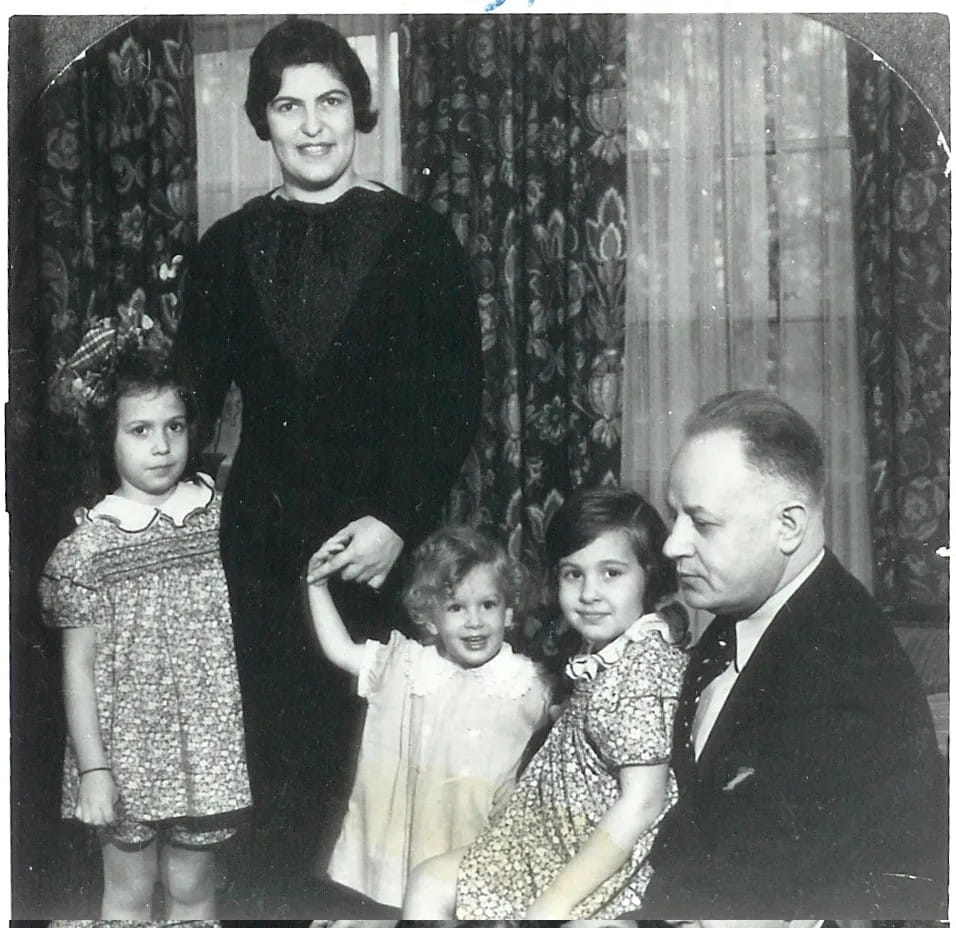
It started with a suitcase . . . Ted Gup's 80 year-old mother handed it to him in 2008. The label said, "Memoirs." Days later he popped the latches and opened it. "And then inside this were stuffed a couple of hundred letters," Gup said. "They were all from the same week in December of 1933. They were all addressed to someone named Mr. B. Virdot." Gup also found what prompted the letters: A small advertisement in the local paper, the Canton Repository, offering small gifts to struggling families. The writer pledges that their identity will never be revealed. Please write B. Virdot. General Delivery, Canton, Ohio." At first Ted Gup had no idea who "B. Virdot" could be. And then, he told Braver, all of a sudden, "the light went on." The mysterious B. Virdot was an invention of his grandfather, "an amalgam of his three daughters' names: Barbara, Virginia and Dorothy." (via CBS News)
Hi everyone! Mathew Ingram here. I am able to continue writing this newsletter in part because of your financial help and support, which you can do either through my Patreon or by upgrading your subscription to a monthly contribution. I enjoy gathering all of these links and sharing them with you, but it does take time, and your support makes it possible for me to do that. I also write a weekly newsletter of technology analysis called The Torment Nexus.
Chess first went electronic in 1844 when the telegraph was new

On 18 November 1844, the Washington Chess Club challenged its counterparts in Baltimore to a match. Two teams were organized, and at 4 p.m. on 26 November, the first game commenced with three consulting members to a side. Washington began conventionally, pushing a pawn to the center of the board. Baltimore immediately responded by mirroring the move. But this was unlike any chess game ever played before. The Baltimoreans were still in Baltimore, the Washingtonians were still in Washington, D.C, 60 kilometers away, and they were playing by electrical telegraph. Successive moves were transmitted over the new Baltimore–Washington telegraph line, the first in the United States, which Samuel Morse and company had inaugurated in May of that year with the message “What hath God wrought." (via IEEE Spectrum)
This Casio electronic watch from 1989 is the device of choice for IEDs
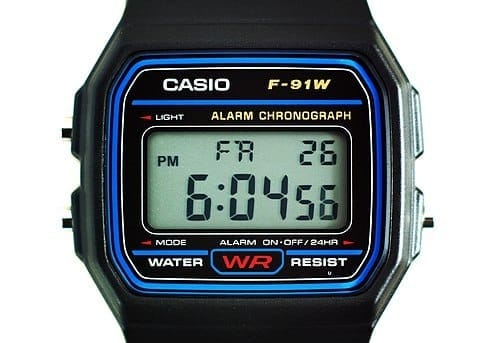
The Casio F-91W is a digital watch manufactured by Japanese electronics company Casio. Introduced in June 1989 as a successor of the F-87W, it is popular for its low price, long battery life, and design. As of 2011, annual production of the watch is 3 million units, which makes it the most sold watch in the world. According to secret documents issued to interrogators at Guantanamo Bay, obtained and released by The Guardian, "the Casio F-91W digital watch was declared to be 'the sign of al-Qaeda' and a contributing factor to continued detention of prisoners by the analysts stationed at Guantanamo Bay. Briefing documents advise that possession of the F-91W and the A159W, available online for as little as £4, suggests the wearer has been trained in bomb making by al-Qaeda in Afghanistan." United States military intelligence officials have identified the F-91W as a watch that terrorists use in constructing time bombs. (via Wikipedia)

Acknowledgements: I find a lot of these links myself, but I also get some from other places that I rely on as "serendipity engines," such as The Morning News from Rosecrans Baldwin and Andrew Womack, Jodi Ettenberg's Curious About Everything, Dan Lewis's Now I Know, Robert Cottrell and Caroline Crampton's The Browser, Clive Thompson's Linkfest and Why Is This Interesting by Noah Brier and Colin Nagy. If you come across something you think should be included here, feel free to email me at mathew @ mathewingram dot com