Two strangers, a terrorist bomb and an amazing tale of courage

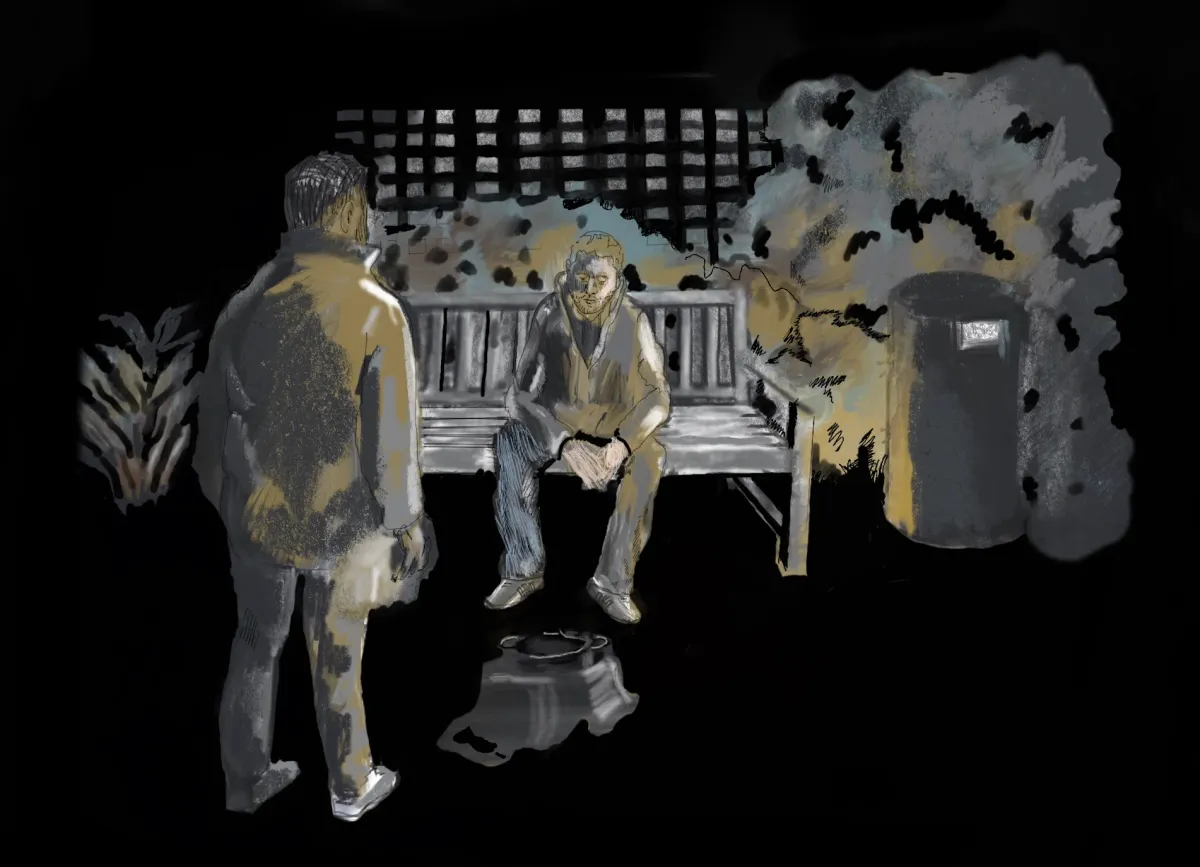
In the early hours of Friday, January 20, 2023, a dirty blue car parked outside St. James’s hospital in Leeds. The car was filled up to its windows with junk. Mohammad Farooq sat behind the steering wheel in the cold and dark, surrounded by his mess. His phone was in his hand. He was 27, overweight and round-faced, with black hair shaved neatly at the sides and swept over on top. His heart was pounding, and breathing took effort. It was, he decided, time to show them. At 12:53 a.m. he sent a carefully composed message to a senior nurse on ward J28, St. James’ acute assessment unit. “I’ve placed a pressure cooker on J28. It will detonate in one hour. Let’s see how many lives you will save.” He had read ISIS terror manuals that suggested causing an evacuation, then setting off a bomb, or stabbing or shooting those that emerged. He watched out of the window and waited for the sirens. (via Bungalow)
Rumoured to be a witch, she died in 1813 but wasn't buried until 1998
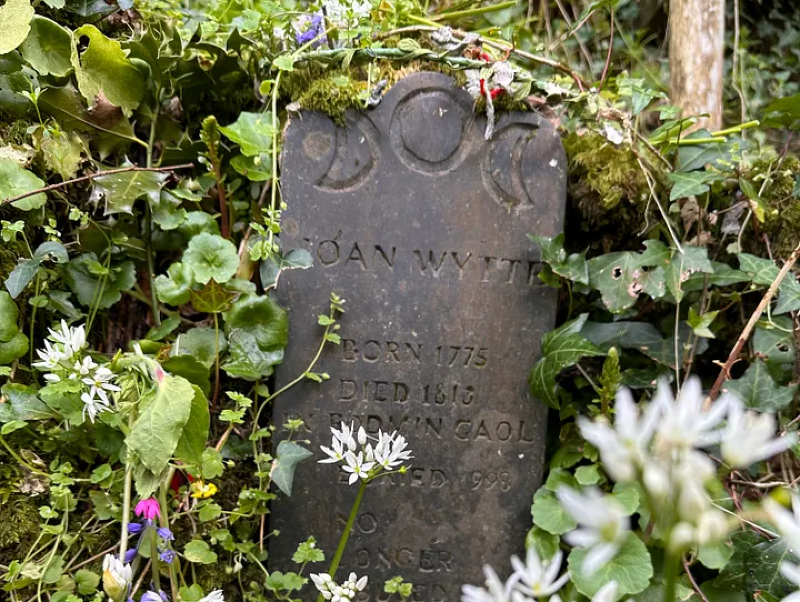
For 185 years her skeleton was an object of derision, ridicule, and fascination. Joan Wytte is believed to be a local North Cornish woman known as the ‘Fighting Fairy Woman of Bodmin’ — abused and persecuted as a witch. Since her death, aged 38 in 1813 she has been in motion: stored in Bodmin Jail, used in a séance, examined, and hung in a museum. After her death the anatomist, William Clift, requested Joan’s body for scientific research, yet never bothered to collect her. William Hicks, the governor of the Bodmin Asylum in the 1840s and 50s, used her bones as a prop in a séance. Subsequently, Joan was derided as an item of ridicule and her bones were locked in storage until the prison closed in 1927. During the 1930s and 1940s she was in the custody of a Cornish doctor. It seems Joan was neglected until a ‘showman’ acquired her at auction in the 1950s for his new business venture — a Museum of Witchcraft and Magic. (via RebelBuzz)
What it's like at Maha Kumbh Mela, the Hindu equivalent of Burning Man

Jennifer and I traveled to Uttar Pradesh to attend the Maha Kumbh Mela, a Hindu mega-event of the highest order and, as you have probably already heard, the largest gathering of humans on the planet. Over a six-week period, determined by the sidereal dance of the sun, moon, and Jupiter, hundreds of millions of people made their way to Prayagraj (formerly Allahabad). More specifically, pilgrims were aimed at the triveni sangam: the confluence of the rivers Ganga and Yamuna, which are both Google-mappable, as well as the invisible or mythical Sarasvati. Here people would ritually bathe, rinsing away their tangled mortal karmas in the cold, polluted, sacred waters, especially on three particularly auspicious “royal bathing” (Shahi Snan) days. Many of these millions were poor villagers who spent their meagre savings to make the trek, but many were also VIPs, or fat slices of the exploding middle class, or cave yogis rocking esoteric sidhis, or hawkers of goods, or global media, or alternative travelers like us. (via Burning Shore)
Hi everyone! Mathew Ingram here. I am able to continue writing this newsletter in part because of your financial help and support, which you can do either through my Patreon or by upgrading your subscription to a monthly contribution. I enjoy gathering all of these links and sharing them with you, but it does take time, and your support makes it possible for me to do that. I also write a weekly newsletter of technology analysis called The Torment Nexus.
Was Clever Hans the world's smartest horse or was it just an act developed by a conman?
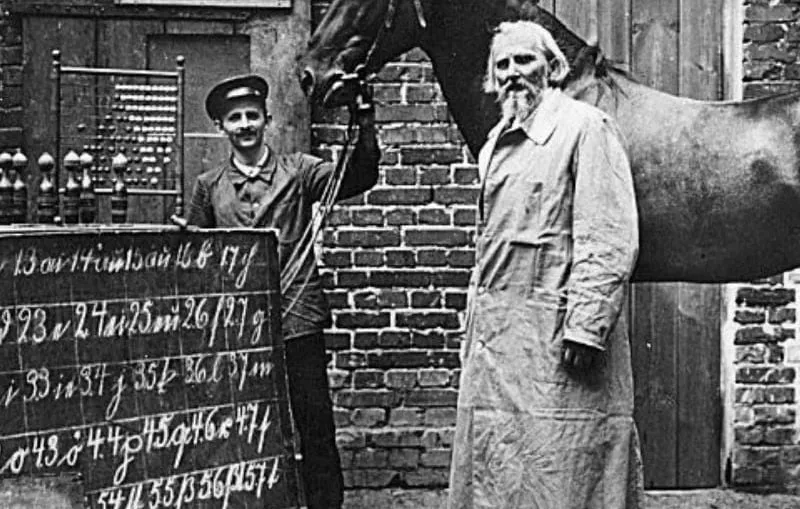
In the fall of 1900, a man who had traveled to Russia from his home in Berlin bought at auction a magnificent trotting horse named Hans: a common enough occurrence at the time, to buy a strapping horse. This particular buyer was Wilhelm von Osten. He had retired not long before from a career as a teacher of mathematics to the browbeaten youth of his neighborhood. By the spring of 1901, von Osten appeared in public, exhibiting his horse, whom he had newly nicknamed Kluger Hans — Clever Hans. The feats of Clever Hans drew almost instant acclaim and debate. The creature had mesmeric equine eyes and a steady gaze to match. Newspapers celebrated and disparaged Clever Hans. Scientists from far and wide wrote articles about him. Soon skeptics and believers alike crowded von Osten’s courtyard to see the horse at work. The psychological researcher Oskar Pfungst, an assistant of the illustrious psychologist and philosopher Carl Stumpf, was soon called upon to investigate the abilities of this horse endowed with an ability for “conceptual thinking”. (via the Hinternet)
These pine trees always lean towards the equator no matter where they grow
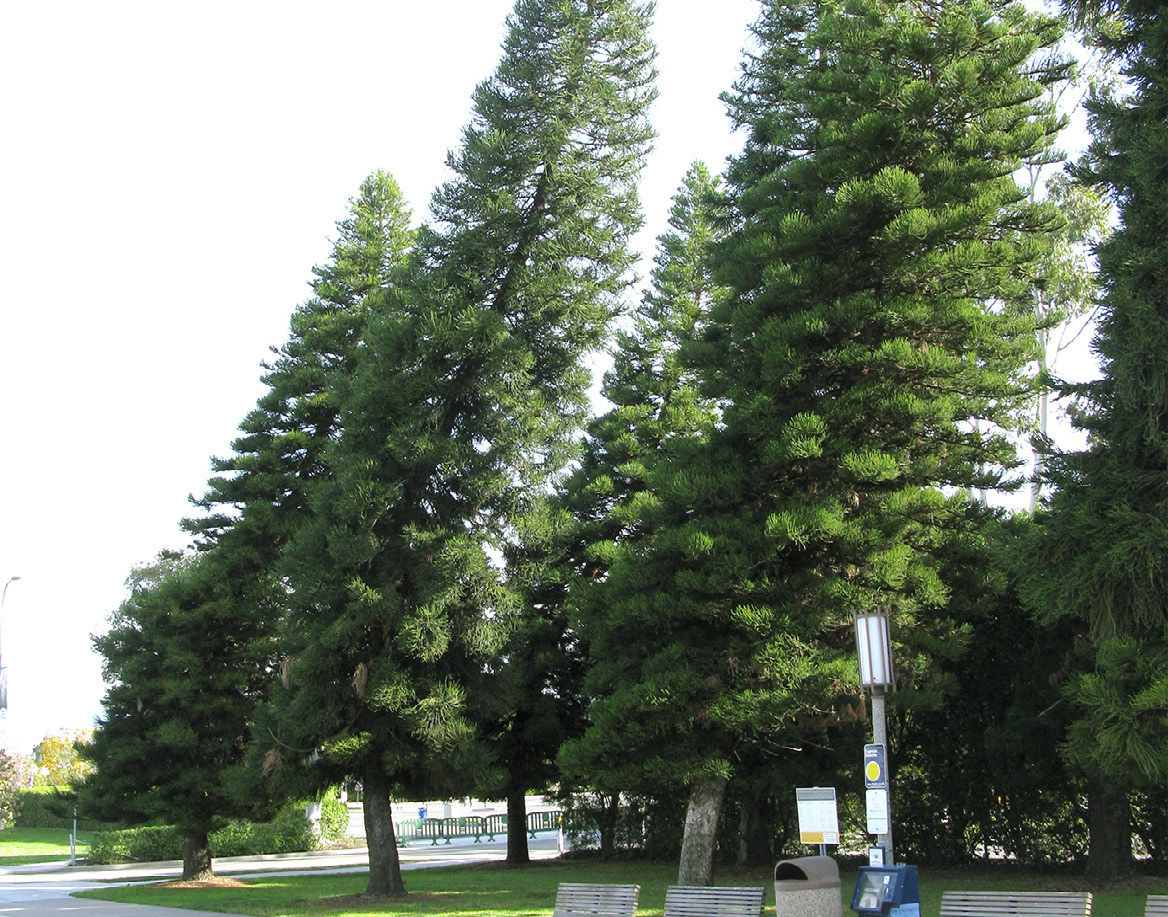
It started out as an anecdotal observation - one of the researchers, botanist Matt Ritter from California Polytechnic State University, noticed that in California and Hawaii, the pines all seemed to be leaning south. But A. columnaris are also commonly grown in Australia, where one of them has even become an infamous leaning Christmas tree in the town of Lismore. And weirdly enough, colleagues told him that the tilt in the southern hemisphere is directed towards the north. To investigate this, Ritter and his team gathered measurements from 256 trees across 18 regions on five continents, including the species' native range in New Caledonia. The researchers excluded any trees whose growth could be impacted by another object, such as a building or electricity pole. To their surprise, Cook pines turned out to be more systematic in their leanings than anyone could have expected. "We uncovered a surprisingly consistent pattern of hemisphere-dependent directional leaning in A. columnaris," the team reports. (via Science Alert)
They are each playing two instruments at the same time

Acknowledgements: I find a lot of these links myself, but I also get some from other places that I rely on as "serendipity engines," such as The Morning News from Rosecrans Baldwin and Andrew Womack, Jodi Ettenberg's Curious About Everything, Dan Lewis's Now I Know, Robert Cottrell and Caroline Crampton's The Browser, Clive Thompson's Linkfest and Why Is This Interesting by Noah Brier and Colin Nagy. If you come across something you think should be included here, feel free to email me at mathew @ mathewingram dot com