Two ships were named after Ed Fitzgerald and they both sank

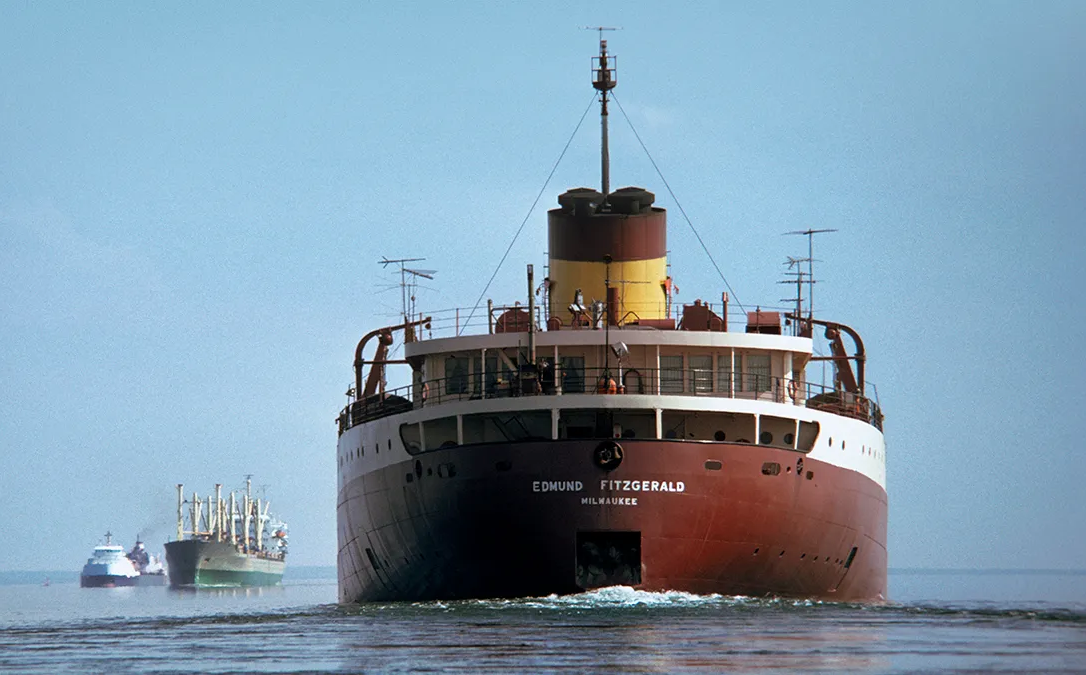
You probably never knew there were TWO Fitzgeralds, did you? No one did. See, that was the problem. If they had known about the first one, things might have been different. The first Fitzgerald survived thirteen years on the Great Lakes, the second one, seventeen years. One was made of wood, the other of steel. One was powered by wind. The other ran on oil-fired engines. But none of that mattered to the waters of the Great Lakes. Both boats were lost . . . just four days short of 92 years apart. One was lost on November 14, 1883. The other on November 10, 1975. Both went down near shoals. One was lost at Long Point, the other near Whitefish Point. Not a single member of the crew on either boat survived. Any sailor will tell you, you never name a boat after one that was lost. They shouldn’t have called the second one the Edmund Fitzgerald. That was bad luck. You don’t build another Titanic, if you know what I mean. (via Great Lakes People)
The secret of US hydrogen bomb research was leaked on a TV show by a senator
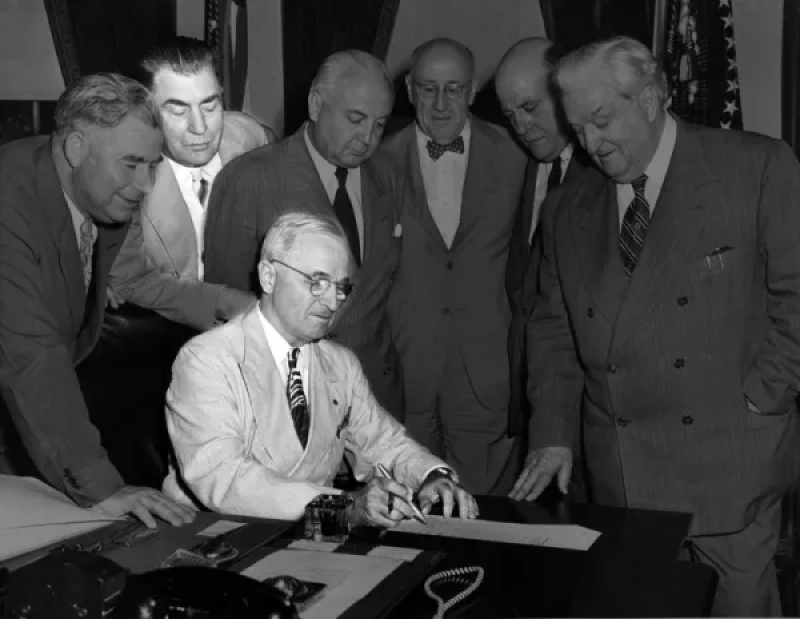
In September 1949, the United States detected radioactive residues which indicated that the Soviet Union had detonated their first atomic bomb. What should the US response be to the loss of its nuclear monopoly? This question raged in the weeks afterwards. This “H-bomb debate,” as it was called, was originally completely within the secret sphere. The fact that it was taking place was not known to the broader public. Eventually, on November 1949, it would leak to the public. The way in which that happened is one of the most bizarre and absurd situations in American nuclear secrecy. On November 1, 1949, at 8:00pm Eastern Time, a television show called “Court of Current Issues” aired on the WABD-TV and Dumont Television Network. The show was essentially a debate program, framed as a courtroom in which various experts would argue as if they were prosecuting the “current issue” as a court case. This episode’s subject was: “Is there too much secrecy in our atomic program?” (via Restricted Data)
She refused to change her maiden name after marriage and started a revolution
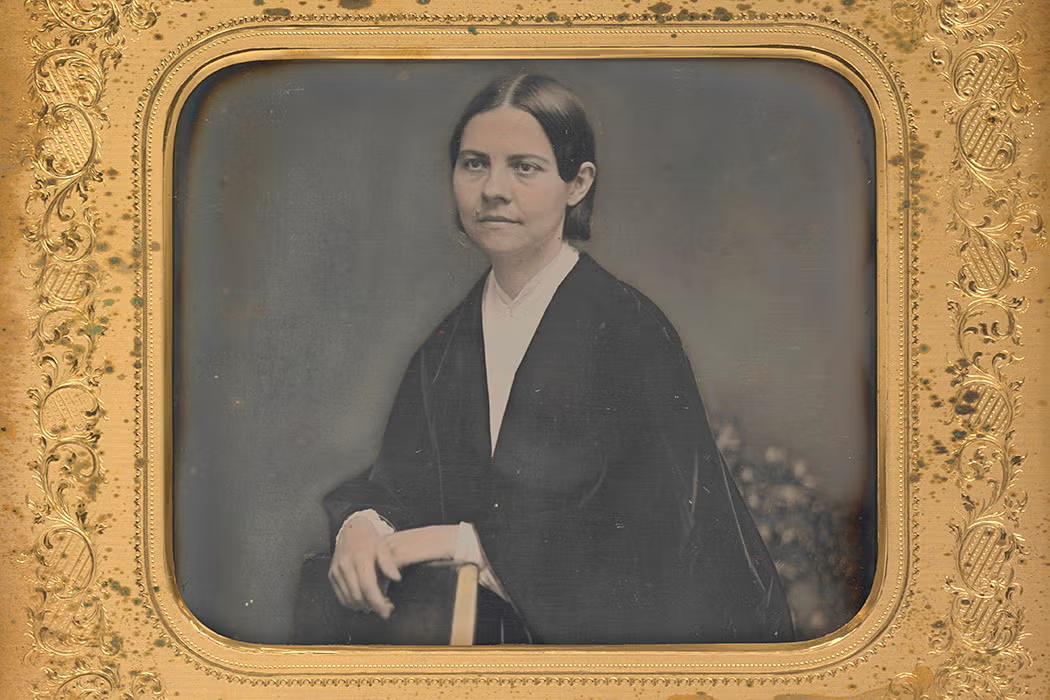
In 1856, when the mighty suffragist Lucy Stone checked into a Dayton, Ohio, hotel under her maiden name instead of that of her new husband, Henry Blackwell, a local newspaper editor, was thunderstruck. “Well, that will do!” he railed in the Dayton Journal. “We don’t offer Lucy Stone her hat, for she has doubtless got one of her own, to match her breeches! Women’s rights, forsooth! Where, we should like to know, are Mr. Blackwell’s rights?” Stone’s famously radical decision opened the door for generations of American women who wanted to preserve their identity — and rights — in marriage. Stone decreed: “A wife should no more take her husband’s name than he should hers. My name is my identity and must not be lost.” Stone’s declaration became the motto of the Lucy Stone League, founded in 1921 to encourage more women to follow her example. (via JSTOR Daily)
Hi everyone! Mathew Ingram here. I am able to continue writing this newsletter in part because of your financial help and support, which you can do either through my Patreon or by upgrading your subscription to a monthly contribution. I enjoy gathering all of these links and sharing them with you, but it does take time, and your support makes it possible for me to do that. I also write a weekly newsletter of technology analysis called The Torment Nexus.
The Egyptian mummy that supposedly caused World War II and the sinking of the Titanic
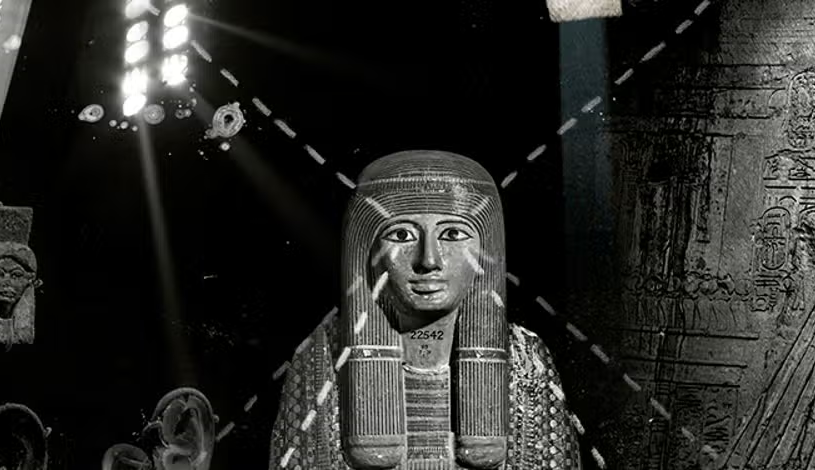
ometime in the 1860s, five recent Oxford graduates took a trip to Egypt. Together they sailed down the Nile, a tourist attraction even then. To remember their trip, they bought a souvenir in the mummy pits of Deir el-Bahri—the coffin lid of a priestess of Amen-Ra. On their way back from Egypt, two of the men died. A third went to Cairo and accidentally shot himself in the arm while quail hunting and had to have it amputated. Another member of the group, Arthur Wheeler, managed to make it back to England, only to lose his entire fortune gambling. He moved to America and lost his new fortune to both a flood and a fire. The coffin lid was then placed under the care of Wheeler’s sister, who attempted to have it photographed in 1887. The photographer died, as did the porter. The man asked to translate the hieroglyphs on the lid committed suicide. The coffin lid seemed almost certainly cursed. But this was only the beginning. (via Nautilus)
Frosty the Snowman voice actor had three secret families and named all the boys Ralph
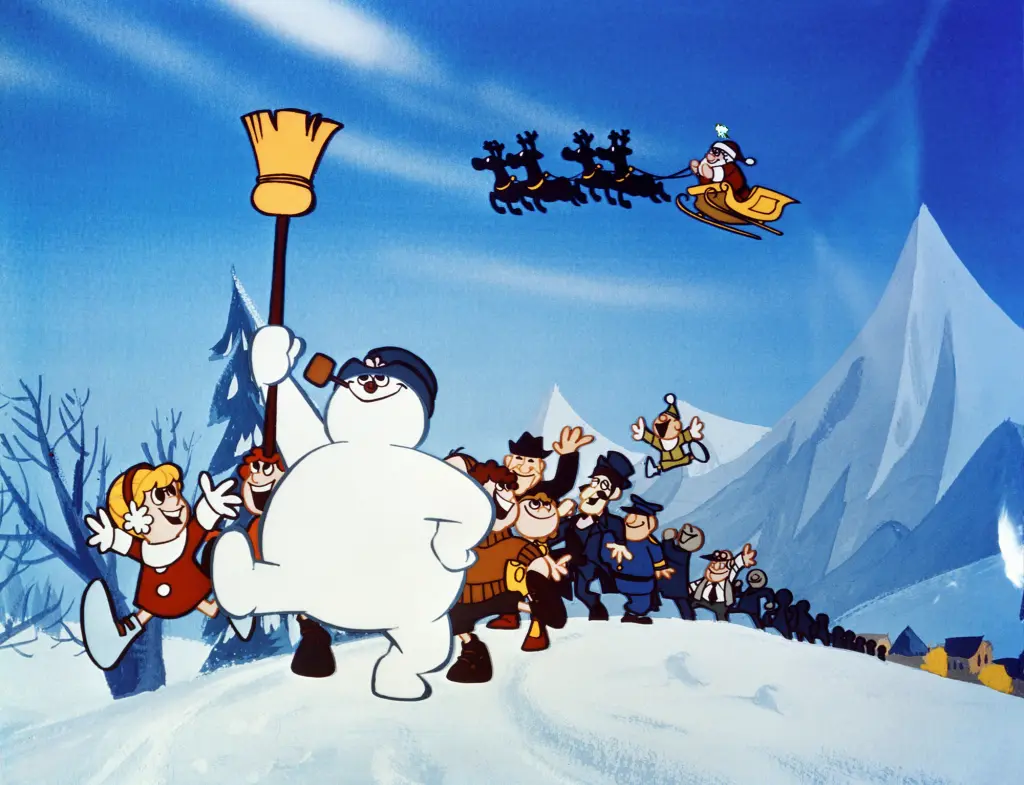
Jackie Vernon, the voice actor behind the 1969 holiday classic “Frosty the Snowman,” reportedly had multiple families before settling down with his wife. David Vernon, one of that couple’s three kids, revealed the surprising news while remembering his late dad during the “Nostalgia Tonight With Joe Sibilia” radio show. According to David, he learned that his famous father had “at least three” secret families when an unknown woman and her son showed up at the Vernon home sometime before Jackie’s death at 63 in November 1987. After Hazel came to the door, the woman dropped the bombshell revelation regarding Jackie’s other marriages and families. That was not the only surprise for David. It also came out that his father had several other sons before his marriage to Hazel — and they all shared the same name. “From these marriages, he had sons, and he named them all Ralph, after himself, after his original name, Ralph Verrone,” David said. “But he also abandoned all these families, moved on.” (via the NY Post)
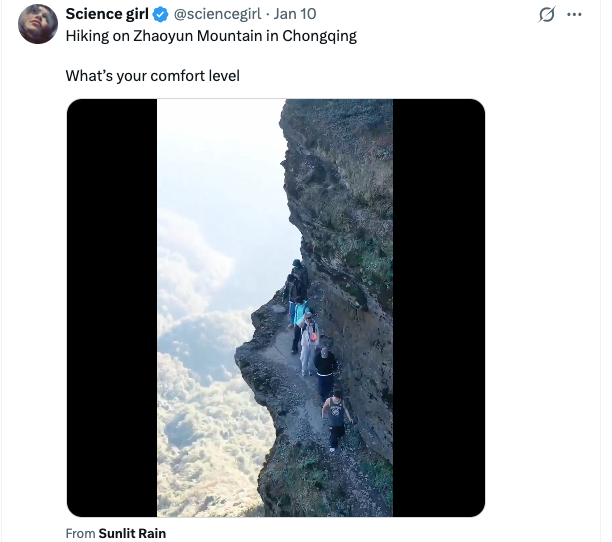
Do you like heights? This hike will test that
Acknowledgements: I find a lot of these links myself, but I also get some from other places that I rely on as "serendipity engines," such as The Morning News from Rosecrans Baldwin and Andrew Womack, Jodi Ettenberg's Curious About Everything, Dan Lewis's Now I Know, Robert Cottrell and Caroline Crampton's The Browser, Clive Thompson's Linkfest and Why Is This Interesting by Noah Brier and Colin Nagy. If you come across something you think should be included here, feel free to email me at mathew @ mathewingram dot com