Two nuns who left a Brazilian convent are now married

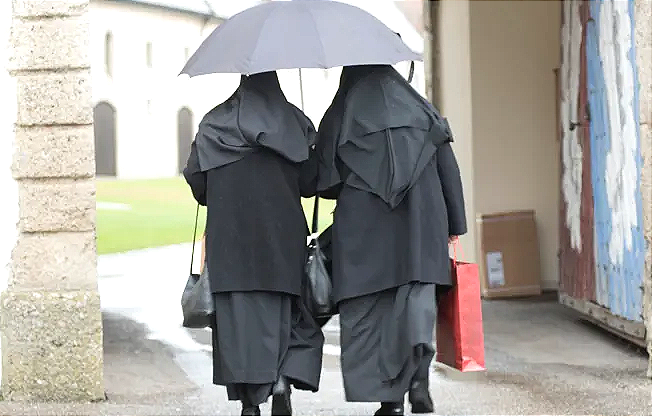
Francília Costa and Luiza Silvério first met in a convent in Brazil back in 2019. Costa had been raised by deeply religious grandparents and was encouraged to join the convent, while Silvério joined as a teenager while searching for purpose. The pair initially didn’t like each other, with Silvério admitting that she thought Costa was “an unbearable and stuck-up little nun.” Costa shared that she also didn’t like Silvério. Proximity made the heart grow fonder in this case, and the pair gradually became close friends. However, they each struggled with their mental health while living in the convent. Together, Costa and Silvério made the decision to leave the convent in 2020 for their mental health. Neither could afford to live alone and so continued to live together. Then, one night in 2023, Costa realised her true feelings for her friend. She admitted her feelings to Silvério, who kissed her in return. The couple are now married. (via The Pink News)
An anonymous group posted code-breaking puzzles online and then suddenly disappeared
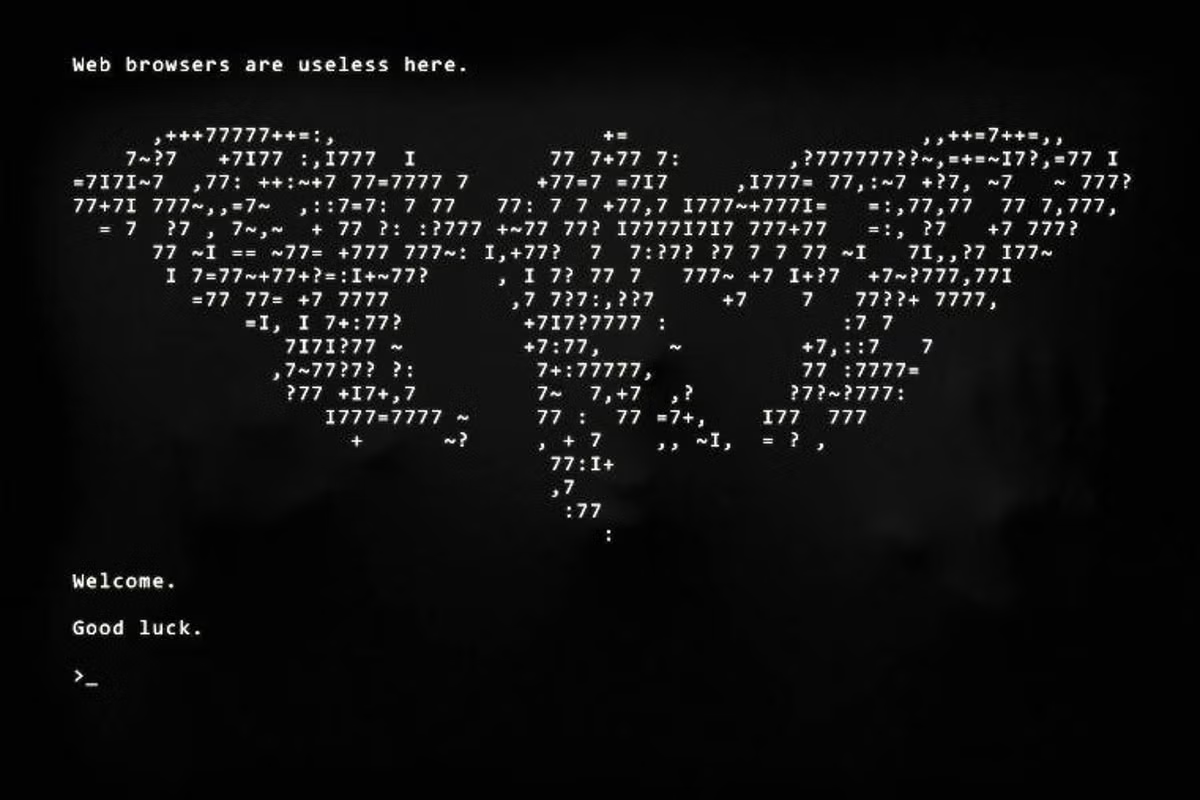
Cicada 3301 is the name of three sets of puzzles posted under the name '3301' online between 2012 and 2014. The first appeared on 4chan on January 4, 2012, and ran for nearly a month; a second came in 2013, and a third in 2014. The third puzzle remains unsolved. The stated aim was to recruit "intelligent individuals." The puzzles focused heavily on data security, cryptography, steganography, and Internet anonymity. One has been called "the most elaborate and mysterious puzzle of the Internet age," and The Washington Post listed it among the "top 5 eeriest, unsolved mysteries of the Internet." Many have speculated that the puzzles were a recruiting tool for the NSA, CIA, MI6, or Mossad. Cicada 3301's last verified message came in April 2017. (via Boing Boing)
Why is a famous New York basketball team named after pants?
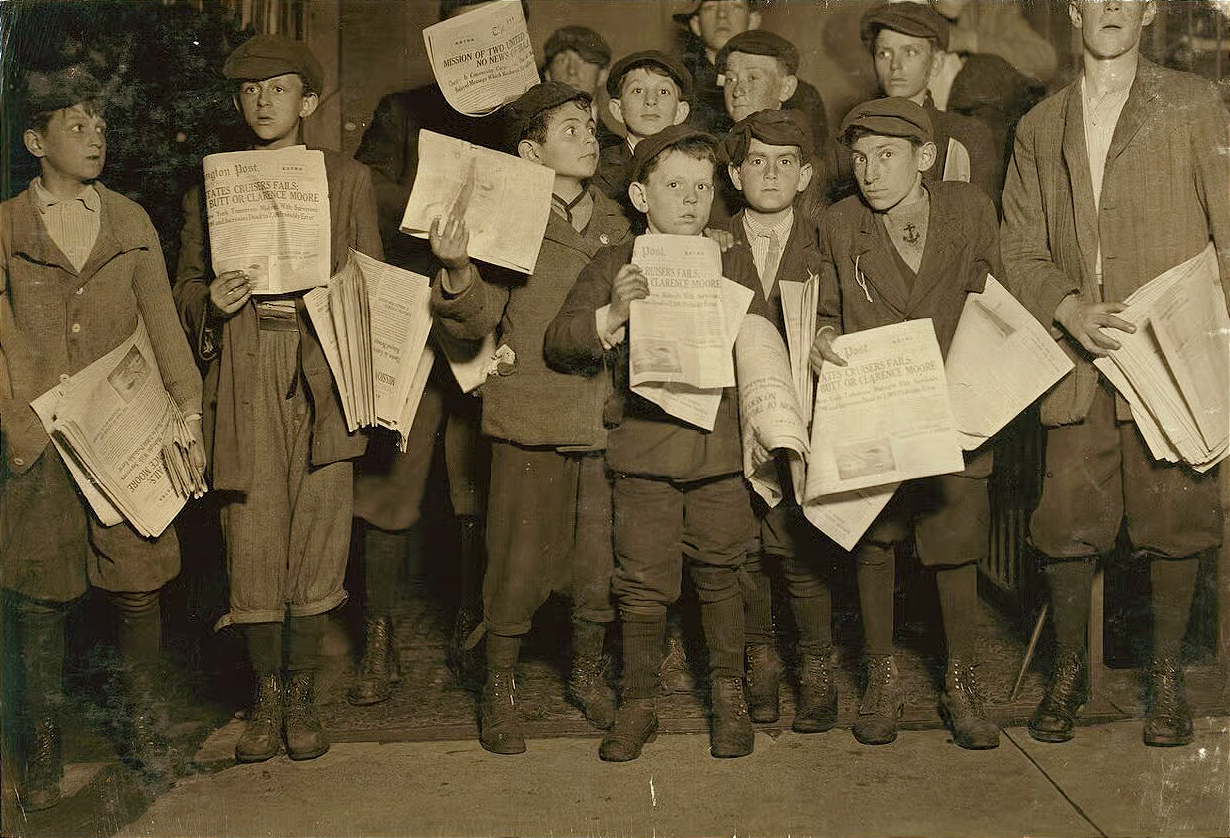
Most professional sports teams have nicknames, and usually, those nicknames are a reference to the team’s history or that of their city. But when it comes to the New York Knicks, there’s more confusion than typical. “Knicks” is short for “Knickerbocker,” which was a style of baggy, rolled up pants worn in New York and elsewhere. Early European settlers of the area now known as New York City were predominantly Dutch; they even called the region “New Netherland.” That influence became central to the writing of famed American author Washington Irving. In 1809, Irving published a novel titled “A History of New York: From the Beginning of the World to the End of the Dutch Dynasty,” a satire of the local politics of his time. But he adopted a pseudonym and a fake identity — a historian named Diedrich Knickerbocker. Knickerbocker became a New York City icon, and because he was a Dutchman, many aspects of his Dutch identity became associated with New York itself. His style of trousers, for example, became known as “knickerbockers” or “knickers.” (via Now I Know)
Hi everyone! Mathew Ingram here. I am able to continue writing this newsletter in part because of your financial help and support, which you can do either through my Patreon or by upgrading your subscription to a monthly contribution. I enjoy gathering all of these links and sharing them with you, but it does take time, and your support makes it possible for me to do that. I also write a weekly newsletter of technology analysis called The Torment Nexus.
Scientists have discovered a whale graveyard with skeletons dating back millions of years
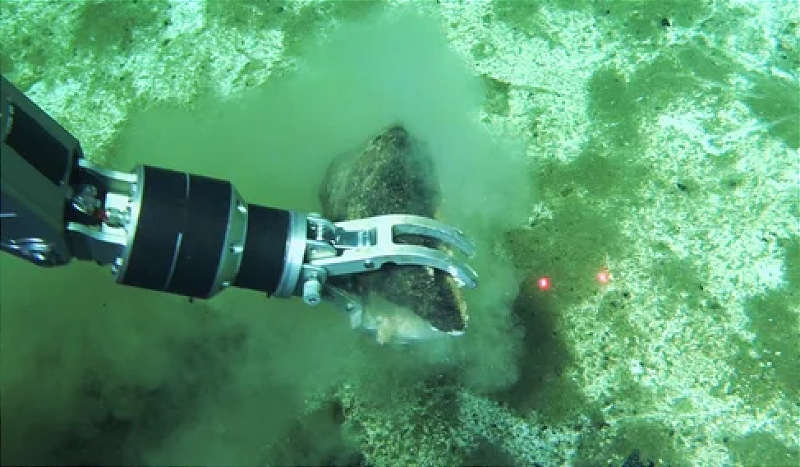
Chinese scientists have discovered the largest whale “graveyard” ever found. It contains nearly 500 whale skeletons all collected by chance and spreads across 750 miles of seafloor and five million years of evolutionary history. The discovery is centered on the Diamantina Fracture Zone, which travels west from the southwesternmost tip of Australia into the Indian Ocean along a rift valley that formed some 50 million years ago, when the Down Under continent split from Antarctica.In early 2023 Chinese scientists used a crewed submersible vehicle to scout along the fracture and spotted what they quickly realized was a whale fossil at some 23,000 feet (7,000 meters) below the surface. Over the course of some 30 additional dives, the researchers discovered an incredible array of whale remains, as well as traces of the animals’ activity. (via Scientific American)
This German subway entrance looks like a streetcar smashed into the pavement
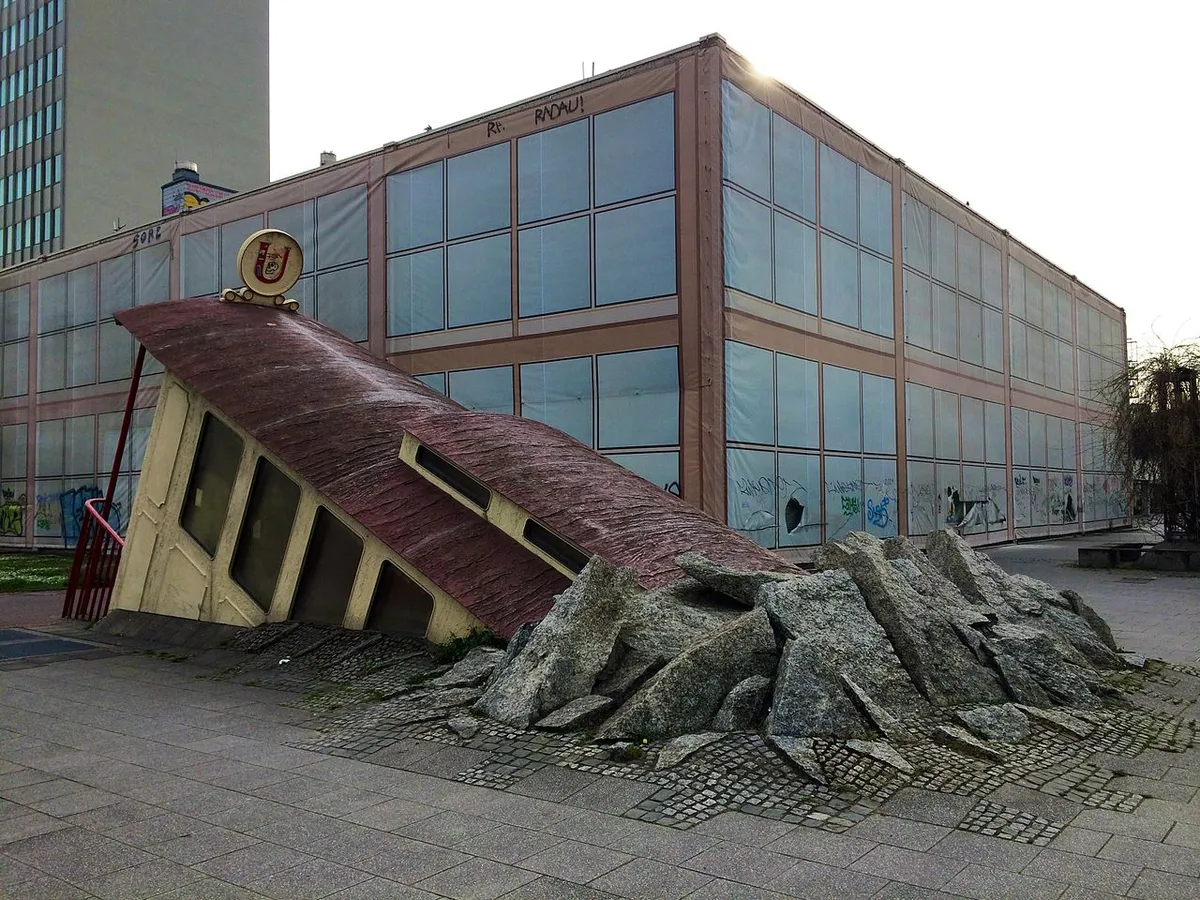
Imagine a scene in a Marvel film in which the Hulk has picked up a tram car and rammed it front-first into the sidewalk. That’s kind of what the entrance to the Bockenheimer Warte subway station looks like. The station entrance was the idea of the architect Zbigniew Peter Pininski. At the time, locals were concerned about the expansion of the city’s transport network, and any new construction was being fiercely debated and frequently opposed. Pininski, therefore, decided to design something that might bring a smile to the faces of the frowning Frankfurters. Inspired by the work of the Belgian surrealist artist René Magritte, Pininski designed a subway entrance that looked like an old tram car rammed into the sidewalk. Local authorities gave the green light to his whimsical (and, arguably, slightly dark) design, and it was completed in 1986 along with the B and C levels of the subway station. (via Atlas Obscura)
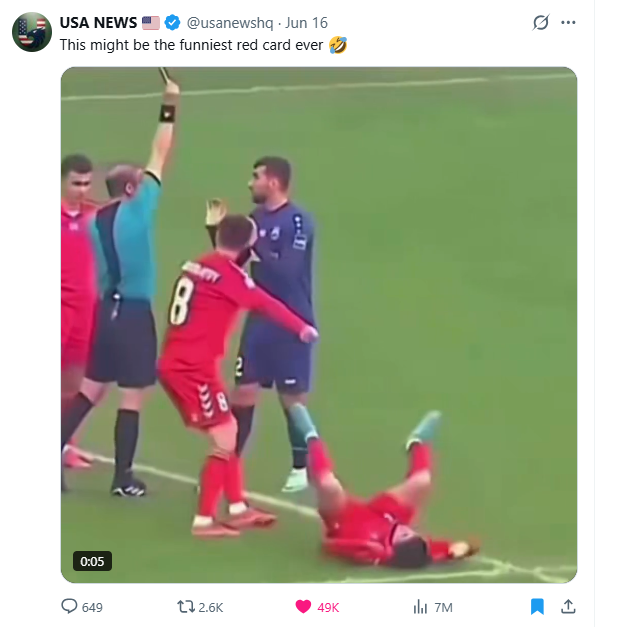
This might be soccer's funniest red card ever
Acknowledgements: I find a lot of these links myself, but I also get some from other places that I rely on as "serendipity engines," such as The Morning News from Rosecrans Baldwin and Andrew Womack, Jodi Ettenberg's Curious About Everything, Dan Lewis's Now I Know, Robert Cottrell and Caroline Crampton's The Browser, Clive Thompson's Linkfest and Why Is This Interesting by Noah Brier and Colin Nagy. If you come across something you think should be included here, feel free to email me at mathew @ mathewingram dot com