Two hikers found a can with $300,000 in gold coins inside


A field in an overgrown Czech Republic forest has, for nearly 100 years, served as the hiding place for a secret stash of nearly 600 gold coins and other precious metal goods tucked into a stone wall. But the cache of treasure is hiding no more. Two hikers traversing the Krkonoše Mountains (Giant Mountains) came across the small aluminum can, which had been hidden in a crevice in the wall, and opened it up to find the collection of gold coins. Just a few feet away, they found another hidden cache — this one an iron box holding jewelry, cigarette cases, and other personal items all made from gold. The lucky hikers wound up finishing their trip with an extra 15 pounds of precious cargo. They eventually took their discovery for an assessment by experts at the Museum of Eastern Bohemia. Whoever stashed the treasure may have done so to conceal valuables while fleeing the Nazis’ annexation of the region.(via Popular Mechanics)
This entire family had their stomachs removed and had to learn how to live without one

"What do you mean, you just take the stomach out?” Karyn Paringatai wondered, when doctors first said her stomach had to be surgically removed. Could she still eat? Yes, but differently. What would replace it? Nothing. She would have to live the rest of her life missing a major organ. Paringatai was not actually sick, not yet. Her stomach was fine. But her cousin, just a few years older, had recently died of an aggressive stomach cancer at age 33, leaving behind three children. The cousin’s own mother had died young of stomach cancer. So had her grandmother. So had her sister. To the doctors who saw Paringatai’s cousin in Tauranga, New Zealand, this pattern was hauntingly familiar. The doctors had witnessed the same rare cancer run through a large Māori family near Tauranga. In that family, one woman lost six of her siblings to stomach cancer. (via The Atlantic)
On the hunt for a famously rare Californian novel that no one can seem to find

I tell the taxi driver to floor it. If a first edition of the novel is at the Fondo Reservado, then I’m about to lay eyes on the rarest book ever published in California. The lost cornerstone of the Zamorano 80. The Holy Grail of Western Americana. According to Agüero, a leading auction house in Mexico, an 1854 edition of Yellow Bird might fetch a small fortune. The Life and Adventures of Joaquín Murieta: The Celebrated California Bandit goes by many names. Some call it the Murieta. Others call it Z64. The “Z” stands for the Zamorano Club, California’s preeminent group of rare-book collectors. Founded in Los Angeles in 1928, the club published a list of 80 titles essential to understanding California history. The “64” refers to the book’s position on the list. But to the most ardent collectors, it’s Yellow Bird — a nod to the English translation of Cheesquatalawny, the birth name of the book’s Cherokee author, the first Native American novelist, who later went by John Rollin Ridge. (via Alta Online)
Hi everyone! Mathew Ingram here. I am able to continue writing this newsletter in part because of your financial help and support, which you can do either through my Patreon or by upgrading your subscription to a monthly contribution. I enjoy gathering all of these links and sharing them with you, but it does take time, and your support makes it possible for me to do that. I also write a weekly newsletter of technology analysis called The Torment Nexus.
This Scottish woman can't feel pain and also doesn't experience fear or anxiety

Jo Cameron of Scotland spent decades without knowing exactly why she was the way she was. All her life, she felt virtually no pain and didn’t experience anxiety or fear. She thought it was normal. It wasn’t until doctors realized she didn’t have pain after major hip and hand surgeries during her 60s that the research on her began. And it hasn’t stopped. Moreover, it led to the 2019 discovery of the FAAH-OUT gene and the mutations that allow Cameron to live as she does. She is one of only two known people in the world to with the mutation. Before Cameron’s rare case surfaced, scientists didn’t know what the section of the genome containing FAAH-OUT was for — it was originally written off as functionless “junk” DNA. But the new study shows that it is really part of the endocannabinoid system, a key player in pain and mood. The study looked at the functions of the gene at a molecular level, one of the first steps in translating the unique biology to something useful for drug discovery. (via Popular Mechanics)
At the turn of the century he invented a solar-powered shutoff valve for gas lighthouses
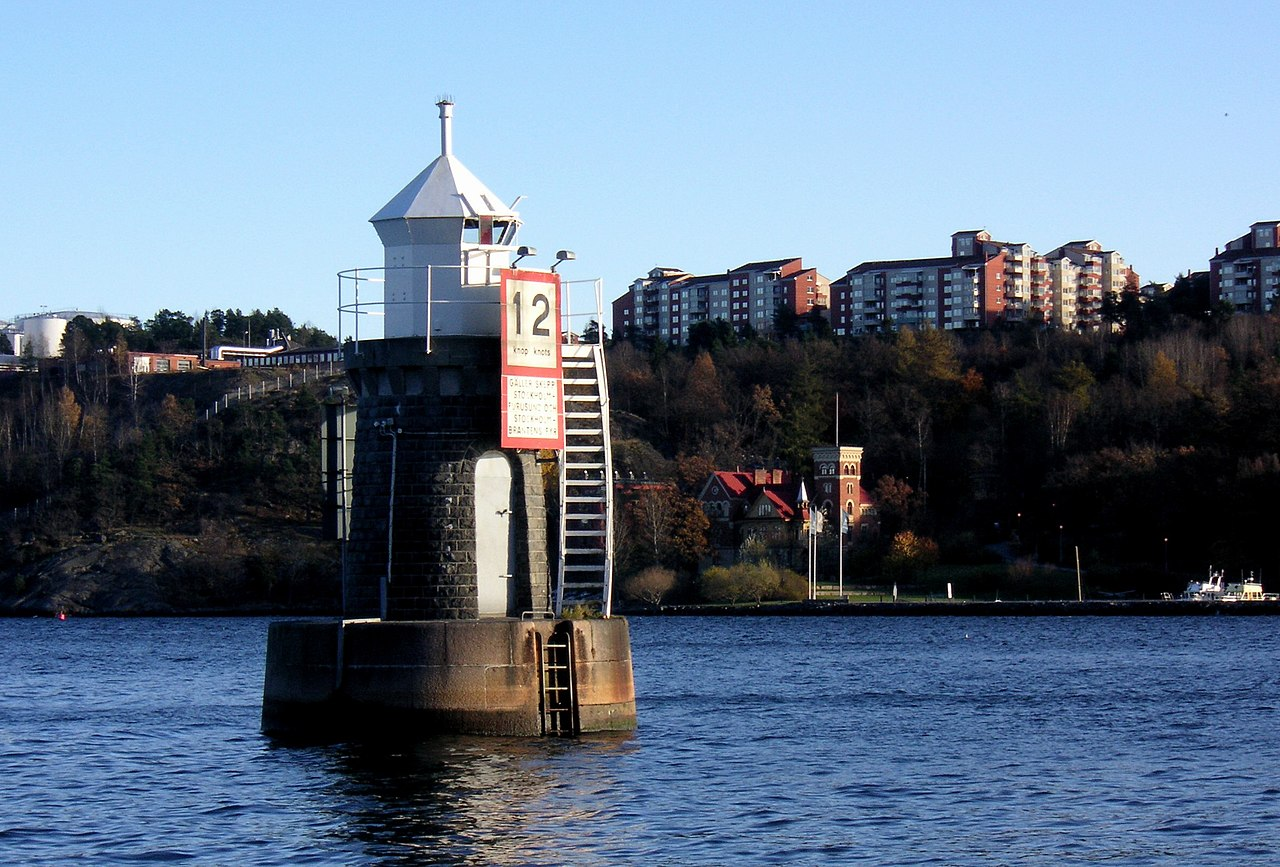
A sun valve is a flow control valve that automatically shuts off gas flow during daylight. It earned its inventor Gustaf Dalén the 1912 Nobel Prize in Physics. The valve was the key component of the Dalén light used in lighthouses from the 1900s through the 1960s, by which time electric lighting was dominant. Prominent engineers such as Thomas Edison doubted that the device could work. The German patent office required a demonstration before approving the patent application. The valve is controlled by four metal rods enclosed in a glass tube. The central rod that is blackened is surrounded by the three polished rods. As sunlight falls onto all of the rods, the absorbed heat of the sun expands the dark rod, switching a valve to cut the gas supply. After sunset, the central rod cools down, contracting to become the same length as the polished rods and opening the gas supply. The gas is lit by the small, always-burning pilot light. (via Wikipedia)
He invented a pedal-powered camper that runs on abandoned railroad tracks
Acknowledgements: I find a lot of these links myself, but I also get some from other places that I rely on as "serendipity engines," such as The Morning News from Rosecrans Baldwin and Andrew Womack, Jodi Ettenberg's Curious About Everything, Dan Lewis's Now I Know, Robert Cottrell and Caroline Crampton's The Browser, Clive Thompson's Linkfest and Why Is This Interesting by Noah Brier and Colin Nagy. If you come across something you think should be included here, feel free to email me at mathew @ mathewingram dot com