Three chess friends battled demons and saved each other

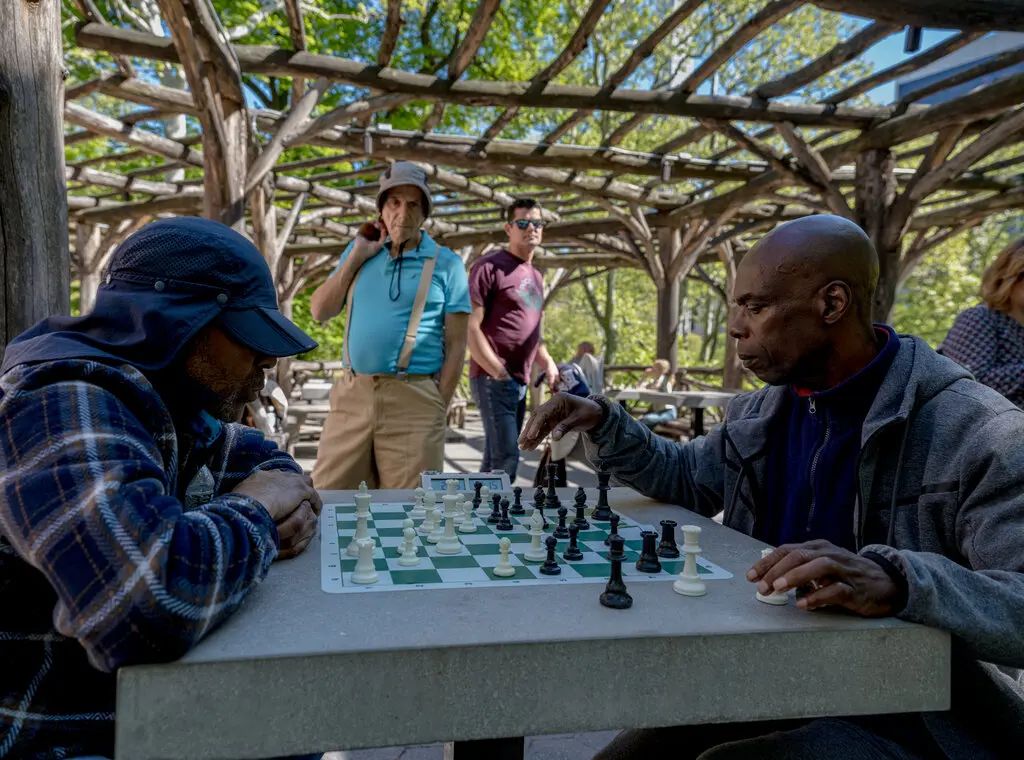
They began as strangers playing chess in Central Park. Frank was a scholar of South Asian textiles, known to friends as a guy who will lend a hand. Lincoln was homeless, living on a sidewalk on 59th Street. Paul was an older man living alone, in an apartment across the street from the Dakota, one of New York’s storied addresses.They formed the kind of casual friendships that can happen over a chessboard.Last year, when Frank realized that he had not seen Paul around in a while, he started asking people whatever happened to him. No one knew. So one day in September, he went to Paul’s apartment to check up on him, not knowing what to expect. He opened the door, and the smell that came out would have killed a herd of elephants. Paul, 87, was incoherent and ragged, and the place was filled with rotting food and rat feces. For the three men — Frank Ames, Paul Trahan and Lincoln Cyrus — that day last September began an unlikely chain of events that would ultimately save one life, maybe two. (via the New York Times)
Experiments on worms show that learning and memories can be transferred

In the 1960s, an eccentric behavioral psychologist named James McConnell convinced the scientific establishment that planarian worms, like Pavlov’s dogs, could be classically conditioned — and that memories of this training could be transferred from worm to worm through cannibalism. These bizarre findings were replicated by other scientists. Now, 60 years later, the worms have stopped learning, and nobody knows why. If a planarian is chopped in half, both halves will regrow into a new worm — the tail will grow a new head, and the head will grow a new tail. McConnell started beheading his trained planarians. The worms that grew back from the severed heads behaved as the originals had, associating light with a shock — a result he expected, given the preservation of their brains. What surprised McConnell was that the worms that regenerated from headless tails remembered, too. This meant that whatever form the worms’ memories took, they weren’t the exclusive purview of the brain. (via Quanta)
After he invented the phonograph Edison wasted a lot of time and money on talking dolls
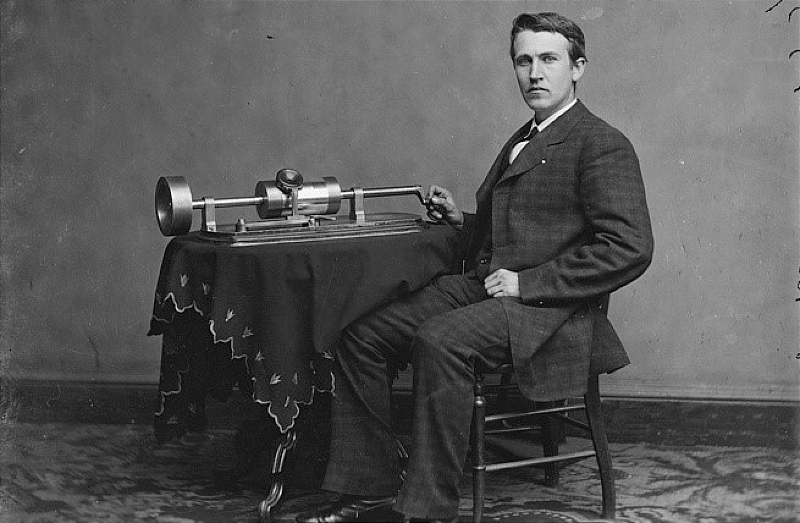
When Edison first hit upon the principle behind his phonograph in mid-July 1877, he seems to have imagined only that it would be used to record rapid speech for someone to write out on paper afterwards, as an alternative to shorthand. The earliest evidence that he had begun pondering other scenarios turns up in a note dated November 23, over four months later, and the very first idea on his brainstorming list was this one: "I propose to apply the phonograph principle to make Dolls speak sing cry & make various sounds also apply it to all kinds of Toys such as Dogs' animals, fowls reptiles human figures: to cause them to make various sounds." It should come as no surprise that this was the first recreational use for the phonograph that came to Edison's mind, since the talking doll was then already an established commercial commodity. Edison signed a contract on January 7, 1878, assigning the right to manufacture phonographic toys to an entrepreneur named Oliver D. Russell. (via the National Park Service)
Hi everyone! Mathew Ingram here. I am able to continue writing this newsletter in part because of your financial help and support, which you can do either through my Patreon or by upgrading your subscription to a monthly contribution. I enjoy gathering all of these links and sharing them with you, but it does take time, and your support makes it possible for me to do that. I also write a weekly newsletter of technology analysis called The Torment Nexus.
One of the biggest Roman military victories was won thanks to the humble backpack
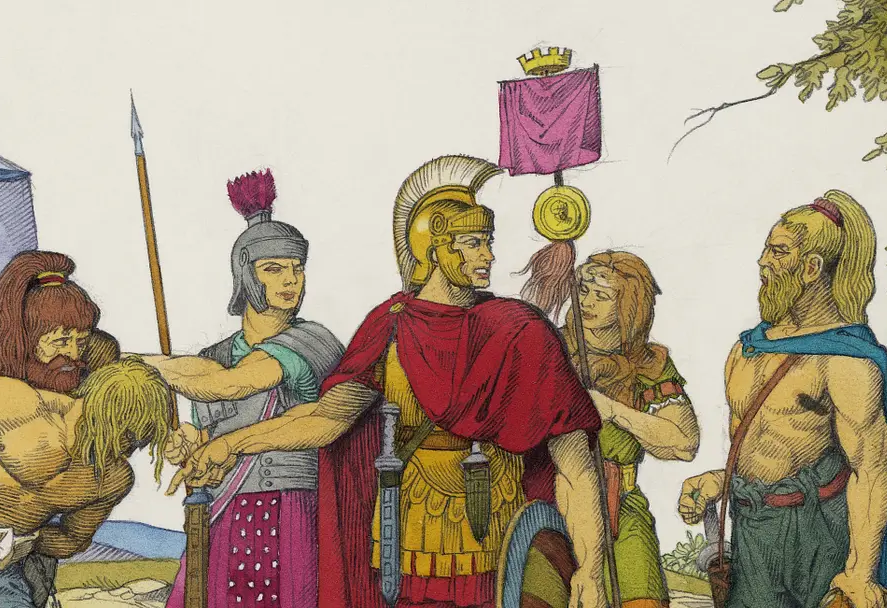
Today, Gaius Marius is most famous for being Julius Caesar’s uncle by marriage. Back in his own day, however, he was known for many other things as well, including mandating the use of backpacks at a critical moment in Roman military history. Marius was known for revolutionizing the Roman military. Over the course of his many campaigns, he implemented sweeping reforms that were instrumental in Rome’s transition from republic to empire. Marius created a professional, salaried army featuring soldiers from all over Italy, and he also overhauled the Roman military’s logistics. Previously, supplies and weaponry were carried around in slow-moving carts that often got stuck on uneven and muddy terrain. To speed things up, Marius introduced the furca—a knapsack containing each soldier’s armor, weapons, and provisions, tied to a wooden pole and carried over their shoulders as they marched. At first, the furca—Latin for “fork”—was incredibly unpopular with the rank and file. (via Mental Floss)
Was it a shark or a sea monster? The mystery lives on almost a century later
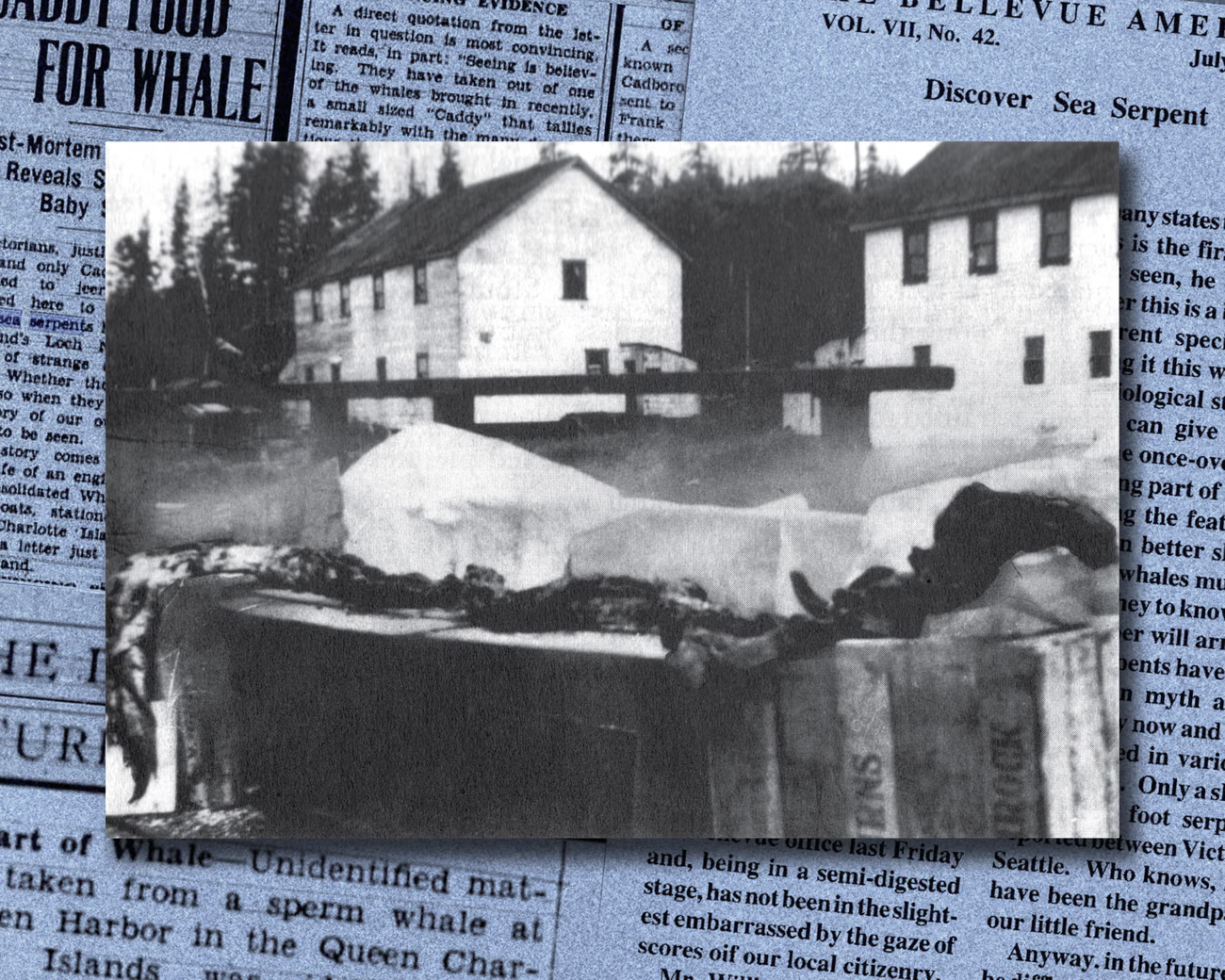
Its head resembled a dog’s, its downturned nose a camel’s, and at the end of its reptilian body was the tail of a horse. Witnesses say it was covered in a thin white film. When the remains of a strange creature were pulled from the stomach of a sperm whale, most of those present agreed: it was a sea monster – or at least something unknown living in the depths off Canada’s west coast. Crews at the whaling station in the archipelago of Haida Gwaii assembled a platform of wooden boxes and laid out the 10ft carcass, using a white sheet to display the curiosity that had baffled veteran whalers. A photo of the creature, called the “Cadborosaurus”, by locals, appeared on the front page of a local newspaper on 31 October 1937, adding to the growing lore that a marine cryptid – a creature unknown to science – and at times supposedly measuring three times as long, stalked the waters. Samples of the mysterious discovery have long disappeared and all that remains are a handful of black and white images. (via The Guardian)
A spectator is overcome after Olympic rock climber Janja Garnbret falls into his arms

Acknowledgements: I find a lot of these links myself, but I also get some from other places that I rely on as "serendipity engines," such as The Morning News from Rosecrans Baldwin and Andrew Womack, Jodi Ettenberg's Curious About Everything, Dan Lewis's Now I Know, Robert Cottrell and Caroline Crampton's The Browser, Clive Thompson's Linkfest and Why Is This Interesting by Noah Brier and Colin Nagy. If you come across something you think should be included here, feel free to email me at mathew @ mathewingram dot com