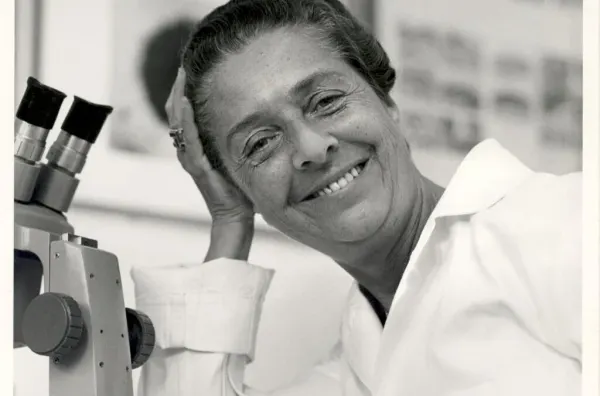
This British mansion has one resident who lives on the porch

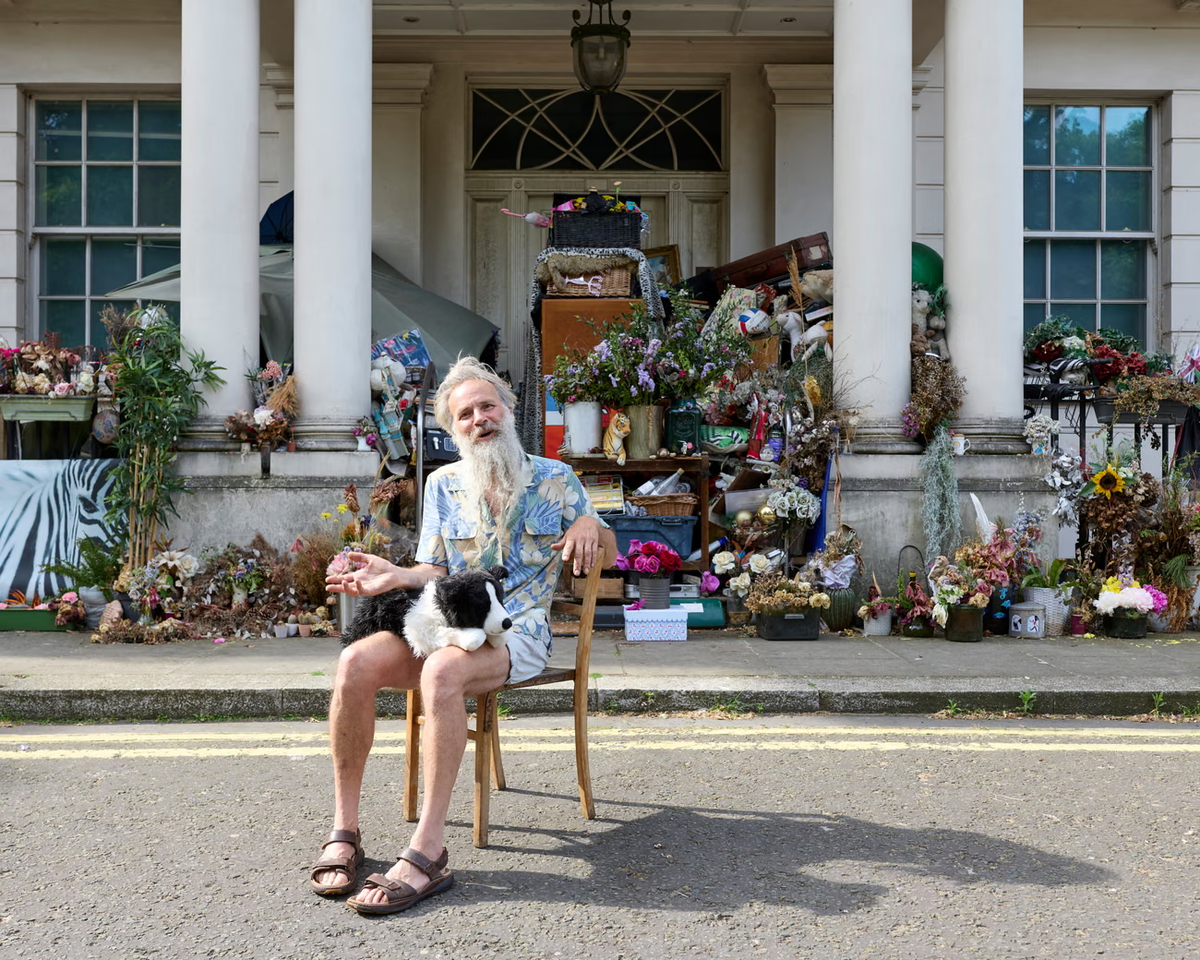
When it last changed hands, in 2020, 2-8A Rutland Gate was Britain’s most expensive house, selling for £210m. The word “house” hardly does it justice; palace is probably more accurate. It is in Knightsbridge, one of the most glamorous parts of London, and has 45 rooms, four lifts, an indoor pool and 116 windows, 68 of which overlook Hyde Park. But no one is enjoying those views. This palace has been empty for years. There may not be anyone inside, but there is someone outside and I’m afraid I’ve woken him up. On the porch is a makeshift tent, made mostly from umbrellas. A bearded head emerges, looking a little bleary, but cheerful. The porch is filled with stuff, which spills out along the railings: baskets, books and newspapers, pictures, teddy bears, games, a couple of bicycles, lots of flowers in vases, pots and bins. (via The Guardian)
David Hockney says the Old Masters used a camera lucida to create their art
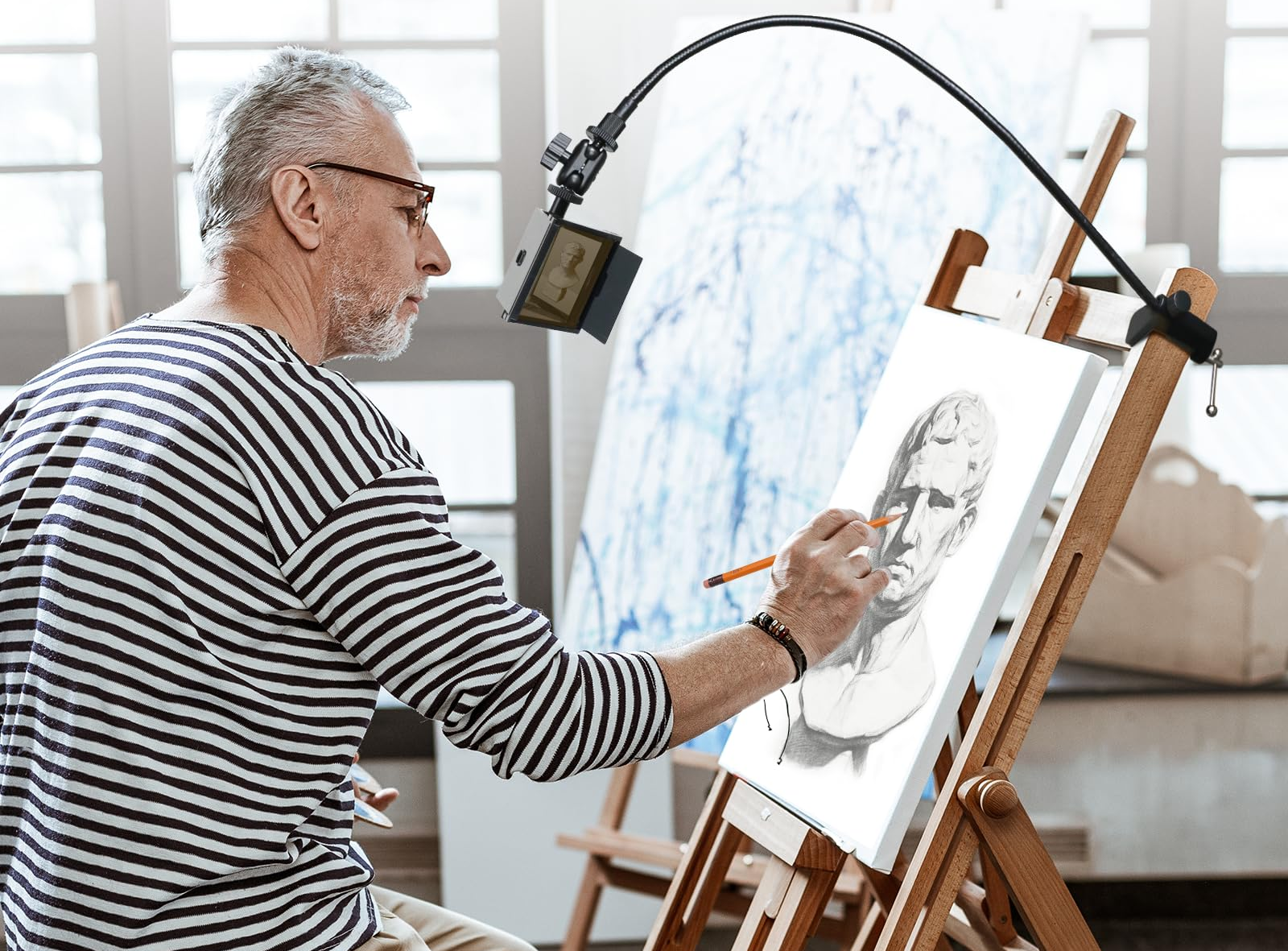
The story begins when Hockney visits an exhibit by Jean-Auguste-Dominique Ingres at the National Gallery in London in 1999. At the exhibit, Hockney is struck, in particular, by the pen-and-ink drawings and, most specifically, by the portraits, which were produced around 1816. What catches his painter's eye is that they seem incredibly detailed and "uncannily 'accurate.'" Hockney, who knows from his own experience as a portrait painter how hard it is to produce such detail, suspects that something else might be at work. He knows that Andy Warhol used a slide projector to project photographs from which he traced his images, and Hockney is convinced Ingres must have used a similar device. But if Ingres made use of a similar device, what was it? Photography was not invented until 1839; the camera lucida, however, was invented in 1806. It consists of a prism at the end of a metal rod, which extends from a weighted stand or clamp that can be placed over a sheet of drawing paper. (via American Scientist)
A new discovery suggests soccer was invented in Scotland rather than in Britain

England has long claimed to be the birthplace of soccer, known around the world as “football.” However, researchers recently identified what they think was a 17th-century soccer field in Scotland. They argue the find proves football was invented in Scotland, not England. “Our discovery has serious implications for sports historians,” says Ged O’Brien, who founded the Scottish Football Museum in Glasgow and helped find the field. “They will have to rewrite everything they think they know about the origins of the so-called beautiful game.” The quest started when they discovered a letter from Samuel Rutherford, who was a minister at a Presbyterian church in the town of Anworth in Kirkcudbrightshire, Scotland, between 1627 and 1638. In the letter, he wrote: “There was a piece of ground on Mossrobin farm where on Sabbath afternoon the people used to play at foot-ball.” The minister then directed churchgoers to place stones across the field, to prevent athletes from playing on it. (via the Smithsonian)
Hi everyone! Mathew Ingram here. I am able to continue writing this newsletter in part because of your financial help and support, which you can do either through my Patreon or by upgrading your subscription to a monthly contribution. I enjoy gathering all of these links and sharing them with you, but it does take time, and your support makes it possible for me to do that. I also write a weekly newsletter of technology analysis called The Torment Nexus.
A small-town doctor handed out drugs for sex but was his fronto-temporal dementia to blame?

In 1983, Ray Howell opened a family-medicine clinic in Roachdale, Indiana with a humble mission: to make a dent in Indiana’s rural-doctor shortage. “Getting rich is at the very bottom of my list of reasons for wanting to become a physician,” he had written in a medical-school essay. Howell had envisaged Tri-County Family Medical Clinic as an informal place. He hugged and prayed with his patients and sometimes provided free care when they couldn’t pay. On his days off, Howell taught Sunday school, went on medical missions to Haiti, and was the team doctor for some of his children’s sports teams. Evangelical, physician, family man: this is how Howell appeared to Roachdale on October 18, 2011, when he was arrested on charges of recklessly distributing controlled substances, often in exchange for sex. Howell eventually pleaded guilty to several charges, including one involving the death of a young man, and a Drug Enforcement Agency investigation linked his illicit activities to three other deaths. (via the New Yorker)
The famous Cerne Abbas chalk giant didn't originally have a huge erection
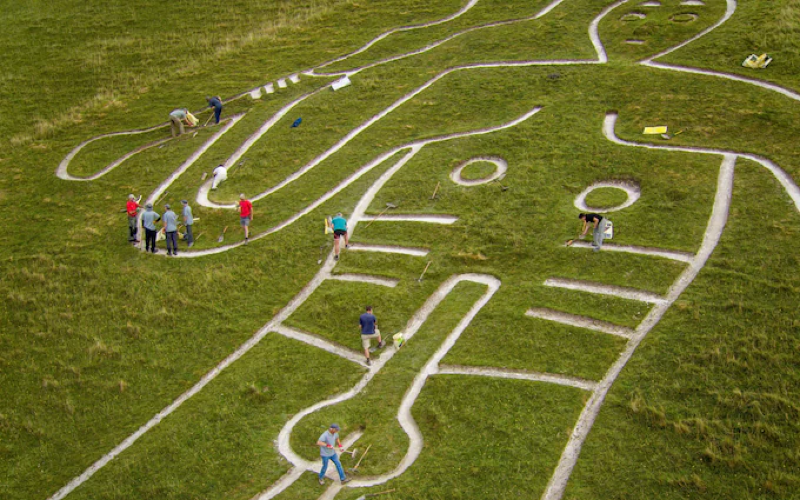
The origins of the Cerne Abbas giant have long been cloaked in mystery, and its vast anatomy has long caused shock by being cloaked in nothing at all.But the National Trust has revealed that the hill figure is Saxon and actually had trousers for 700 years before a phallus was added in the 17th century as a possible parody of Oliver Cromwell, made on the orders of a disgruntled baron.Before then, the club-wielding nude wore trousers, according to National Trust senior archaeologist Martin Papworth. The phallus was added during the 17th century – a time that supports a theory that the culprit was statesman Denzil Holles, 1st Baron Holles, owner of the Dorset hillside. An MP, he was forced into exile for opposing Cromwell, and it has been theorised that he ordered the giant to be created in its entirety as a parody of “England's Hercules”. New dating has now revealed he may simply have added the giant’s vast erection. (via The Telegraph)
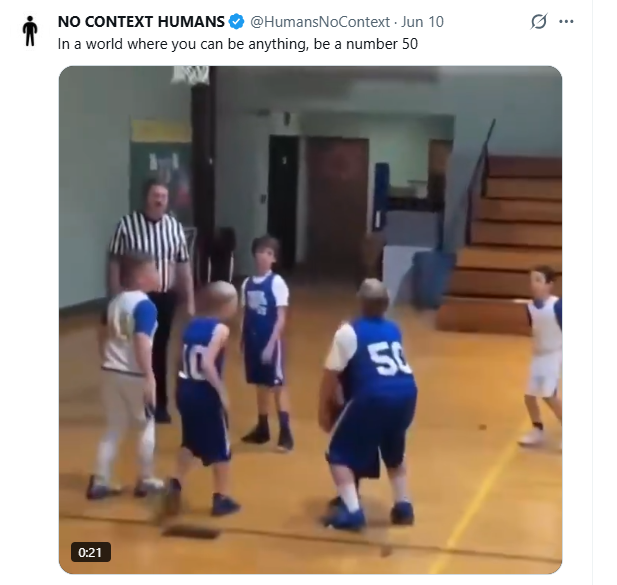
In a world where you can be anything you want, be like number 50
Acknowledgements: I find a lot of these links myself, but I also get some from other places that I rely on as "serendipity engines," such as The Morning News from Rosecrans Baldwin and Andrew Womack, Jodi Ettenberg's Curious About Everything, Dan Lewis's Now I Know, Robert Cottrell and Caroline Crampton's The Browser, Clive Thompson's Linkfest and Why Is This Interesting by Noah Brier and Colin Nagy. If you come across something you think should be included here, feel free to email me at mathew @ mathewingram dot com