This Belgian teen just got his PhD in quantum physics


Belgian child prodigy Laurent Simons has officially become a doctor in quantum physics at just 15 years old. On Monday, he successfully defended his doctoral thesis at the University of Antwerp, VTM Nieuws reported. According to VTM, Laurent believes he may be the youngest person ever to obtain a PhD. His latest success marks a new peak in a trajectory that has fascinated the scientific world for years, a journey that began long before his teenage years. Laurent’s academic feats were already making headlines back in 2022. Then aged 12, he had just completed a bachelor’s degree in physics with distinction at the University of Antwerp, finishing the three-year programme in only 18 months. This came after graduating from high school at the age of eight. At the time, he was already being courted by major companies and wealthy benefactors eager to support his scientific ambitions. But Laurent remained unfazed. (via Brussels Times)
The early 1900s was a time of medical quacks and John Brinkley was one of the best

The early 20th century was a time of rapid technological innovation and of demanding greater responsiveness of government and society to the needs of the common man. These impulses carried into the field of medicine, where quacks promised to overturn the medical establishment to bring wondrous new cures directly to the people. John Brinkley, among the foremost practitioners of that dark art, made a fortune implanting goat testicles into gullible men to cure sexual dysfunction and other ravages of old age. His medical training was limited, his treatments implausible, and yet, during a career that spanned over a quarter century, he became one of the best-known doctors of his era, through his use of technology, salesmanship, and politicking. Brinkley’s success illustrates how eager the public can be for panaceas, regardless of merit. (via the NLM)
The science behind ice-skating shows that it is a miracle of physics
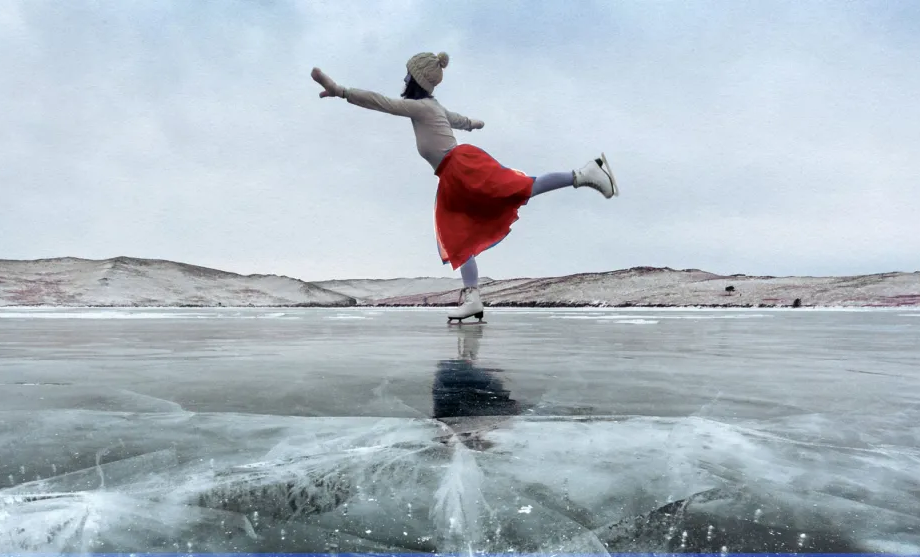
Normally, when you wear conventional shoes, sneakers, or boots, the gravitational force that pulls you down onto the Earth gets distributed over a relatively large area: the surface area of the soles of your footwear. If you want to raise the pressure even higher, you can either increase the amount of force that pushes down over the same area, or you can decrease the amount of area that the force is applied over. That’s where the idea of ice skates becomes so powerful. Instead of distributing the force from your body, which can approach nearly 1000 Newtons for an average human being, over a substantial area, they instead decrease your area tremendously: down to a long, thin “blade” of metal. If a typical skate blade is 30 centimeters long (about 1 foot) but only about 1 millimeter thick, that can create a pressure of up to three million pascals: about 30 times the normal amount of atmospheric pressure! (via Big Think)
Hi everyone! Mathew Ingram here. I am able to continue writing this newsletter in part because of your financial help and support, which you can do either through my Patreon or by upgrading your subscription to a monthly contribution. I enjoy gathering all of these links and sharing them with you, but it does take time, and your support makes it possible for me to do that. I also write a weekly newsletter of technology analysis called The Torment Nexus.
Organ-tuning books in English churches contain detailed records of a warming climate

Yangang Xing had never heard of organ-tuning books, but his colleague Andrew Knight often played the pipe organ at churches as a teenager. When the pair, who are researchers at Nottingham Trent University, set out to study how environmental conditions in churches had changed over time, Knight explained that all over the country many organs had notebooks full of data tucked away in their recesses. Xing realised organ-tuning books were troves of data that might span decades. rgan tuners make brief records of their visits and often jot down observations, including the temperature and humidity inside the building. Materials within organs are sensitive to climatic changes, which can knock the majestic instruments out of tune. Earlier this month, Xing, Knight and a colleague published a paper in the journal Buildings & Cities, with data gleaned from 18 organ-tuning books associated with churches in London, Nottinghamshire and Derbyshire. The records date back to 1966 and indicate a rise in average temperatures inside churches since then. (via The Guardian)
This crowdfunded video game has raised close to $1 billion and it still hasn't officially launched

Star Citizen’s alpha testing continues, as the massive crowd-funding initiative inches closer to the monumental $1 billion raised milestone. Star Citizen began its crowdfunding journey all the way back in 2012. In the thirteen years since its record-breaking beginnings, the team at Roberts Space Industries have managed to crowdfund $928,446,689 and counting. That staggering total comes from a combined 6,193,570+ contributors at the moment and is separate from any additional private funding the developers have acquired, as well. The most expensive Star Citizen pledge packages are built around very rare ships. The least expensive ships in the official Pledge Store come in at just $15, but the other end of the spectrum goes quite high. The most expensive ship, the Javelin, currently sells for $3,000. Although the average player will obviously never drop that kind of money on a ship, there are enough whales making these types of purchases to continue to drive up the numbers on the Star Citizen crowd funding. (via Vice)
The newest AI video models offer real-time face swapping and it is wild

Acknowledgements: I find a lot of these links myself, but I also get some from other places that I rely on as "serendipity engines," such as The Morning News from Rosecrans Baldwin and Andrew Womack, Jodi Ettenberg's Curious About Everything, Dan Lewis's Now I Know, Robert Cottrell and Caroline Crampton's The Browser, Clive Thompson's Linkfest and Why Is This Interesting by Noah Brier and Colin Nagy. If you come across something you think should be included here, feel free to email me at mathew @ mathewingram dot com