They won a £1-million lottery jackpot for the second time

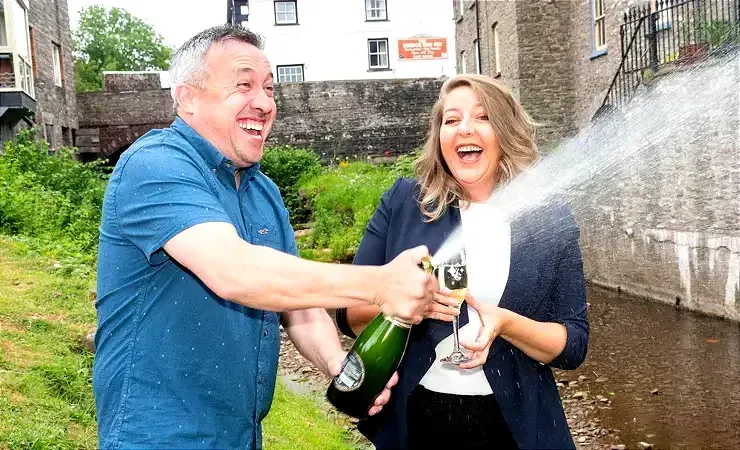
One lucky couple has beaten extraordinary odds to win £1m on the National Lottery — for the second time. Richard Davies, 49, and Faye Stevenson-Davies, 43, first scooped a seven-figure jackpot playing the EuroMillions Millionaire Maker in June 2018. And now they have done it again by matching five main numbers and the bonus ball in the Lotto draw on 26 November. According to experts at Allwyn, operator of the National Lottery, the odds of winning both the EuroMillions Millionaire Maker and then five numbers and the bonus ball on Lotto are over 24-trillion-to-one. Former hairdresser Richard uses his skills at a shelter for the homeless in Cardiff, a project which received vital National Lottery funding, while also helping out friends by working as a delivery driver. Ex-nurse Faye is a volunteer cook at Cegin Hedyn community kitchen in Carmarthen, while also providing mental health counselling services. (via the BBC)
New research helps solve the mystery of why more women wake up during surgery
Often casually compared to falling into a deep sleep, going under is in fact wildly different from your everyday nocturnal slumber. Not only does a person lose the ability to feel pain, form memories, or move—they can’t simply be nudged back into conscious awareness. But occasionally, people do wake unexpectedly — in about 1 out of every 1,000 to 2,000 surgeries, patients emerge from the fog of anesthesia into the harsh light of the operating room while still under the knife. One question that has dogged researchers over the past several decades is whether women are more likely to find themselves in these unfortunate circumstances. A number of recent studies, including a 2023 meta-analysis, suggest that the answer is yes. Now, a new study published in the Proceedings of the National Academy of Sciences helps untangle some of the mystery. In a series of experiments in mice and in humans, the researchers found that females do wake more easily from anesthesia and that testosterone plays an important role in how quickly and deeply we go under, and how easily we wake up. (via Nautilus)
How do you copyright a specific clown's face makeup? Paint it on an egg
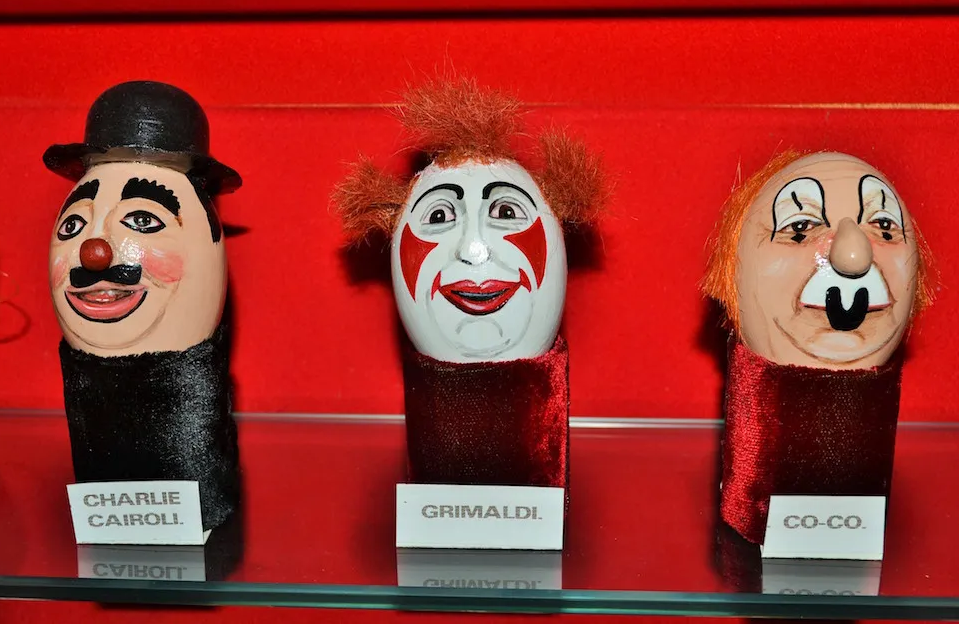
Debbie Smith has her work cut out for her. Since 2010 she has been the artist responsible for recording the likeness of every clown registered with Clowns International, the oldest established organization for clowns in the United Kingdom. It's a seemingly straight-forward task — that is, until you discover what she uses as a canvas: eggs. She has tradition to thank for using such a tiny — and fragile — canvas. The late Stan Bult, founder of the International Circus Clowns Club, began the practice in the 1940s. Though not a clown himself, Bult was a clown enthusiast, and would capture the appearances of various clowns by painting them onto hollowed-out eggs as a way to copyright their facial features, ensuring that no two clowns looked the same. Eventually the collection grew into the Clown Egg Registry, a compendium of hundreds of eggs housed inside the London Clowns’ Gallery-Museum in the UK. (via the Smithsonian)
Hi everyone! Mathew Ingram here. I am able to continue writing this newsletter in part because of your financial help and support, which you can do either through my Patreon or by upgrading your subscription to a monthly contribution. I enjoy gathering all of these links and sharing them with you, but it does take time, and your support makes it possible for me to do that. I also write a weekly newsletter of technology analysis called The Torment Nexus.
He got out of the car for a toilet break and discovered a 50,000-year-old ruin
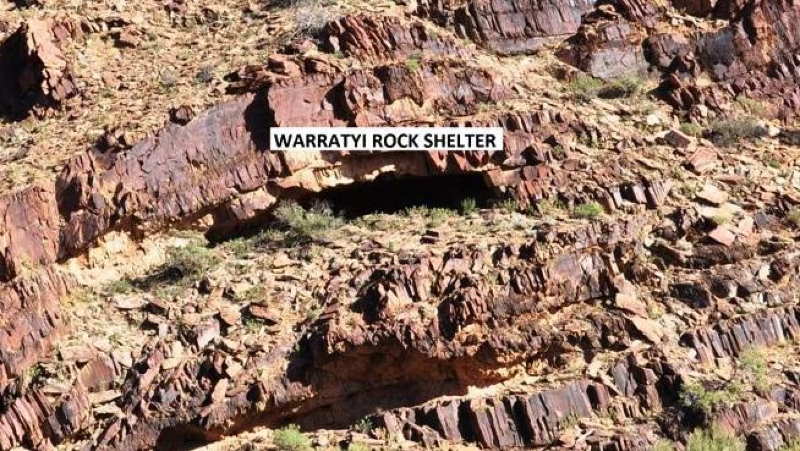
A man getting out of the car to go to the toilet in the remote outback of South Australia has led to a discovery that has rewritten history. A doctoral student at La Trobe University, Giles Hamm was surveying gorges in the northern Flinders Ranges with a local elder Clifford Coulthard when nature called. “Cliff walked up this creek bed into this gorge and found this amazing spring surrounded by rock art,” Hamm said. They noticed a rock shelter with a blackened roof about 20 metres above the creek bed, an indication of people having fires inside the shelter. Remnants of plants, ochre and bones, including one from a rhino-sized marsupial, were among 4300 artefacts uncovered at the site about 550km north of Adelaide. A sharpened bone point found at the site is the oldest bone tool found in Australia. The discovery of artefacts and bones in the rock shelter has revealed that humans started to settle inland Australia 10,000 years earlier than previously believed, scientists said Thursday. (via News.com.au)
The Galapagos vampire ground finch drinks the blood of blue-footed boobies
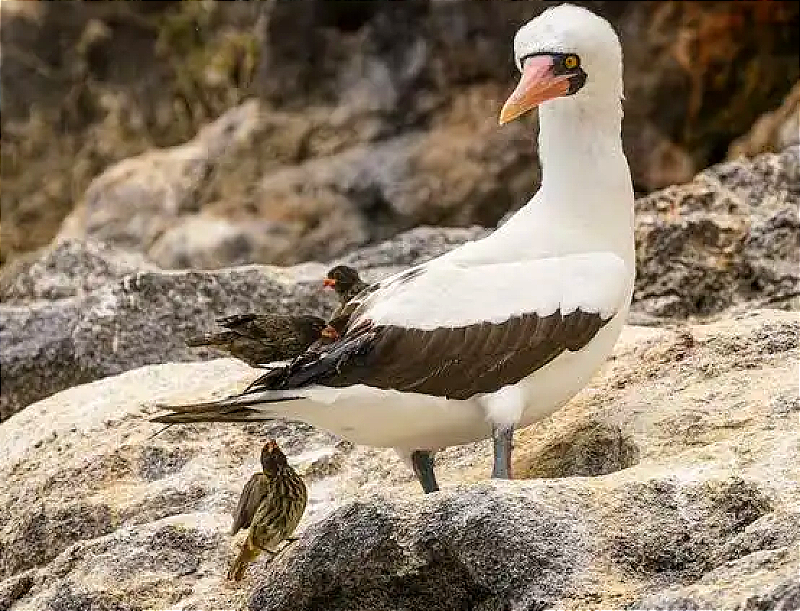
The vampire ground finch is a small bird native to the Galápagos Islands found primarily on Wolf and Darwin Island. This bird is most famous for its unusual diet. When alternative sources are scarce, the vampire finch occasionally feeds by drinking the blood of other birds, chiefly the Nazca and blue-footed boobies, pecking at their skin with their sharp beaks until blood is drawn. The boobies do not offer much resistance against this. It has been theorized that this behavior evolved from the pecking behavior that the finch used to clean parasites from the plumage of the booby. The finches also feed on eggs, stealing them just after they are laid and rolling them (by pushing with their legs and using their beak as a pivot) into rocks until they break. Guano and leftover fish from other predators additionally serve as diet options. Vampire ground finches drink more blood during dry seasons when seeds and other prey are scarce, resuming omnivorous predation when the rainy season begins. (via Wikipedia)
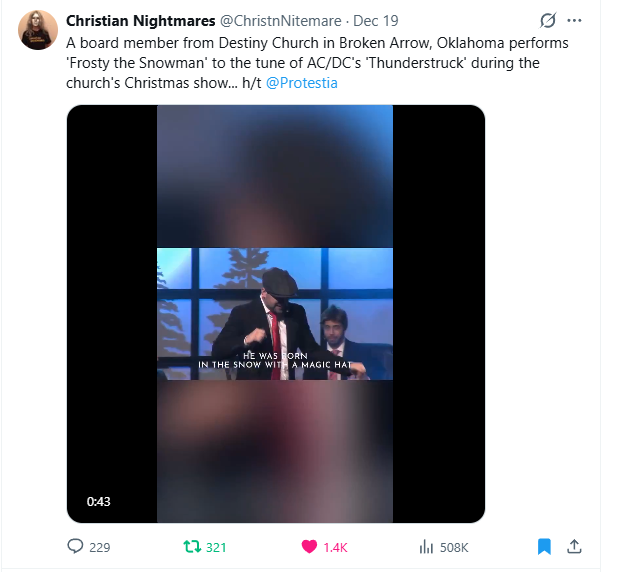
A version of Frosty the Snowman sung to the tune of AC/DC's Thunderstruck
Acknowledgements: I find a lot of these links myself, but I also get some from other places that I rely on as "serendipity engines," such as The Morning News from Rosecrans Baldwin and Andrew Womack, Jodi Ettenberg's Curious About Everything, Dan Lewis's Now I Know, Robert Cottrell and Caroline Crampton's The Browser, Clive Thompson's Linkfest and Why Is This Interesting by Noah Brier and Colin Nagy. If you come across something you think should be included here, feel free to email me at mathew @ mathewingram dot com