The tragic love life of Jeremy the world's loneliest snail

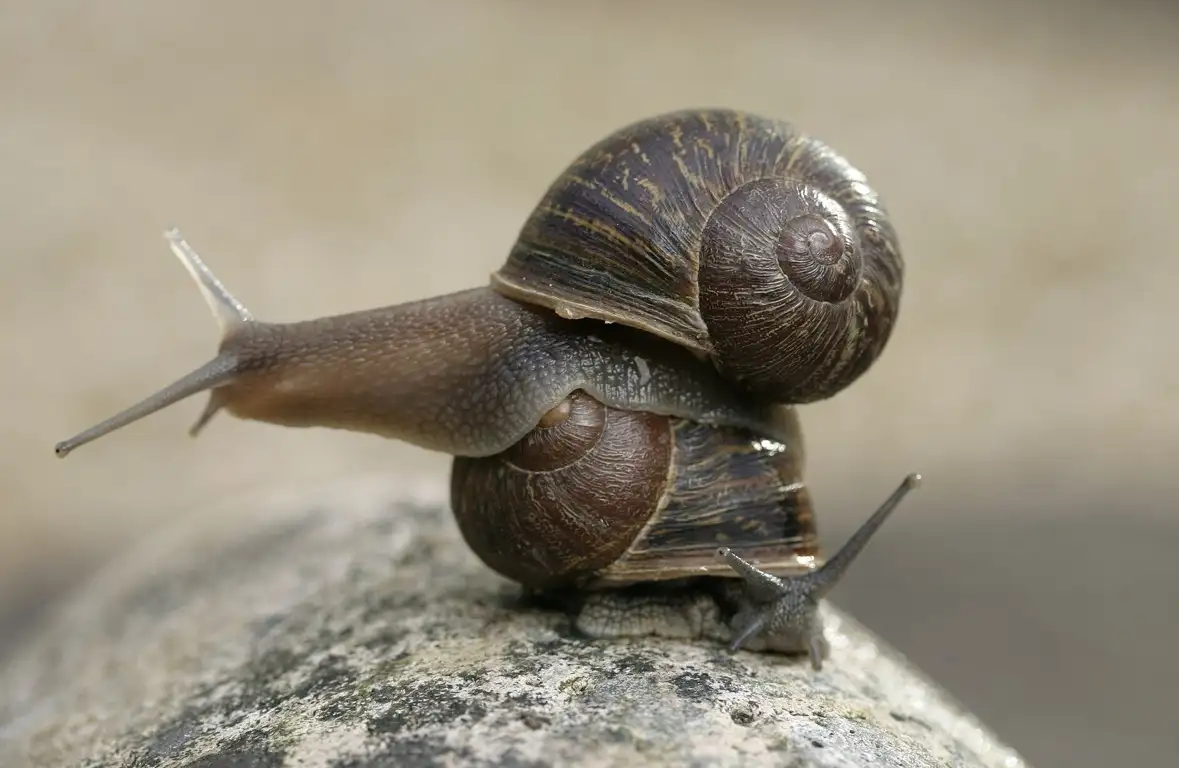
In 2016, a retired scientist in London discovered a garden snail with a shell that coiled counterclockwise — the opposite of nearly every other snail on Earth. He named the snail Jeremy, after Labour leader Jeremy Corbyn (also a lefty), and what followed was an international quest to find the lonely gastropod a mate. The problem: snails with left-coiling shells can't physically mate with right-coiling snails. Their reproductive organs are on opposite sides. It's like trying to shake hands with someone whose arm is attached to the wrong shoulder. Scientists at the University of Nottingham launched a public appeal, asking people worldwide to search their gardens for other "sinistral" snails. Two potential mates were eventually found — Lefty from Ipswich and Tomeu from Majorca. But when they arrived, they promptly mated with each other instead of Jeremy, leaving our hero to watch from the sidelines. (via Boing Boing)
The world's smallest fighter jet was called The Goblin and didn't even have landing gear

With the Second World War shifting into the Cold War, the jet engine made possible a major shift in strategic bomber technology. Where a long-range bomber like the Boeing B-29 could fly from England to Berlin and back, the post-war Convair B-36 Peacemaker could make it to Moscow and back. However, the new bombers were ridiculously vulnerable. Unfortunately, the range of a jet fighter in those days could only be measured in a few hundred miles. That meant that any mission to penetrate Soviet air space would have left the attacking fleet completely vulnerable. But the US Navy's fleet was protected by fighter planes by putting them on aircraft carriers that acted as floating airfields. Why not turn the bombers into aircraft carriers? That's where the McDonnell Goblin XF-85 parasite fighter came in. Looking like the offspring of a compact car and a fighter plane, the Goblin was so tiny because it had to fit inside a B-36. (via New Atlas)
A popular new Chinese social app is called Are You Dead? and that's all it wants to know

An app that asks a blunt question — "Are you dead?" — has become a hit in China. The app, called "Si Le Me" (Chinese for "are you dead"), requires users to "check in" by pressing a button. If they fail to do so for two consecutive days, the app alerts an emergency contact. Designed for people living alone, "Si Le Me" has surged to become the most popular paid download on China's Apple App Store this week. It costs 8 yuan, or $1.15, to download. The app was launched in mid-2025, but its downloads only surged in early January, according to Chinese media reports. Its stark, literal name has struck a nerve on Chinese social media, triggering raw discussions about loneliness and the risks of living alone. Solo living is becoming increasingly common in China, among both young city dwellers and the growing population of old people living independently. China could have as many as 200 million one-person households by 2030, with more than 30% of people living alone, according to a research firm. (via Business Insider)
Hi everyone! Mathew Ingram here. I am able to continue writing this newsletter in part because of your financial help and support, which you can do either through my Patreon or by upgrading your subscription to a monthly contribution. I enjoy gathering all of these links and sharing them with you, but it does take time, and your support makes it possible for me to do that. I also write a weekly newsletter of technology analysis called The Torment Nexus.
Based on the historical development of English eggs should be called eyren
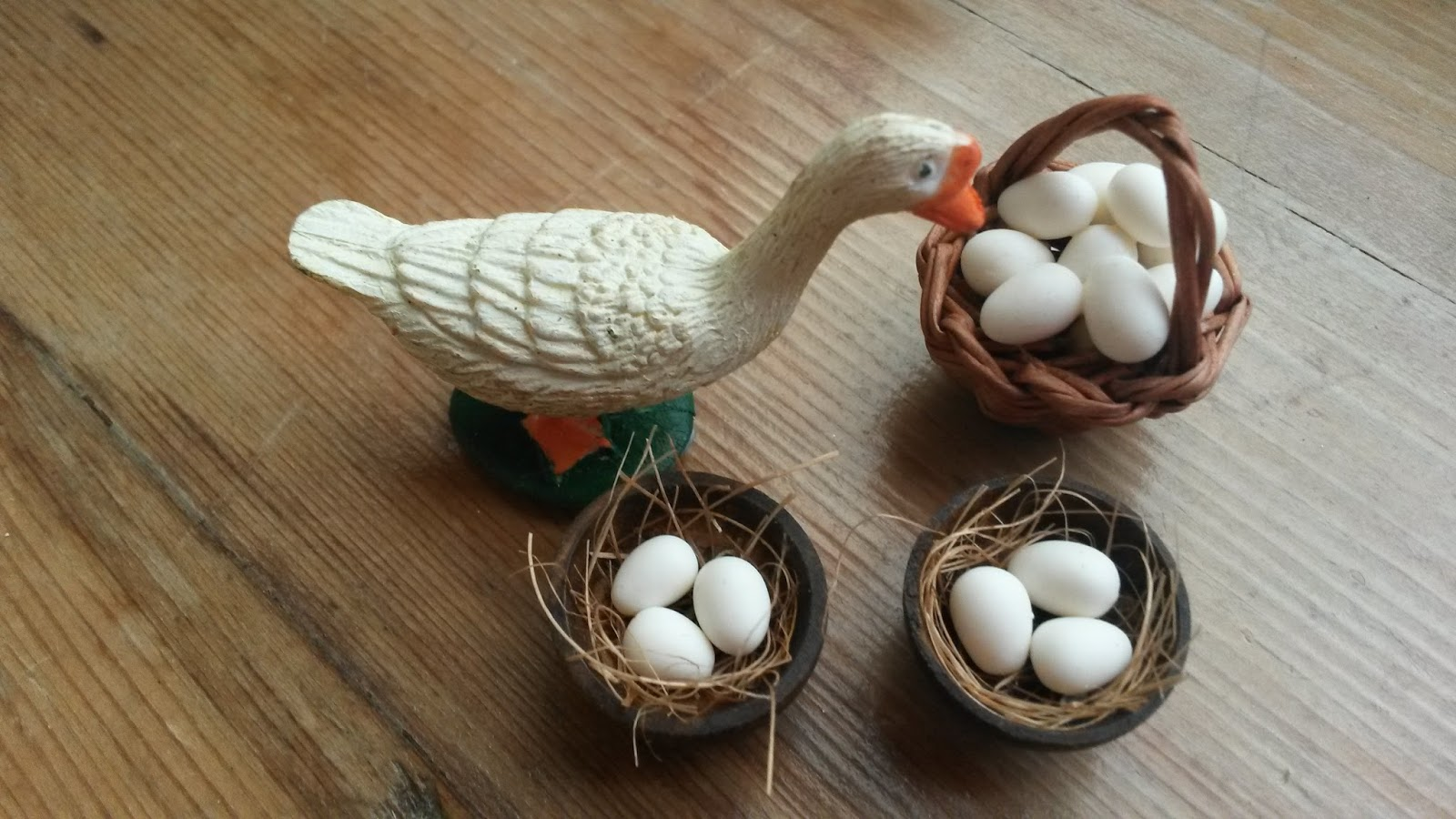
In 1476, the first book printed by a machine appeared in England. It was a copy of Geoffrey Chaucer’s The Canterbury Tales, and it was printed by William Caxton. At the time, English varied dramatically across the British Isles. Even between different English regions, dialects were so different that people often struggled to understand one another. According to his story, a merchant asked a woman if he could buy some ‘egges.’ The woman said she didn’t speak French, which annoyed Sheffield, because he wasn’t speaking French. A passerby said he was asking for some ‘eyren,’ and the woman understood. I know the you’ve been wondering: why on Earth would they be called eyren? Where did that strange word come from? In fact, ‘egg’ is the intruder. At one time, everyone who spoke English would have called them eyren. (via Dewi Hargreaves)
X-rays were discovered by accident and their inventor never patented the idea
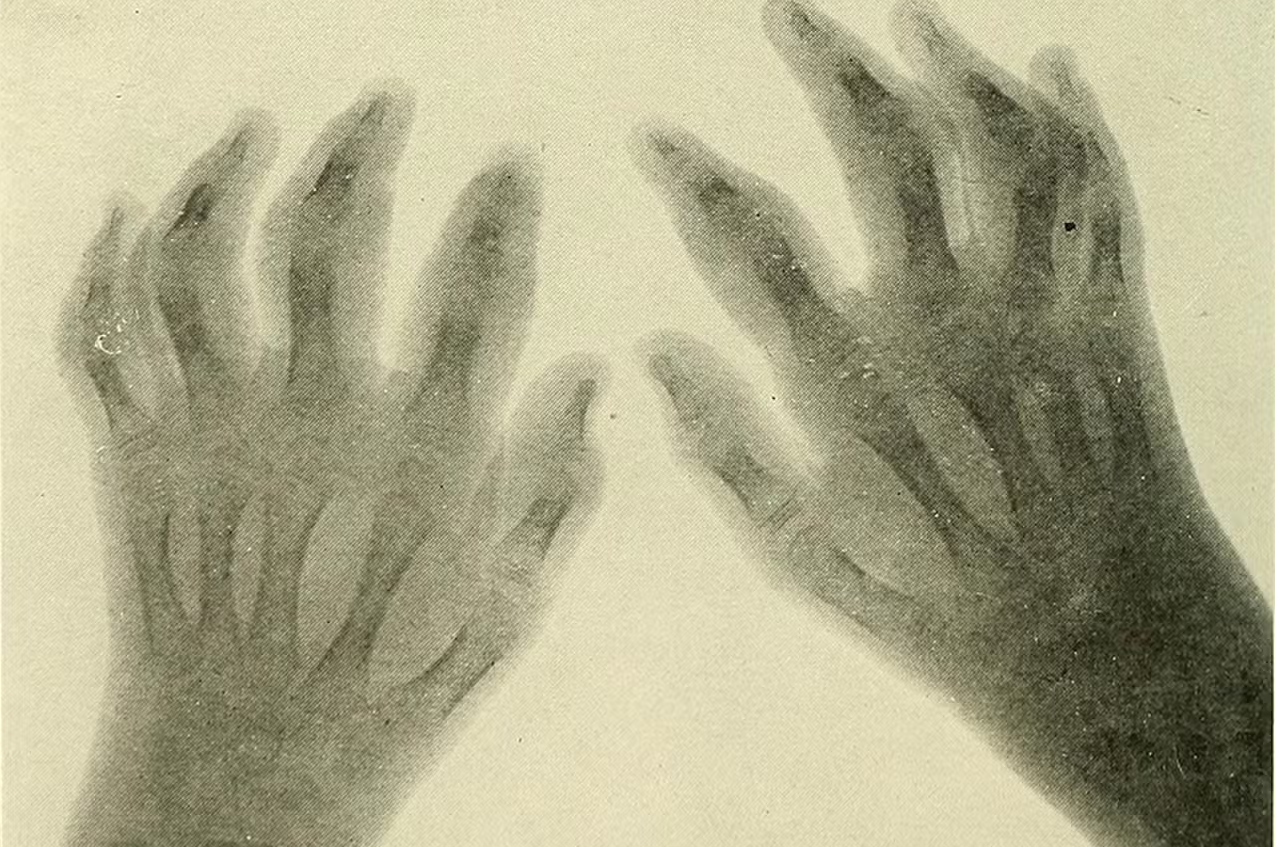
Wilhelm Röntgen, a German physicist, accidentally discovered the X-ray in 1895 while tinkering in his lab. Röntgen had wondered whether streams of electrons called cathode rays could move through glass. He had covered his cathode tube in heavy black cardboard, but he noticed that a green glow seeped through. This odd phenomenon persisted even when the receiving surface was more than 6 feet away from the tube. Röntgen beamed the rays through items of varying thickness and observed that they showed different degrees of transparency to this light when recorded on a photographic plate. He named them X-rays, with X referring to “unknown.” In 1901, Röntgen received the inaugural Nobel prize in physics, among other awards, and several cities named streets after him. Still, he “retained the characteristic of a strikingly modest and reticent man,” the Nobel Prize organization notes. Röntgen never applied for patents and said that “his inventions and discoveries should belong to humanity. (via Nautilus)
Robot delivery vans have become a meme in China because they don't stop for anything

Acknowledgements: I find a lot of these links myself, but I also get some from other places that I rely on as "serendipity engines," such as The Morning News from Rosecrans Baldwin and Andrew Womack, Jodi Ettenberg's Curious About Everything, Dan Lewis's Now I Know, Robert Cottrell and Caroline Crampton's The Browser, Clive Thompson's Linkfest and Why Is This Interesting by Noah Brier and Colin Nagy. If you come across something you think should be included here, feel free to email me at mathew @ mathewingram dot com