The creator of the SAT exam was an infamous racist

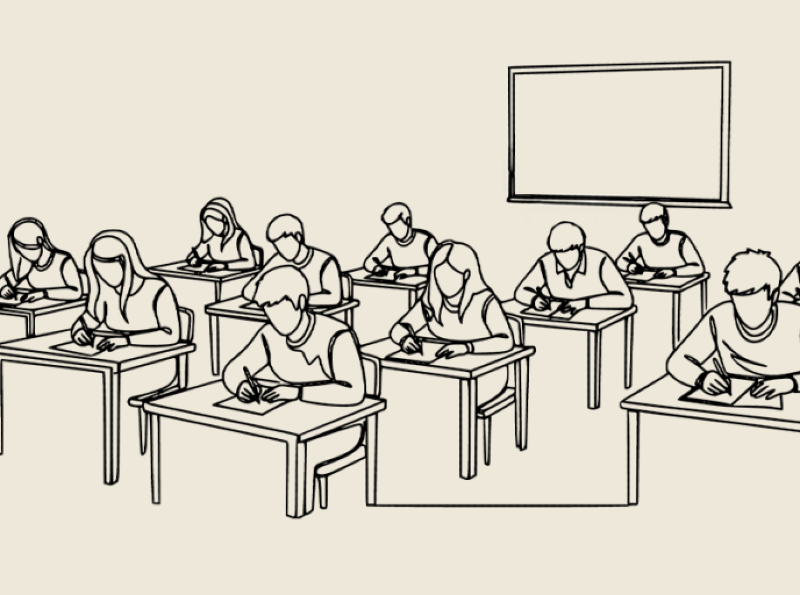
As you read this, hundreds of thousands of high school students across the country are busy preparing for the most important test of their lives so far — the dreaded SAT. The most common college entrance exam has come under fire in recent years for glaring racial disparities, with critics pointing to the racism of its architect, Carl Brigham, as evidence the test belongs in the dustbin of history. Was Carl Brigham a racist? The short answer is yes. The long answer is also yes, and his racism led him to twist his own data to arrive at faulty — and bigoted — conclusions. During World War I, Brigham was tasked with developing psychological tests to measure the cognitive abilities of newly drafted soldiers. There was also a eugenics movement sweeping the country, and Brigham bought into the notion that some races were superior to others. While he viewed Blacks as inferior to whites, this wasn’t his primary concern. Instead, he was focused on the influx of “inferior” white immigrants coming into the country. (via Nautilus)
He ran 500 miles from Colorado Springs to Moab while microdosing psychedelics
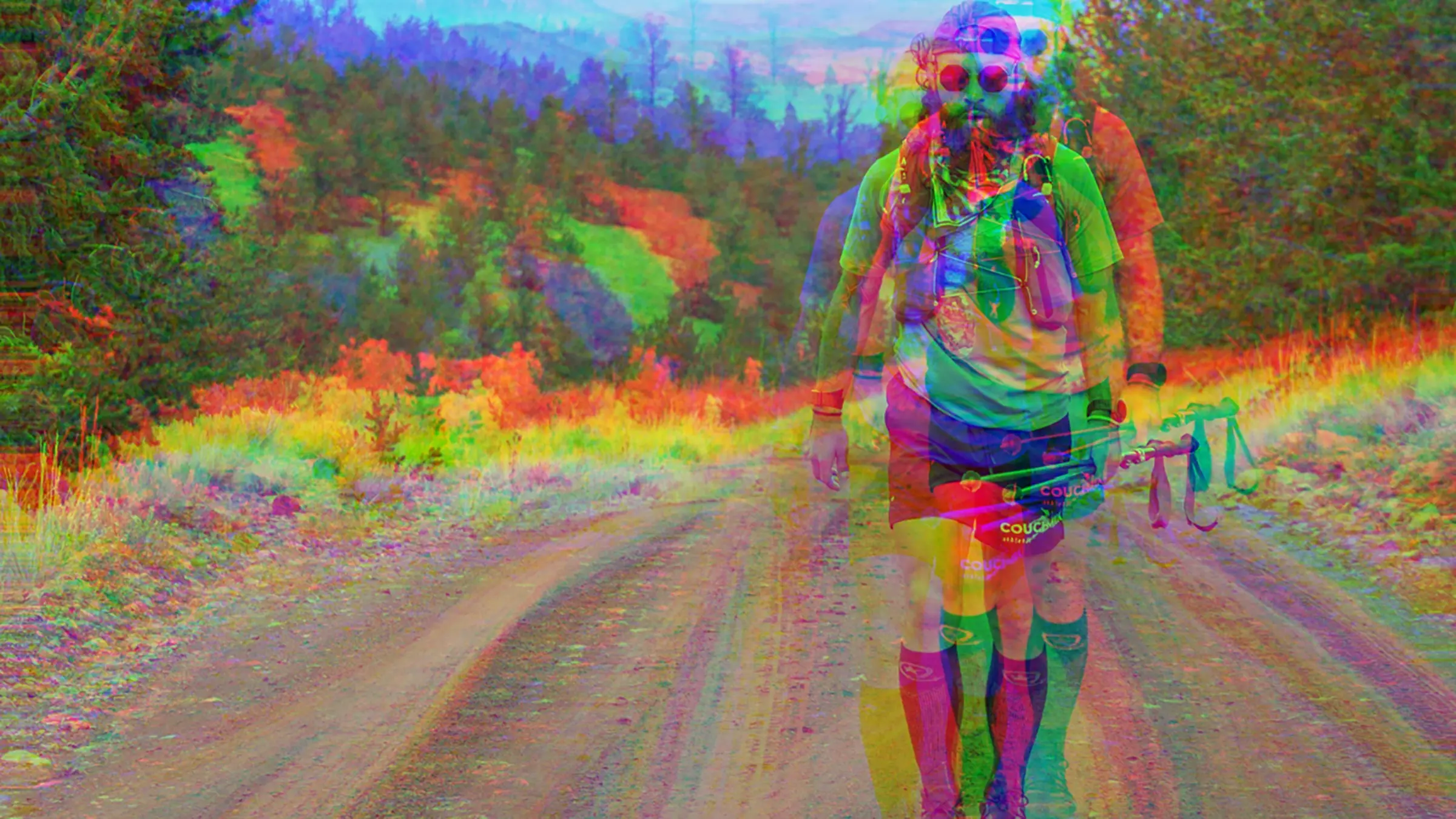
Dante Liberato was somewhere around Olathe, Colorado, on the edge of the desert when the drugs began to take hold. Maybe it wasn’t a chemical taking hold of Liberato, but rather exhaustion from having jogged 241 miles across mountain ranges and river valleys. No matter what it was, a powerful force made him to sit down on the side of an empty road. This moment marked the crux of a seemingly insane personal challenge that Liberato—an ultrarunner, coach, and yes, regular psychedelics user—took on in 2025. Over the course of 11 days, Liberato ran 500 miles from his home in Colorado Springs, Colorado, to Moab, Utah. Along the way, he ingested LSD and psilocybin, a naturally occurring psychotropic found in certain mushrooms. A film crew followed Liberato’s every step for a forthcoming documentary, titled Dante, about his very unorthodox approach to endurance sports. Spoiler alert: Liberato completed the journey, celebrating the feat by eating an ice cream sandwich at a small grocery store. (via Outside)
Cambodia has unveiled a statue dedicated to a famous landmine-sniffing rat
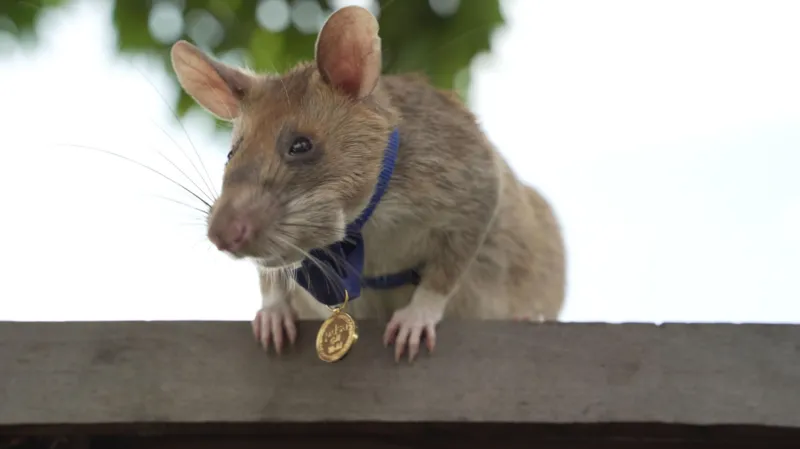
A famous mine-clearing rat, who was awarded a gold medal for his heroism, has been commemorated with the world's first statue dedicated to a landmine-detecting rat. Magawa, who lived to eight years old, sniffed out over 100 landmines and other explosives in Cambodia during his five-year career that started in 2016. A statue of the rodent carved from local stone by artists was unveiled in Siem Reap, Cambodia on Friday, in time for the International Day for Mine Awareness on 4 April. Magawa, an African giant pouched rat, was trained by the Belgian charity Apopo before moving to Cambodia to begin his bomb-sniffing career in 2016. Using his acute sense of smell and training to detect a chemical compound within explosives, Magawa would then alert human handlers of mines that could be later safely removed. During his time, Magawa cleared more than 141,000 square metres of land – the equivalent of 20 football pitches – and could search a field the size of a tennis court in just 20 minutes. (via the BBC)
Hi everyone! Mathew Ingram here. I am able to continue writing this newsletter in part because of your financial help and support, which you can do either through my Patreon or by upgrading your subscription to a monthly contribution. I enjoy gathering all of these links and sharing them with you, but it does take time, and your support makes it possible for me to do that. I also write a weekly newsletter of technology analysis called The Torment Nexus.
When he died this man had been awake more or less continuously for six months

In 1991, Michel A. Corke was enjoying the summer break from his position as a music teacher in a Chicago high school when he started to develop sleeping problems. It wasn't just taking him longer to fall asleep than normal. Nor was he suffering from the common problem of waking up frequently over the course of the night. He wasn't sleeping at all. Within a few months, Corke's lack of sleep was causing obvious physical and mental deterioration. He developed problems with balance and had trouble walking. He began to display signs of dementia and there were times when he appeared to lose touch with reality. After Christmas, he was admitted to the hospital. At that point, Corke was unable to communicate. He had become completely dependent on his family to help him perform even the simplest tasks like showering and getting dressed. When he died, he had essentially been awake for 6 months. (via Neuroscientifically Challenged)
This is what life is like on Tristan de Cunha the world's most remote inhabited island
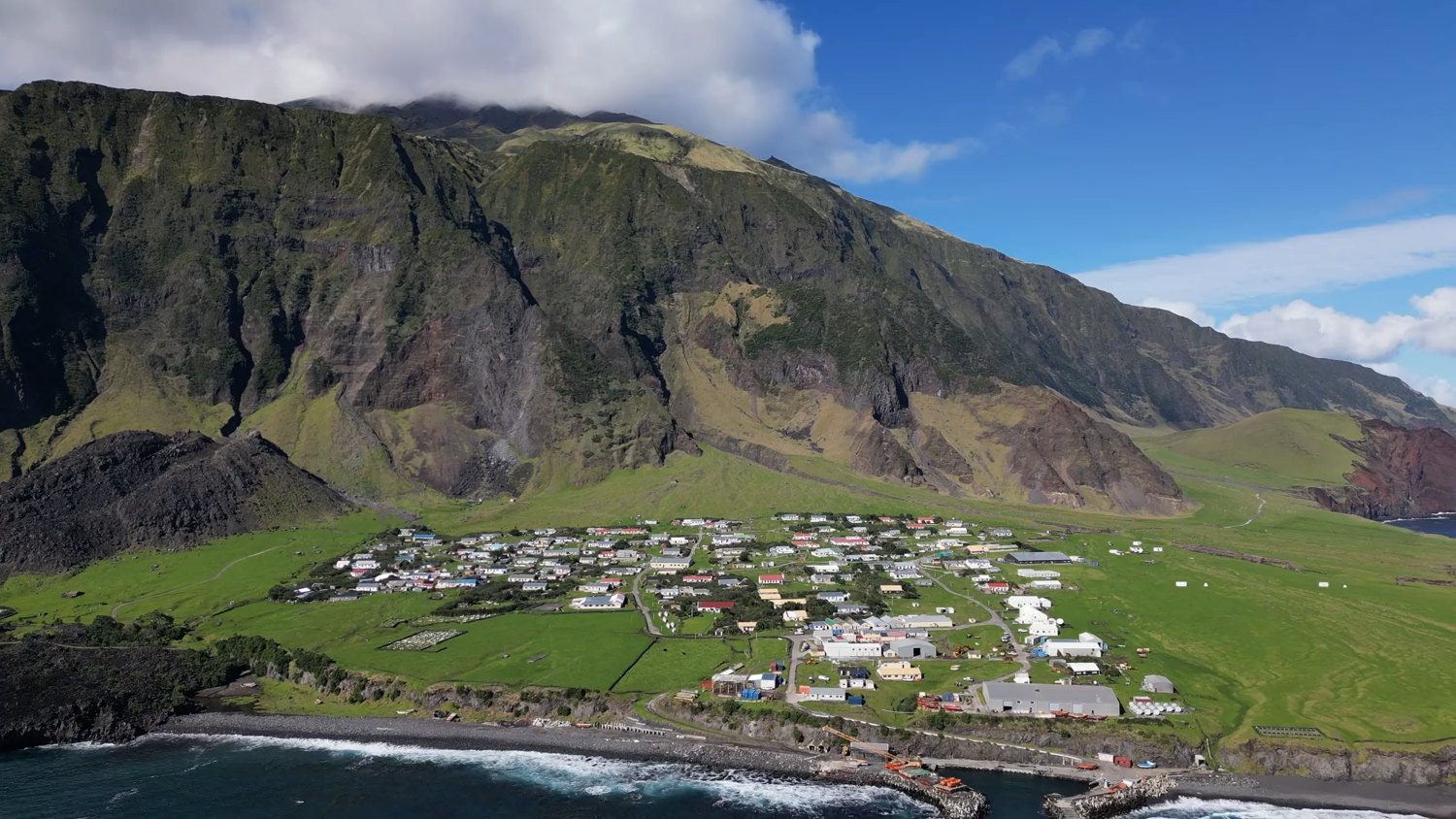
Part of one of 14 British overseas territories, Tristan de Cunha lies roughly halfway between South Africa and South America, over 1,500 miles from its nearest inhabited neighbor. Just 221 people live here — descendants of Dutch, American, English, St. Helenian, South African, Scottish and Italian sailors, settlers and shipwreck survivors who found refuge on the once-uninhabited island — in a single village called Edinburgh of the Seven Seas, the island’s only settlement. You’d be forgiven for thinking that life on Tristan da Cunha is quiet: a hammock-strung-between-two-coconut-palms kind of existence, somewhere in the shimmering blue Pacific. It is anything but. Tristan da Cunha is a rugged Scottish highland dropped into the middle of the South Atlantic. Towering volcanic cliffs rise from the sea. There are no palm trees or white sandy beaches here; instead, you’ll find potato fields, fierce winds and plenty of activity. (via NPR)
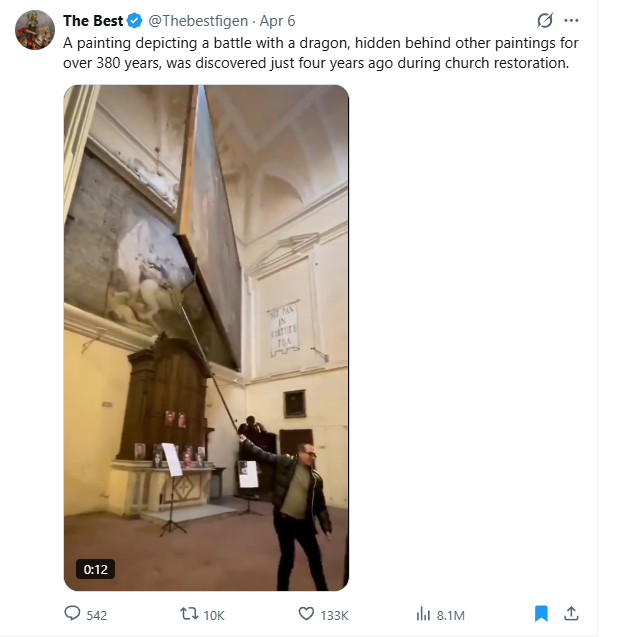
A painting was hidden behind another painting for almost 400 years
Acknowledgements: I find a lot of these links myself, but I also get some from other places that I rely on as "serendipity engines," such as The Morning News from Rosecrans Baldwin and Andrew Womack, Jodi Ettenberg's Curious About Everything, Dan Lewis's Now I Know, Robert Cottrell and Caroline Crampton's The Browser, Clive Thompson's Linkfest and Why Is This Interesting by Noah Brier and Colin Nagy. If you come across something you think should be included here, feel free to email me at mathew @ mathewingram dot com