Target has a forensic lab that is so good it does work for the FBI

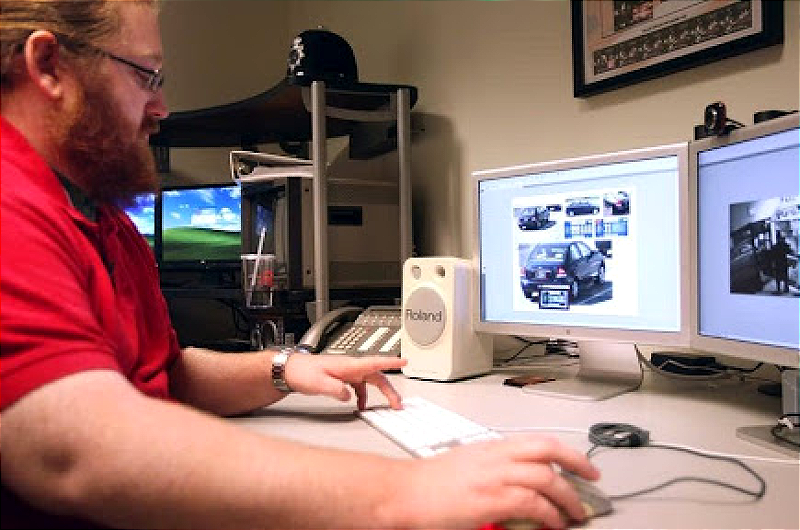
Target, just like many other retailers, has fallen victim to shoplifters, with almost a billion dollars in goods stolen from their stores in 2023. However, the numbers could have been much worse if it weren’t for their unique anti-shoplifting tactics. Target’s way of combating shoplifting was to establish a forensics lab in Minneapolis, Minnesota, that is more advanced and high-tech than many police departments’ forensics labs. The lab was developed in 2003 to give the company expertise when it came to analyzing surveillance footage from in and around the store. The lab hires specialists in analyzing video evidence from cameras and smartphone recordings to help identify shoplifters, frauds, and injuries inside Target stores, but it has also reportedly helped police forces solve murders, arsons, abductions, rapes, and mass robberies. In many cases, the Target lab has been able to solve cases that even the FBI can’t solve. (via The Horizon Sun)
For about 40 years this railroad crossing in Mississippi had the coolest warning sign ever
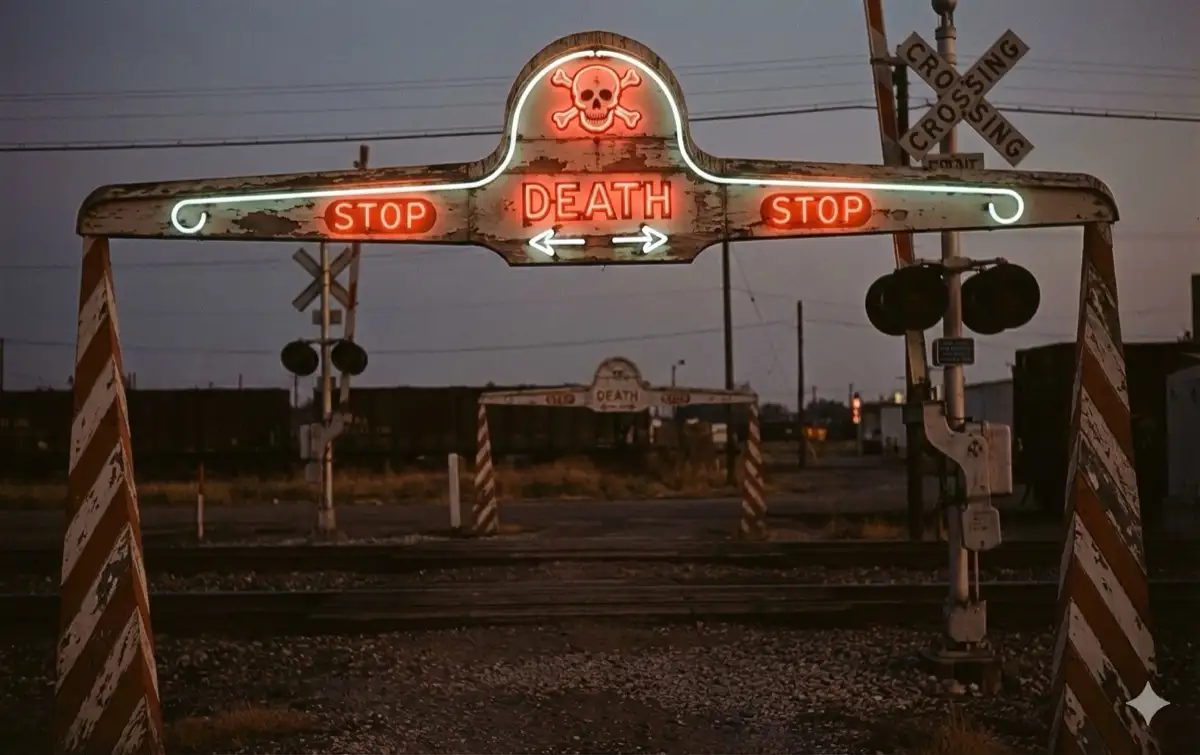
In the mid-1930s, a dangerous Illinois Central railroad crossing in Grenada, Mississippi, had claimed too many lives. Local inventor Alonzo Billups had seen enough, and his solution was gloriously excessive: a massive gantry spanning the highway, topped with a giant neon skull and crossbones that flashed "STOP – DEATH – STOP" in alternating blue and red whenever a train approached. The Billups Neon Crossing Signal was almost certainly the first gantry-style railroad crossing in America, predating the type now commonly used. But Billups wasn't content with just dramatic signage. He added flashing neon arrows indicating the train's direction and replaced the standard crossing bells with an air-raid siren. But World War II brought neon shortages, and the signal had a persistent problem: the siren would sometimes start wailing and refuse to stop until a maintenance crew arrived to shut it up. (via Boing Boing)
At his funeral President Andrew Jackson's pet parrot swore so much it had to be removed
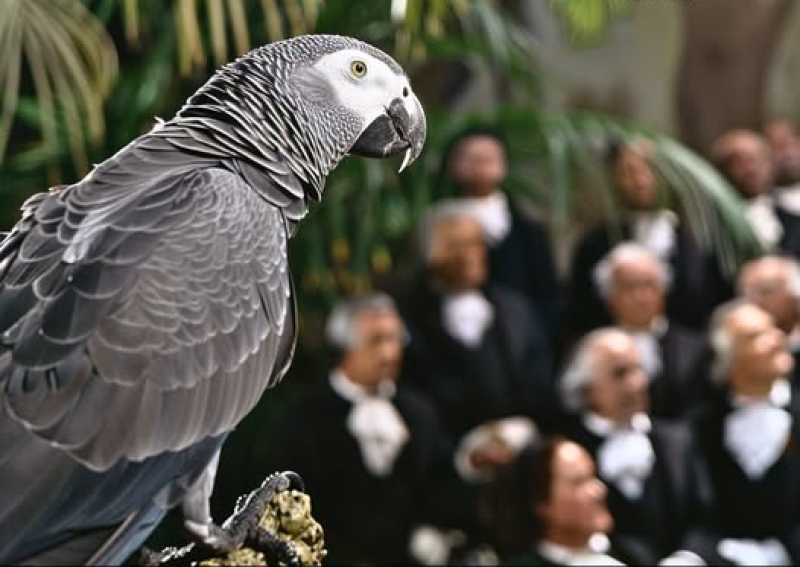
I asked Marsha Mullin, the authority on all things Andrew Jackson at The Hermitage, where the story came from. She directed me to Rev. William Menefee Norment’s recollections, which are in volume 3 of Andrew Jackson and Early Tennessee History: "Before the sermon and while the crowd was gathering, a wicked parrot that was a household pet, got excited and commenced swearing so loud and long as to disturb the people and had to be carried from the house." An obituary of Rev. Norment went on to report, “While still at school, word reached Cumberland University that General Jackson was dead. Only six weeks before he had shaken his hand. Rev. Norment says he went to the funeral and that the General’s parrot, excited by the multitude and the wailing of the slaves, let loose perfect gusts of ‘cuss words.’ The Negro slaves of the General were horrified and awed at the bird’s lack of reverence.” (via Jacksonian America)
Hi everyone! Mathew Ingram here. I am able to continue writing this newsletter in part because of your financial help and support, which you can do either through my Patreon or by upgrading your subscription to a monthly contribution. I enjoy gathering all of these links and sharing them with you, but it does take time, and your support makes it possible for me to do that. I also write a weekly newsletter of technology analysis called The Torment Nexus.
Audio crosswalk alerts in Palo Alto were hacked because they used the default password

We now know why hackers were able to take over the talking crosswalks on El Camino and have them air AI messages impersonating Elon Musk and Mark Zuckerberg. Turns out Caltrans didn’t change the passwords for the crosswalks that the manufacturers set, making them vulnerable to hackers. Crosswalk signals were hacked in Palo Alto, Menlo Park and Redwood City in April. When the prank was discovered, Caltrans disabled the audio feature of the crosswalk device, but has since restored it. But the problem was that the password for the crosswalk signals was never changed, allowing hackers to replace the audio files with the voices of the fake Zuckerberg and Musk, according to emails the Post obtained. The manufacturer reached out to Caltrans and Menlo Park to advise them to use a strong password for the crosswalk signals. Newer systems use Bluetooth, and there are ways to connect to the frequency wirelessly by being in close proximity to the signal with a phone, Banafa said. (via the Palo Alto Post)
The legendary man-eating tree of Madagascar was a big deal in the 1800s

The earliest and most influential account appeared in the New York World newspaper on April 28, 1874. According to that report, a German botanist named Karl Leche encountered the plant while traveling with a pygmy tribe. Leche claimed the tree’s trunk rose roughly eight feet high and bore a striking resemblance to a massive pineapple. From its crown extended eight enormous leaves, each reaching some twelve feet in length. Embedded within the plant were shallow, dish-like structures that secreted a sugary liquid said to induce violent intoxication. From the upper portions of the tree sprouted long, green, hair-covered tendrils and finger-like appendages that writhed continuously, as if animated by their own will. Leche reported witnessing a ritual in which the Mkodos forced one of their women onto the plant and compelled her to drink the sap. As the tribe chanted, the tree allegedly responded: its tendrils tightened around the victim while the massive leaves folded inward, enclosing her completely. (via Thunderbird Photo)
She started making snow angels so her horse decided to lie down and join her

Acknowledgements: I find a lot of these links myself, but I also get some from other places that I rely on as "serendipity engines," such as The Morning News from Rosecrans Baldwin and Andrew Womack, Jodi Ettenberg's Curious About Everything, Dan Lewis's Now I Know, Robert Cottrell and Caroline Crampton's The Browser, Clive Thompson's Linkfest and Why Is This Interesting by Noah Brier and Colin Nagy. If you come across something you think should be included here, feel free to email me at mathew @ mathewingram dot com