Mysterious Chinese couple have dozens of surrogate kids


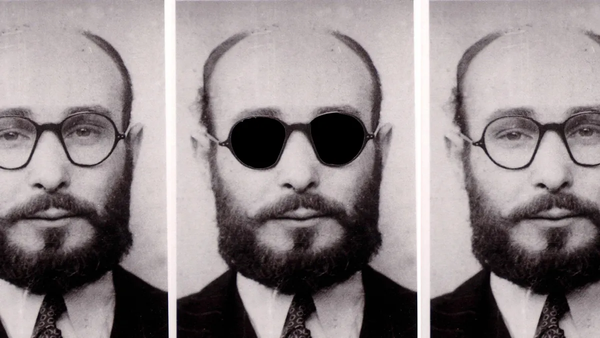
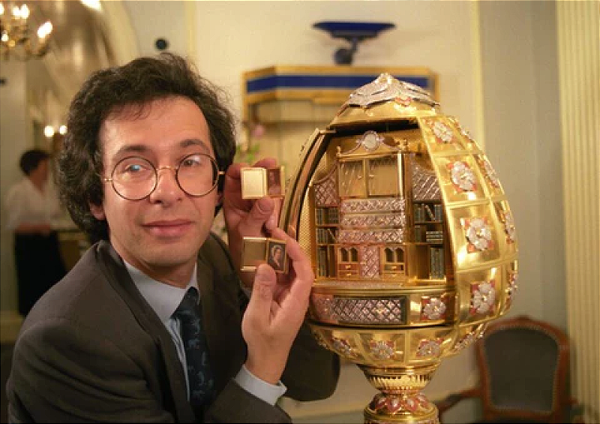
In the delicate jargon of the fertility industry, a woman who carries a child for someone else is said to be going on a “journey.” Kayla Elliott began hers in February, 2024. Elliott already had four children, but she was intrigued by the prospect of bearing another. She’d loved the natural rush of pregnancy and as a surrogate, she could earn money for her family.Within days, Elliott received a brief message from Mark Surrogacy, an agency in Los Angeles, who wanted to know if she was interested in working with a Chinese couple. She was sent a dating-style profile with a photo of a paunchy sixty-four-year-old, Guojun Xuan, with his arm draped around a woman identified as his wife, Silvia, who was thirty-six and had short-cropped black hair. They lived in Arcadia, an affluent city in L.A. County, and shared a daughter who, they said, longed for a sibling. Then another surrogate, who lived in Pennsylvania, shared something she’d heard about the couple: they already had thirteen children. (via the New Yorker)
In the 1800s the Iron Riders all-Black infantry corps bicycled almost 2,000 miles
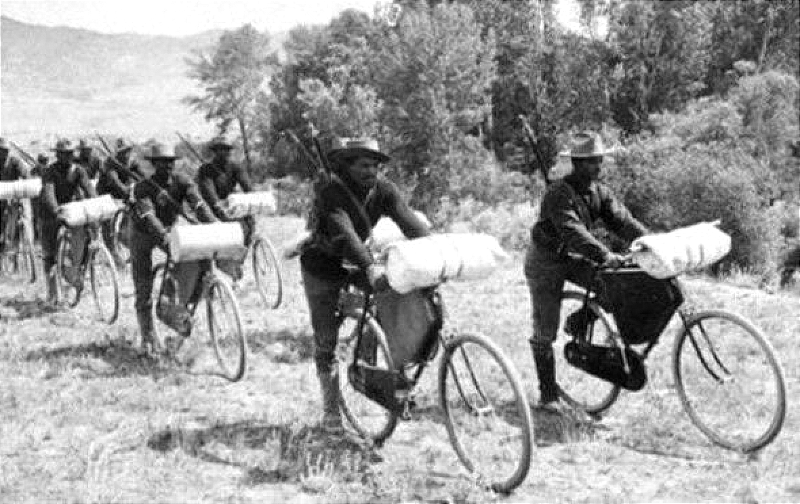
In 1897, the all-Black 25th Infantry Regiment Bicycle Corps embarked on an epic ride of more than 1,900 miles from Fort Missoula, Montana, to St. Louis, Missouri, as part of an experiment by the U.S. Army to determine the effectiveness of moving troops by bicycle. Called “The Great Experiment” in national newspapers, the journey took 41 days to complete. The route was chosen specifically to experience as many different conditions, climates and landscape formations as possible. The 25th Infantry was one of six racially segregated units formed by the Army after the Civil War. Soldiers in these units were required to continuously prove themselves to their white counterparts because of the perception that Black soldiers were inferior in courage and ability. Members of the Bicycle Corps demonstrated the opposite was true. (via Missouri State Parks)
Tests show people can't tell whether an audio signal is sent over copper or through a banana
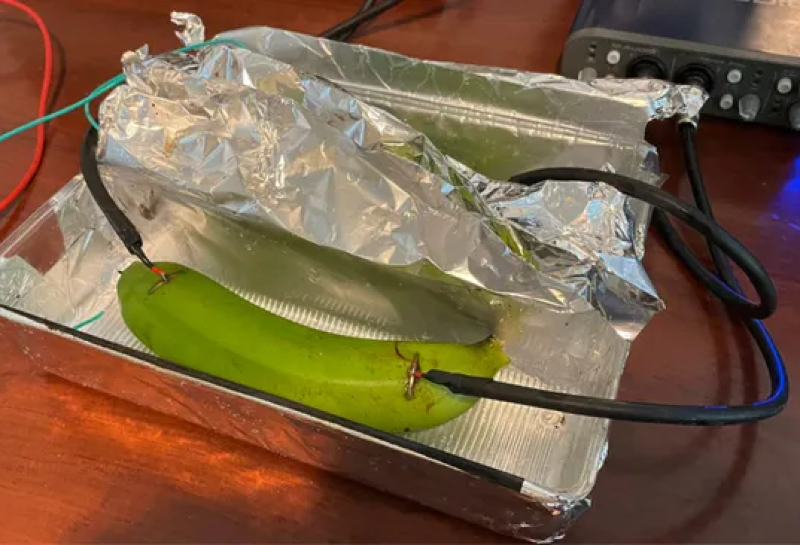
A moderator on diyAudio set up an experiment to determine whether listeners could differentiate between audio run through pro audio copper wire, a banana, and wet mud. Spoiler alert: the results indicated that users were unable to accurately distinguish between these different 'interfaces.' Pano, the moderator who built the experiment, invited other members on the forum to listen to various sound clips with four different versions: one taken from the original CD file, with the three others recorded through 180cm of pro audio copper wire, via 20cm of wet mud, through 120cm of old microphone cable soldered to US pennies, and via a 13cm banana, and 120cm of the same setup as earlier. Initial test results showed that it’s extremely difficult for listeners to correctly pick out which audio track used which wiring setup. (via Tom's Hardware)
Hi everyone! Mathew Ingram here. I am able to continue writing this newsletter in part because of your financial help and support, which you can do either through my Patreon or by upgrading your subscription to a monthly contribution. I enjoy gathering all of these links and sharing them with you, but it does take time, and your support makes it possible for me to do that. I also write a weekly newsletter of technology analysis called The Torment Nexus.
This 14-year-old designed emergency shelters using techniques from origami
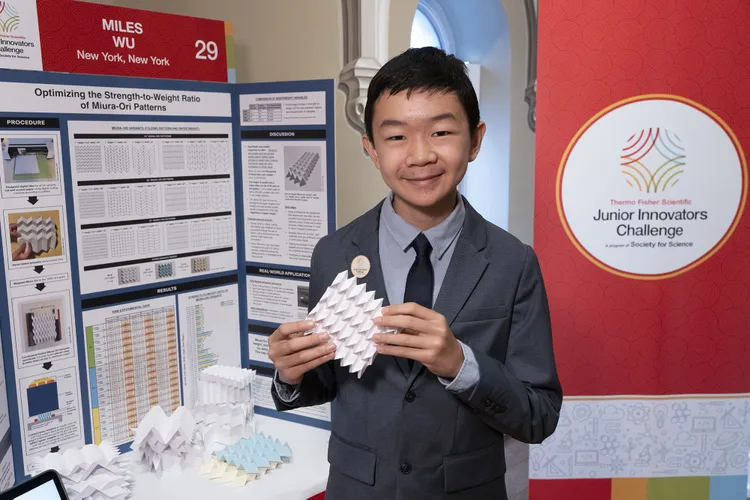
Sitting in his family’s living room in New York City, 14-year-old Miles Wu was astonished to find that a simple piece of paper could hold 10,000 times its own weight. For a total of more than 250 hours, Wu had diligently designed, folded and tested copious variations of the technique — a series of tessellating parallelograms that can fold or unfold — to find one that could be used to build deployable shelters for emergency situations. Wu had always been fascinated with the ancient art of origami, but he really began indulging in it as a hobby about six years ago. Although origami dates back centuries, the fields of engineering, medicine, mathematics and architecture didn’t develop a profound interest in it until the 1960s. Origami has been used in the design of medical devices, such as stents and catheters, and self-assembling robots. (via the Smithsonian)
They are husband and wife but they need translation software to understand each other

For many spouses, smartphone use is a point of tension. But for David Duda and Hong Liang, a couple in New Haven, Conn., the technology is so essential that they own eight external battery packs. If their phones die, so does their ability to communicate.Mr. Duda, 62, speaks English, and Ms. Liang, 57, speaks Mandarin. They rely on a free smartphone app from Microsoft, called Translator, to render a text translation of what they say.Though they have been married for three years, they walked down the street on a recent December afternoon with their arms linked like newlyweds. This was out of necessity as much as affection: One of them chatted and navigated while the other’s eyes were locked on the phone, reading translated remarks.When Mr. Duda told a joke, he held his chortle for a few seconds until Ms. Liang was able to read it. (via the NYT)
When the freestyle skiing course isn't long enough or hard enough for you

Acknowledgements: I find a lot of these links myself, but I also get some from other places that I rely on as "serendipity engines," such as The Morning News from Rosecrans Baldwin and Andrew Womack, Jodi Ettenberg's Curious About Everything, Dan Lewis's Now I Know, Robert Cottrell and Caroline Crampton's The Browser, Clive Thompson's Linkfest and Why Is This Interesting by Noah Brier and Colin Nagy. If you come across something you think should be included here, feel free to email me at mathew @ mathewingram dot com