Kentucky cops arrest man for riding a horse while drunk


The driver, Kentucky cops say, had just left a liquor store, smelled of alcohol, and was found “partially slumped over” the controls of his brown vehicle. As a result, Jorge Hernandez, 48, was arrested for galloping under the influence (GUI) through a residential neighborhood in Bowling Green. According to an arrest report, an officer spotted the sagging Hernandez atop a horse around 6 PM Thursday. When Hernandez began to ride on the sidewalk, the cop performed a traffic stop. Hernandez reportedly smelled of alcohol, had bloodshot eyes, and his speech was slurred. He told police that he had just left a liquor store and was returning home. Tied to the horse’s saddle was a liquor store bag, the report states. He was arrested for operating a non-motor vehicle under the influence of intoxicants. The paperwork describes his vehicle’s make and model as “other.” The vehicle’s year is listed as 2024 and its color as brown. The report does not indicate who took custody of the equine post-arrest. (via The Smoking Gun)
Ohio's "Serpent Mound" still fuels debate as America's most mysterious earthwork

Located in Adams County, Ohio, the ancient site features a massive, undulating serpent whose coiled tail and gaping jaws have stood as an impressive monument to the Buckeye State’s ancient past, prompting serious investigations by archaeologists that have spanned nearly two centuries. First documented in the landmark work Ancient Monuments of the Mississippi Valley in 1848 by Ephraim Squier and Edwin Davis, the famous site features many peculiarities, including the large oval-shaped feature positioned within the serpent’s open mouth. “This oval is formed by an embankment of earth, without a perceptible opening,” Squier and Davis wrote, noting that the feature “is perfectly regular in outline” and “slightly elevated” while also containing an area of “large stones, much burned once, [that] existed in its center.” (via The Debrief)
How the story of a giant squid attack became an urban legend
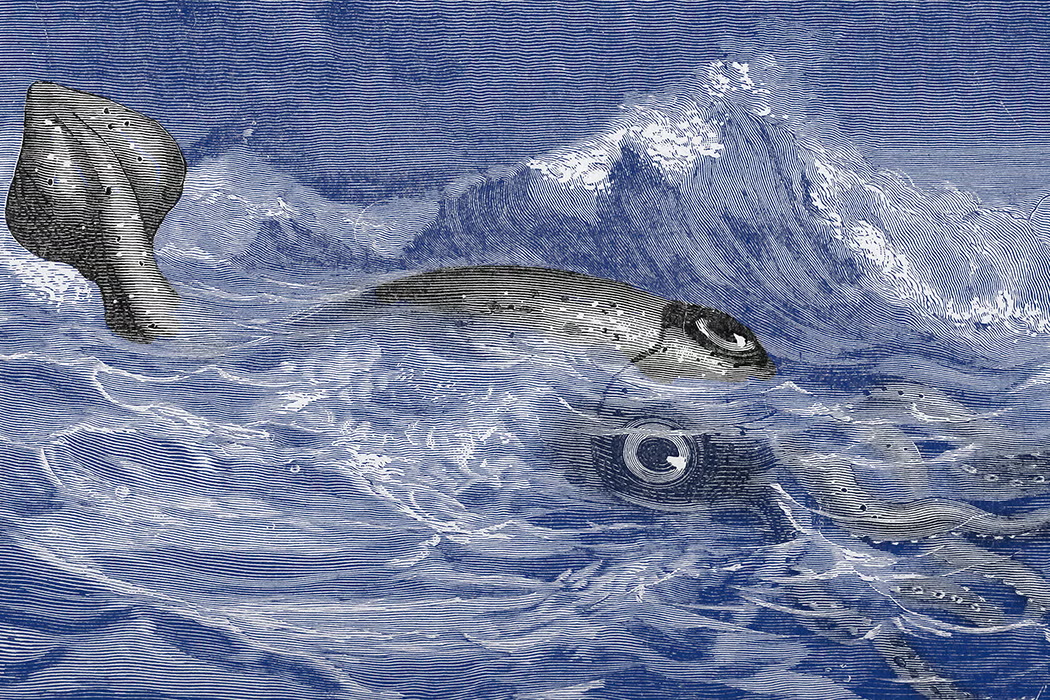
For more than half a century, the story of a giant squid attack on the survivors of a sunken troop ship during World War II has made the rounds. It sounded plausible because Architeuthis dux, to give the squid its formal name, was shrouded in mystery and fantasy. This much seems factual: Second Lieutenant R.E.G. Cox of the Indian Army survived the sinking of the troop ship Britannia in March 1941. He and others clung to a raft for five days before being rescued. One of the men was lost at sea after an attack by a sea creature of some kind. There’s the rub. Nineteen years after the incident, Cox claimed that during his time in the water, a giant squid took one man off the raft, and then attacked him. Luckily, the squid released its grip on Cox… Cox would later point to scars he had, as well as two contemporary newspaper articles, as proof of the encounter. (via JSTOR Daily)
Hi everyone! Mathew Ingram here. I am able to continue writing this newsletter in part because of your financial help and support, which you can do either through my Patreon or by upgrading your subscription to a monthly contribution. I enjoy gathering all of these links and sharing them with you, but it does take time, and your support makes it possible for me to do that. I also write a weekly newsletter of technology analysis called The Torment Nexus.
No one knows whether there was someone named Homer or who actually wrote The Iliad
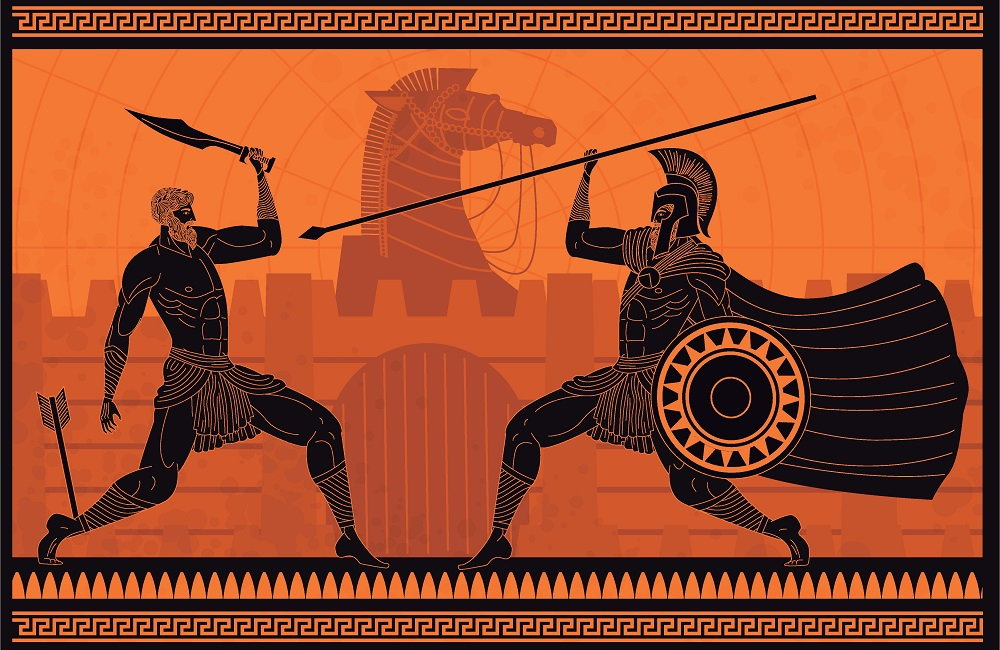
The Homeric Question concerns the doubts and consequent debate over the identity of Homer, the authorship of the Iliad and Odyssey, and their historicity (especially concerning the Iliad). The subject has its roots in classical antiquity and the scholarship of the Hellenistic period, but has flourished among Homeric scholars of the 19th, 20th, and 21st centuries. Now most classicists agree that, whether or not there was ever such a composer as Homer, the poems attributed to him are to some degree dependent on oral tradition. An analysis of the structure and vocabulary of the Iliad and Odyssey shows that the poems contain many regular and repeated phrases; indeed, even entire verses are repeated. Thus according to the theory, the Iliad and Odyssey may have been products of oral-formulaic composition, composed on the spot by the poet using a collection of memorized traditional verses and phrases. (via Wikipedia)
English used to have a host of words to refer to two people like wit, unker and git

Which word would you use to refer to yourself? I, presumably, in the singular. And how about you and a group of people? We, of course, in the plural. But how about you and one other person? In modern English, there is no word for that. You would probably just use we or the two of us. But more than 1,000 years ago, you would have said: "wit". This term, once also used affectionately to describe the closeness between two people, is one of many personal pronouns that have been lost or transformed amid huge social and political change over the centuries. "Wit" means "we two" in Old English, a Germanic language spoken in England until about the 12th Century, which evolved into the English we speak today. Now completely lost, "wit" was part of an extinct group of pronouns used for exactly two people: the dual form, which also includes "uncer" or "unker" ("our" for two people) and "git" ("you two"). (via the BBC)
If the honeybees start doing this you should probably start running

Acknowledgements: I find a lot of these links myself, but I also get some from other places that I rely on as "serendipity engines," such as The Morning News from Rosecrans Baldwin and Andrew Womack, Jodi Ettenberg's Curious About Everything, Dan Lewis's Now I Know, Robert Cottrell and Caroline Crampton's The Browser, Clive Thompson's Linkfest and Why Is This Interesting by Noah Brier and Colin Nagy. If you come across something you think should be included here, feel free to email me at mathew @ mathewingram dot com