His Uber driver had never been tobogganing so he took him


When Dave Nguyen started chatting with his Uber driver days before Christmas, he discovered that he had never been tobogganing in his life, so something had to change. It was a snowy night downtown, and Nguyen had just finished his company Christmas party at Giovanni’s Restaurant. But Nguyen felt stranded and could not find an Uber for the life of him, so he walked 20 minutes toward the intersection of Wellington and Somerset streets. “Then, lo and behold, an Uber accepted the ride.” The driver was Chance Niyomugabo. The snowy Ottawa night proved a jump-off point for the bromance, which led to the logical place of winter activities that turn snow piles into joy and adventure. Niyomugabo had been in Canada for eight years after arriving from Rwanda. In that time, he had never tried anything wintry; not skiing, not tobogganing. Nguyen, who was off for two weeks because the martial arts studio he worked at as an instructor was closed, asked if Niyomugabo wanted to go tobogganing. (via the Ottawa Citizen)
This 7,000-year-old underwater wall raises questions about lost-city myths
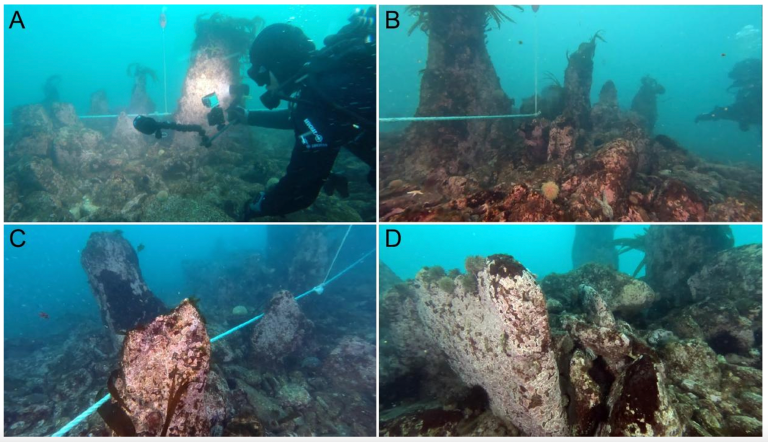
"This can’t be natural,” thought Yves Fouquet. The geologist was studying a newly produced undersea depth chart, generated with LIDAR technology, for the waters off Finistère — the jagged western tip of France, where the land pushes stubbornly into the Atlantic. What caught his eye was a ruler-straight line, 120 meters (394 feet) long, cutting cleanly across an underwater valley. Nature, as a rule, doesn’t do straight lines. Fouquet’s hunch proved correct, though confirmation had to wait until the following winter, when seaweed die-off had created visibility. That seasonal window allowed marine archaeologists to dive into the cold, choppy waters just off the tiny Breton island of Sein, and map what lay below. Nine meters (30 feet) beneath the waves, they found it: a vast, man-made stone wall, averaging 20 meters (66 feet) wide and two meters (6.6 feet) tall. (via Big Think)
She was born with three fingers but her brain knew what having five fingers would feel like
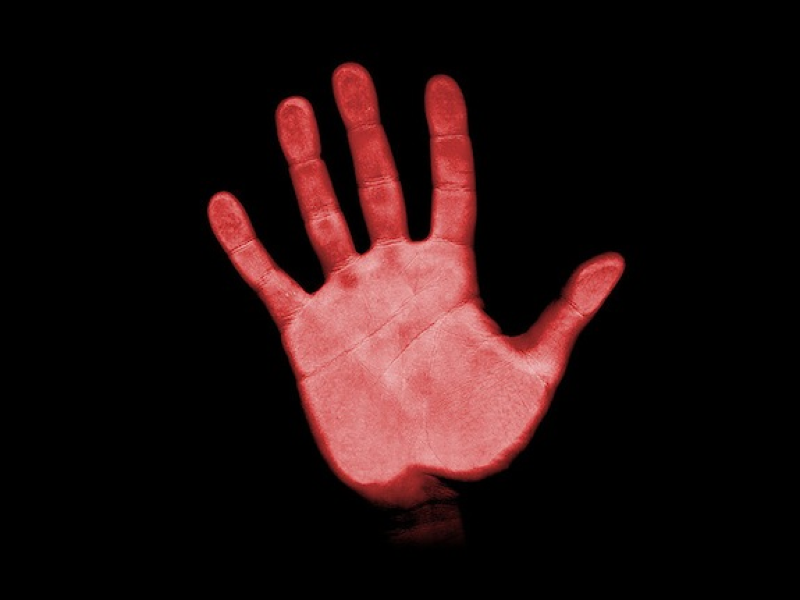
A woman, named RN in the case study, was born with three fingers on her right hand. When RN was 18, she got into a car accident and broke several of the bones in that right hand, and six months later doctors decided to amputate it. After the amputation, RN reported having a painful phantom hand. In other words, she felt as though there was a hand there, and that ghostly hand was causing her pain. Phantom limbs are extremely common in amputees. Cutting off a foot or arm or leg might remove the physical entity from the person, but it doesn’t remap the brain. RN’s case is interesting because the hand that was amputated only had three fingers. One would expect that her phantom limb would be a replica of the hand she lost. But that’s not what happened. RN reported feeling five fingers on her phantom hand. (via the Smithsonian)
Hi everyone! Mathew Ingram here. I am able to continue writing this newsletter in part because of your financial help and support, which you can do either through my Patreon or by upgrading your subscription to a monthly contribution. I enjoy gathering all of these links and sharing them with you, but it does take time, and your support makes it possible for me to do that. I also write a weekly newsletter of technology analysis called The Torment Nexus.
These thieves would have gotten away with it if they hadn't said Frisco
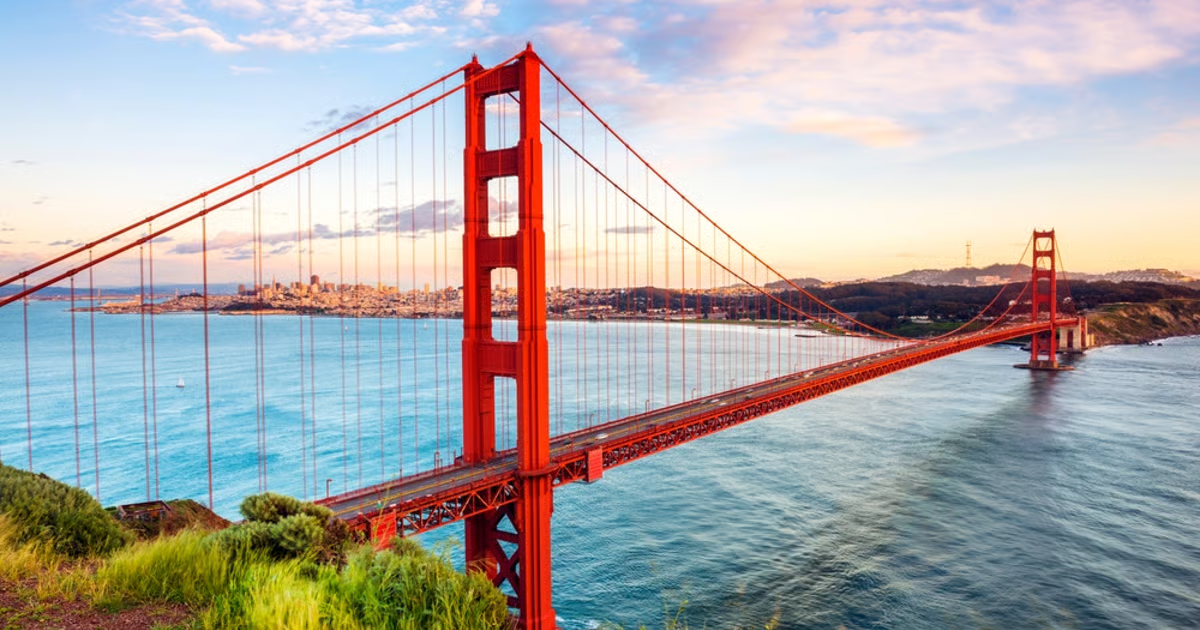
Promontory, Utah is home to a “pre-release facility” — a prison-like institution where inmates are held pending their presumptive pardon. But on September 3, 1995, officers found something amiss during roll call: two inmates were missing. Anthony Scott Bailey and Eric Neil Fischbeck had apparently climbed under a fence the night before and simply walked to freedom. But their time on the run wasn't very long. Bailey and Fischbeck made their way to the San Francisco Bay Area and ended their journey on the campus of the University of California, Berkeley, just across the bay from San Fran itself. And there, they took a nap out in public. That drew the attention of campus police, which came up to the two men and asked them who they were, where they were from, and what they were doing there. The pair could have said virtually anything and, at worst, would have been sent on their way. But they made a fundamental mistake. (via Now I Know)
There's a Welsh connection to the rooster on every box of Kellogg's Corn Flakes

You've probably stared at it whilst eating your breakfast every morning without even realising. We're talking about the world famous cockerel on the side of every box of Kellogg's Corn Flakes. No, not the fact that he's called Cornelius - which, admittedly, not a lot of people know about - we're talking about the fact he's actually Welsh. Renowned harpist and three times National Eisteddfod winner Nansi Richards crossed paths with American entrepreneur Will Kellogg whilst on a tour of the States, around about the time he happened to be looking for a new way to market his firm's decision to switch from selling cereal in sacks to individual cardboard boxes. Legend has it that she suggested using the sunrise serenading farmyard bird because cockerel in Welsh — ceiliog — sounded a lot like Kellogg. And so taken was the man that he decided to give the cockerel the red, white and green colours of the Welsh flag. (via Wales Online)
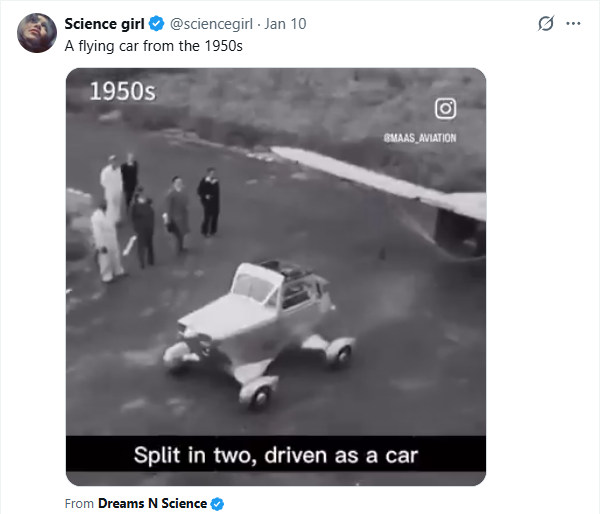
A prototype flying car from the 1950s
Acknowledgements: I find a lot of these links myself, but I also get some from other places that I rely on as "serendipity engines," such as The Morning News from Rosecrans Baldwin and Andrew Womack, Jodi Ettenberg's Curious About Everything, Dan Lewis's Now I Know, Robert Cottrell and Caroline Crampton's The Browser, Clive Thompson's Linkfest and Why Is This Interesting by Noah Brier and Colin Nagy. If you come across something you think should be included here, feel free to email me at mathew @ mathewingram dot com