He wrote a murder mystery and now his death has become one


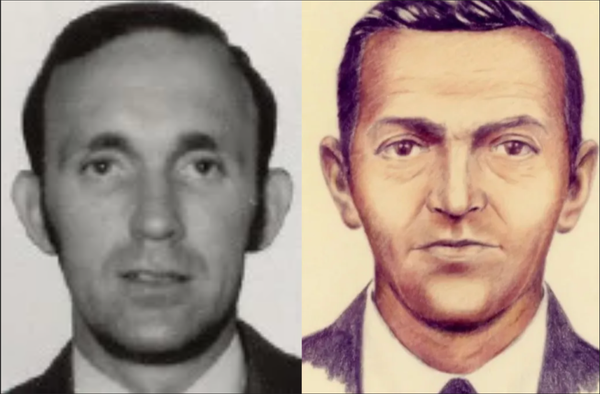
More than halfway through the crime novel he wrote, Robert Fuller describes the frustration of a detective locked in a mystery. He rubbed the back of his neck. “Now what?” he said aloud. It has been a week since someone made their way into Fuller’s assisted living apartment in Potomac, Maryland, police say, and fatally shot the 87-year-old millionaire in the head. Authorities released surveillance video Friday of a suspect walking on the facility’s grounds the morning of Feb. 14 around the time Fuller was killed. The video shows the back of a slender person wearing dark pants with long dark hair flowing over a yellowish checkered shirt. Investigators hope someone will recognize the shirt or the person’s gait, produced as if they’re favoring one foot. Detectives don’t know if the person depicted is a man or woman, was acting alone or what their motive was. (via MSN)
A colonel in the Mexican revolution was born female but lived as man for 70 years

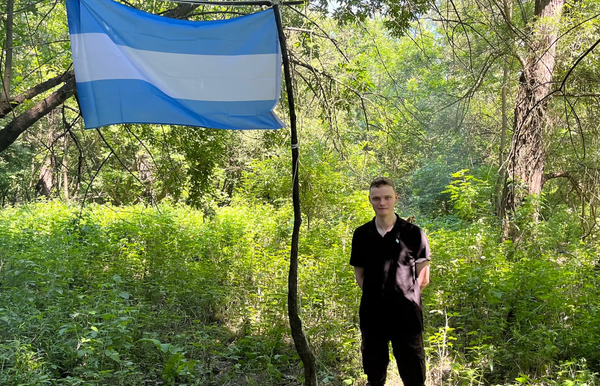
Amelio Robles Ávila was a colonel during the Mexican Revolution. Assigned female at birth, Robles lived openly as a man from age 24 until his death at age 95. From a young age, Robles showed an interest in activities that were considered masculine, learning to tame horses and handling weapons, and becoming an excellent marksman and rider. Robles gained the respect of peers and superiors as a capable military leader, and was eventually given his own command. According to historians, Robles adopted a male identity not as a survival strategy but because of a strong desire to be a man. Robles's male identity was accepted by family, society, and the Mexican government. According to a former neighbor, if anyone called Robles a woman or Doña (an honorific for women, similar to English Lady), he would threaten them with a pistol. (via Wikipedia)
Experts still aren't sure how chickens made it to South America

There’s an enormous problem with the first Spanish explorers finding domestic chickens in South America: The first humans came to the Americas about 15,000 years ago. All of this scientific work points to human migrations from Siberia to Beringia around 24,000 years ago. As the last ice age began to end and gaps opened up in the glacial wall to the south, the Beringians traveled south and populated the Americas. By 10,000 years ago, the glaciers had melted so much that Beringia flooded and Siberia and Alaska became separated by water. “But what about the chickens?” you ask. Chickens were domesticated 9000 years ago. Beringia disappeared under the ocean 10,000 years ago, cutting off Asia from the Americas. Yet when the Pizarro arrived in Peru in 1532, he found chickens happily clucking, pecking, and scratching! (via Randy's Chicken Blog)
Hi everyone! Mathew Ingram here. I am able to continue writing this newsletter in part because of your financial help and support, which you can do either through my Patreon or by upgrading your subscription to a monthly contribution. I enjoy gathering all of these links and sharing them with you, but it does take time, and your support makes it possible for me to do that. I also write a weekly newsletter of technology analysis called The Torment Nexus.
An Amazon driver got stuck in the rising tide on a dangerous footpath to Foulness Island

HM Coastguard Southend said it was called out to reports on Sunday of an Amazon delivery vehicle on The Broomway, at Great Wakering, Essex, after the driver had been following a GPS route to Foulness Island. The Broomway is a route across flat sands from the shore near Southend-on-Sea to Foulness Island and is home to a Ministry of Defence firing range. The route, said to be 600 years old and covering six miles (10km), is managed by Essex Highways. Qinetiq - a global defence and security company which manages the firing range - describes the path as a "unique right of way which requires both caution and specialist knowledge to negotiate safely". The full route is not suitable for vehicles, and people are advised to only walk there accompanied by a guide who knows the mudflats. According to parish council records, 100 people have died on The Broomway, with the last known death in 1919. (via the BBC)
No one really knows where the American anthem Yankee Doodle came from
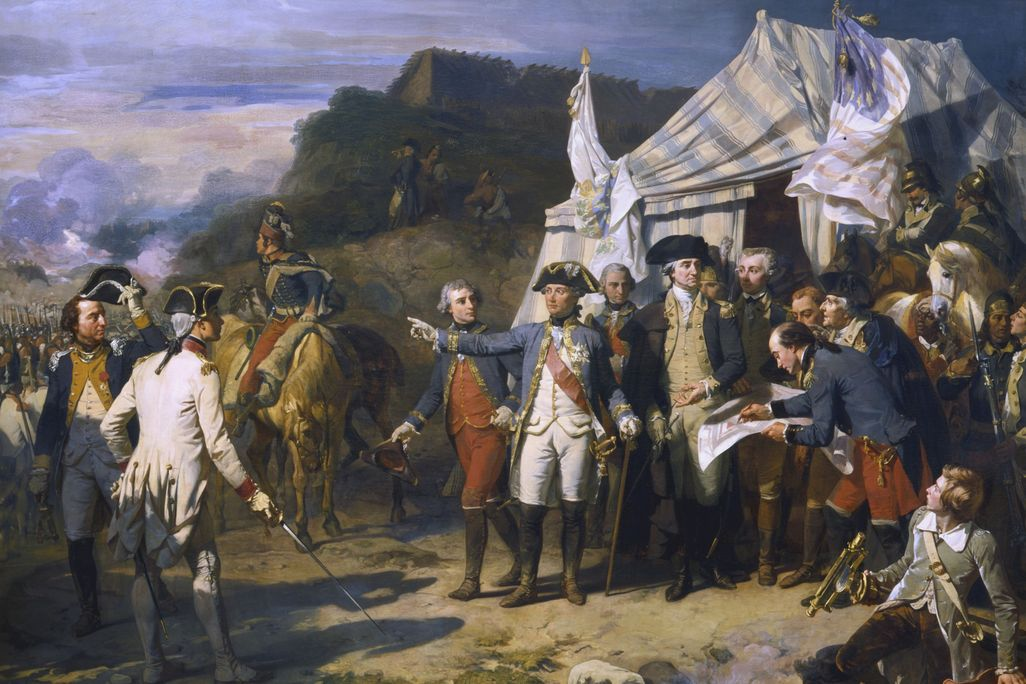
In the fall of 1781, American soldiers clashed with the British in Yorktown, Virginia. As the British marched out to surrender after this final battle of the American Revolution, they reportedly refused to look at the Continental soldiers, instead facing only the French. According to legend, the famous French general the Marquis de Lafayette ordered the Continental fife and drum corps to play “Yankee Doodle,” a song that the British had originally used to mock American colonists. Yankee Doodle is one of America’s earliest known protest songs. The earliest known mention of the words “pony,” “feather” and “macaroni” in a rendition of “Yankee Doodle” appears in English writer James Orchard Halliwell-Phillipps The Nursery Rhymes of England, published in 1842. “It’s a folk song by definition,” says Hildebrand, “meaning it just sort of came from the people somewhere." Over the centuries, historians have proposed no fewer than 16 explanations for the creation of “Yankee Doodle.” (via the Smithsonian)
Her date didn't respond so she created a video game to help him decide

Acknowledgements: I find a lot of these links myself, but I also get some from other places that I rely on as "serendipity engines," such as The Morning News from Rosecrans Baldwin and Andrew Womack, Jodi Ettenberg's Curious About Everything, Dan Lewis's Now I Know, Robert Cottrell and Caroline Crampton's The Browser, Clive Thompson's Linkfest and Why Is This Interesting by Noah Brier and Colin Nagy. If you come across something you think should be included here, feel free to email me at mathew @ mathewingram dot com