He says he is the ruler of a new country on the Danube river

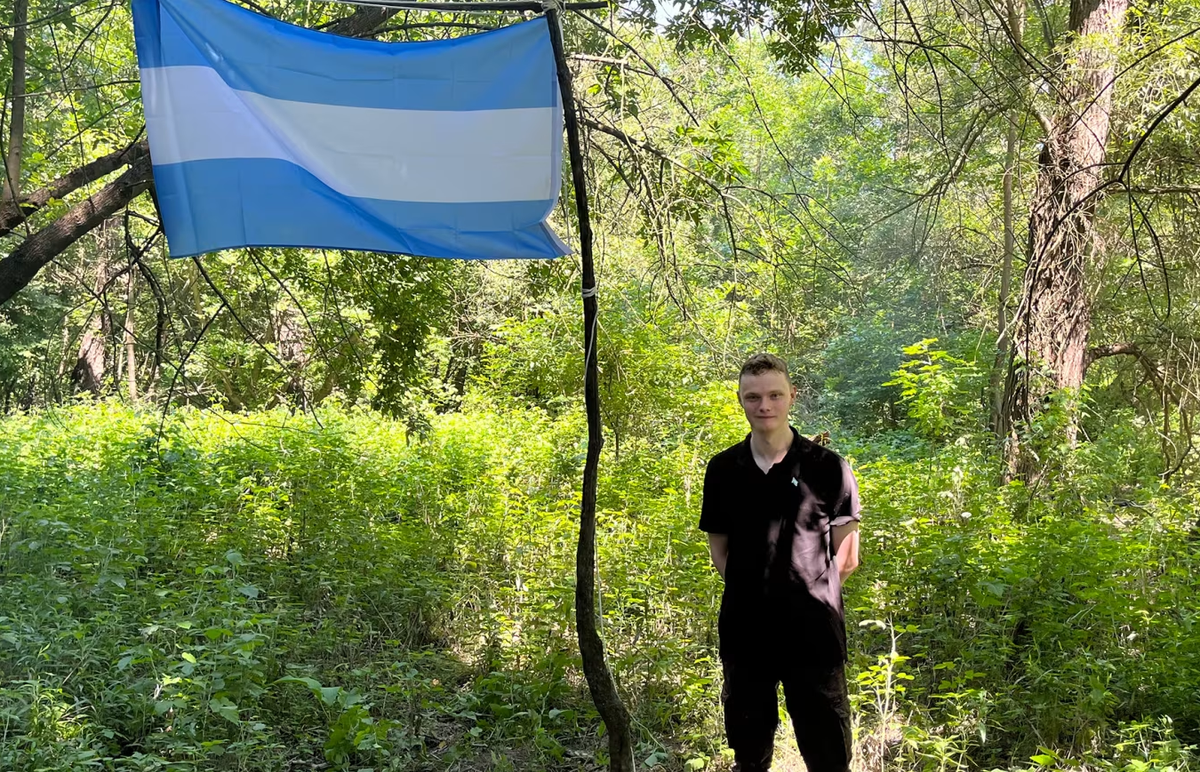
“Terra nullius.” Under international law, this Latin phrase meaning “nobody’s land” describes an area of land unclaimed by any sovereign nation-state. In an age where nearly every inch of the world’s landmass has been mapped, examples of terra nullius are exceedingly rare. Along the Croatian-Serbian border, a drawn-out dispute along the River Danube has resulted in claims of terra nullius around at least four small pockets of land. The boundary dispute began in 1947, after World War II, and flared again in the 1990s when attempts were made to restore the historical separation between Serbia and Croatia. Serbia claims its border runs down the center of the Danube; Croatia claims a different border, based on 19th-century land ownership maps, when the river ran a different course. 20-year-old Daniel Jackson, a dual British and Australian citizen, is the self-declared president of the “Free Republic of Verdis,” or Pocket 3, as it’s labeled on international maps. The microstate he lays claim to is located on the sandy shores of an uninhabited, 124-acre patch of land along the Danube. (via CNN)
It's not looking good for a cow whose fate was sold off by a performance art group
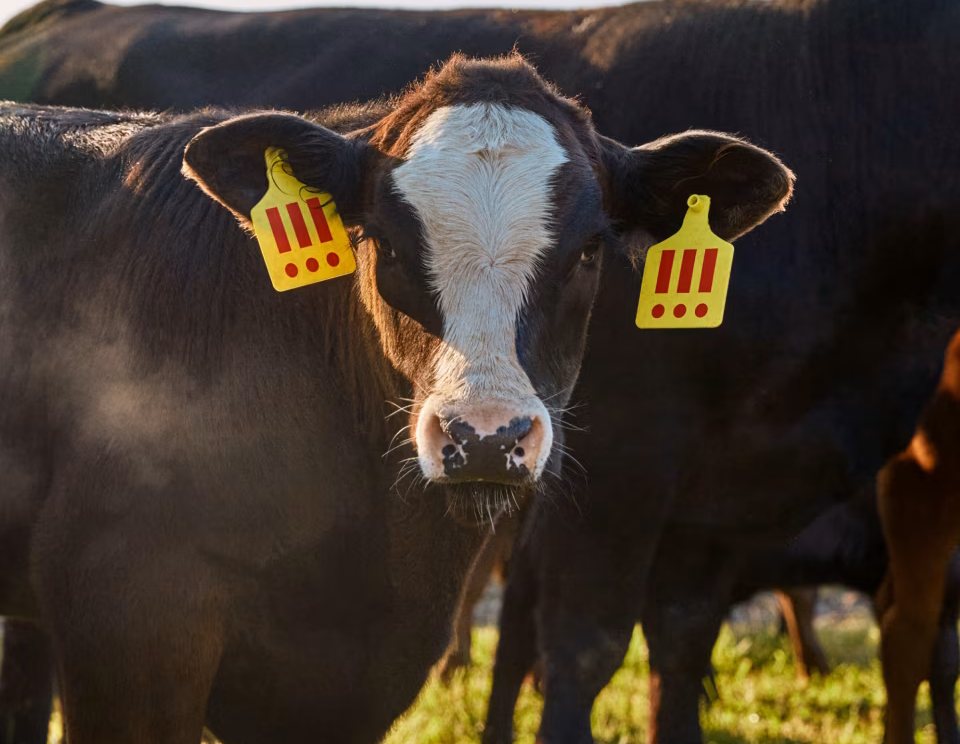
Two years ago, a prankster art collective in Brooklyn known as MSCHF sold off shares in a black calf they nicknamed Angus, pledging to butcher him into burgers and leather handbags unless his arty stakeholders chose to save him. On March 13, the fully grown bull’s fate will be decided, and it’s looking grim.Only around a third of Angus’s 404 owners have plied their tokenized shares of the animal into the artists’ online Remorse Portal, signifying their wish to save his life. If Angus doesn’t cross the 50% mark by Friday, he’ll be butchered and shipped out as 1,200 hamburger patties and four leather handbags designed by the group to look like meat. The art world is typically accustomed to shock art, but “Our Cow Angus” is stirring up polarizing debates among collectors and on social forums at a level not seen since British artist Damien Hirst displayed rotting cow heads as art in the 1990s. Animal-rights activists are decrying MSCHF’s life-or-death project as a barbaric stunt while museum curators hail it as a relevant critique of consumer dissonance about beef. (via the WSJ)
Static electricity remains surprisingly mysterious even to scientists
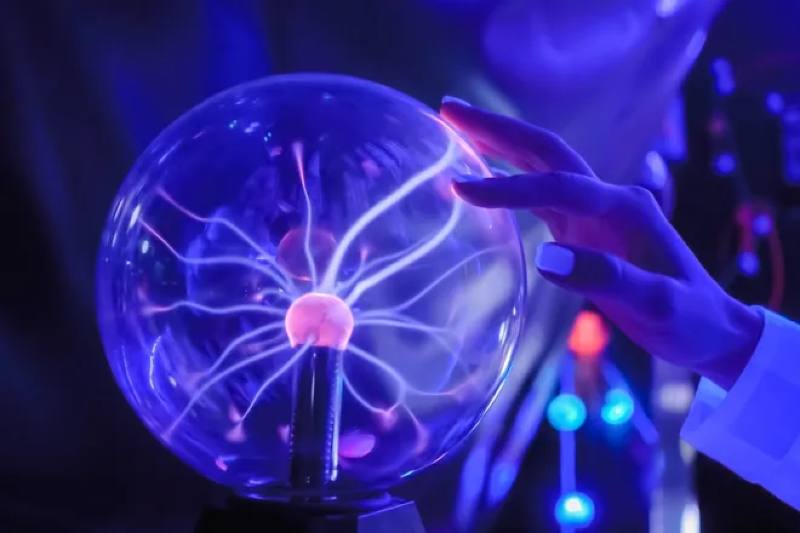
Unlike a flowing electric current, static charge can sit on surfaces and build up until it suddenly discharges as a shock, or even a bolt of lightning. While we’ve known about this force since the ancient Greeks rubbed amber against fur, we are only now realizing its profound impact on the workings of our universe. As ancient volcanic dust particles collided and exchanged charge, they generated shocks that accelerated key chemical reactions. A 2023 study published in Nature proposed that lightning in volcanic ash clouds could have helped drive reactions forming the first ingredients for life. Given its role in life, weather, and planetary formation, it is striking how little we still understand about how static electricity works at the smallest scales. “When you really look at what is going on, you see that it is an exceptionally complex phenomenon,” Daniel Lacks, a chemical engineer at Case Western Reserve University, told Discover. (via Discover Magazine)
Hi everyone! Mathew Ingram here. I am able to continue writing this newsletter in part because of your financial help and support, which you can do either through my Patreon or by upgrading your subscription to a monthly contribution. I enjoy gathering all of these links and sharing them with you, but it does take time, and your support makes it possible for me to do that. I also write a weekly newsletter of technology analysis called The Torment Nexus.
He was arrested for smuggling but it wasn't drugs it was thousands of giant ants
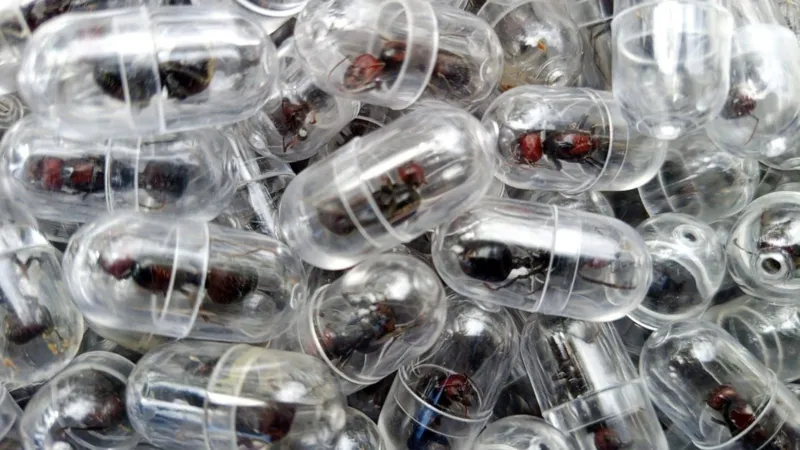
A Chinese national has been arrested in Kenya's main airport accused of attempting to smuggle more than 2,000 queen garden ants out of the country. Zhang Kequn was intercepted during a security check at Jomo Kenyatta International Airport (JKIA) in the capital Nairobi after authorities discovered a large consignment of live ants in his luggage bound for China. He has yet to respond to the accusation but investigators said in court that he was linked to an ant-trafficking network that was broken up in Kenya last year. The ants are protected by international bio-diversity treaties and their trade is highly regulated. Last year, the Kenya Wildlife Service (KWS) warned of a growing demand for garden ants – scientifically known as Messor cephalotes - in Europe and Asia, where collectors keep them as pets. A state prosecutor told the court on Wednesday that Zhang had packed some ants in test tubes, while others were concealed in tissue paper rolls hidden in his luggage. (via the BBC)
Scientists have revived the brain of a cryogenically frozen mouse for the first time
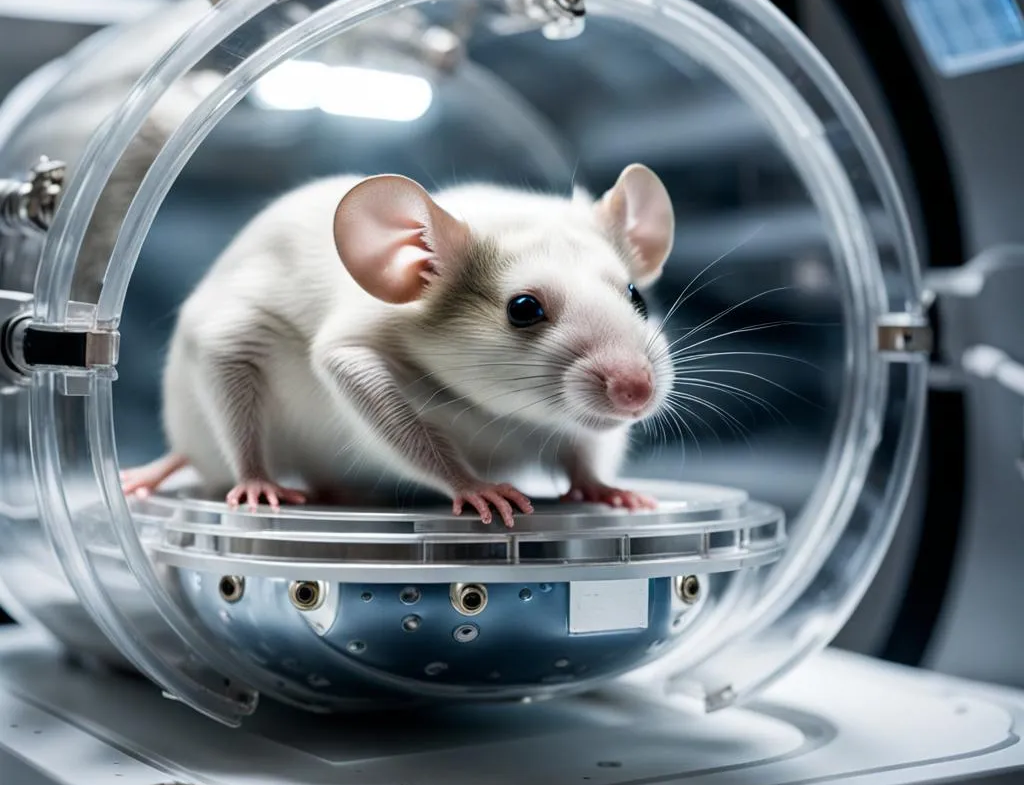
A research team from Friedrich-Alexander University Erlangen-Nuremberg (Germany) has achieved a milestone in the field of cryopreservation: for the first time, they have managed to restore functional activity in adult mouse brain tissue after it had been vitrified at temperatures of -196 °C. The study, published in the journal Proceedings of the National Academy of Sciences (PNAS), shows that the hippocampus —the region of the brain responsible for memory and learning— can undergo a vitrification process, be stored for days, and, once thawed, recover its structure, its metabolism and, most importantly, its ability to transmit electrical signals between neurons. When biological tissue is frozen using conventional methods, the water it contains turns into ice. As ice crystals form, they break cellular structures, damage membranes, and destroy connections between neurons. It is as if, when freezing a computer, the ice were to break all the wires and connections in its circuits. (via La Brujula Verde)
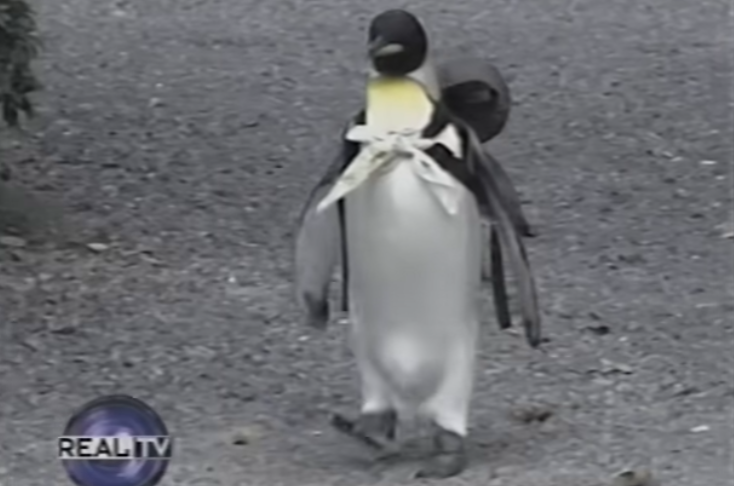
Lala was a giant penguin in Japan who went to town and got his own groceries
Acknowledgements: I find a lot of these links myself, but I also get some from other places that I rely on as "serendipity engines," such as The Morning News from Rosecrans Baldwin and Andrew Womack, Jodi Ettenberg's Curious About Everything, Dan Lewis's Now I Know, Robert Cottrell and Caroline Crampton's The Browser, Clive Thompson's Linkfest and Why Is This Interesting by Noah Brier and Colin Nagy. If you come across something you think should be included here, feel free to email me at mathew @ mathewingram dot com