French spy was born a man but lived their life as a woman

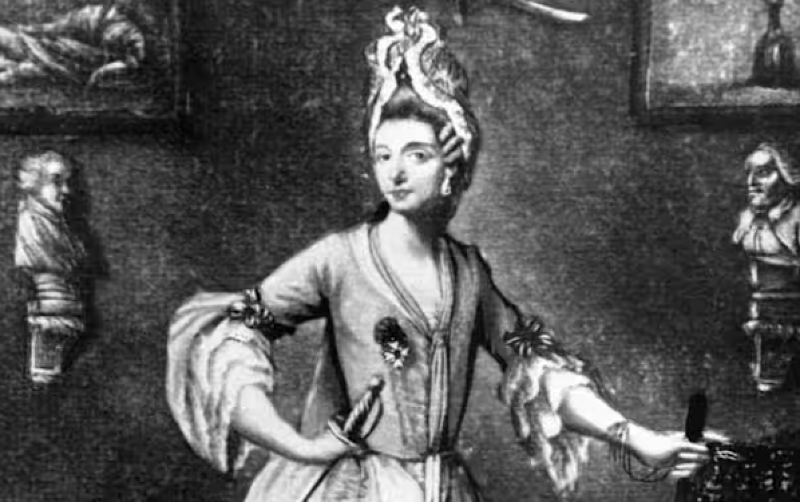
The Chevalier d’Éon was born Charles d'Eon de Beaumont on October 5, 1728, and would go on to be a French soldier, spy, diplomat and in mid-life, a woman named Charlotte. D’Eon’s military exploits in the Seven Years’ War, role in negotiating the Paris Peace Treaty, and daring service as a spy for French King Louis XV was overshadowed by speculation about their gender. Born biologically male, the Chevalier was legally declared female by French King Louis XVI and English courts and spent the last 33 years of their life as a woman. This famous figure blackmailed kings, fenced in dresses and courted controversy throughout their life — and after death. D’Eon was born to a noble family in Tonnerre, Burgundy. In 1756, d’Eon was recruited for the Secret du Roi, or King's Secret, a network of spies working for French King Louis XV. D’Eon was sent to Russia in two capacities: Officially, as Secretary of the Embassy in St. Petersburg. Secretly, the King tasked d’Eon with gathering intelligence in the court of Empress Elizabeth in a bid to put a Frenchman on the Polish throne. (via History.com)
The fate of a man found dead in a wetsuit in a remote lake in Wales remains a mystery
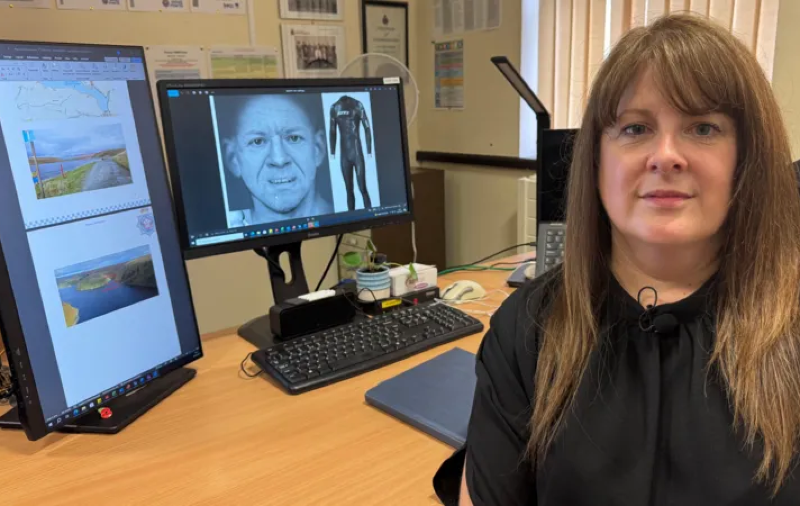
Detectives hope a new digital recreation of a man's face could help them work out who he was - 18 months on from his highly decomposed body being found in a remote mid Wales reservoir. The discovery of the man, who was wearing nothing but a XL Zone3 Agile wetsuit, sparked extensive police searches and international appeals, but no loved ones have ever come forward. Specialists at a Liverpool university have now used photographs, dental records and CT scans of the man's skull to reveal he had "striking facial features", including an overbite. Det Insp Anthea Ponting of Dyfed-Powys Police said she hoped the new images might finally solve the "unusual" mystery of the man in the wetsuit. A lone walker had spotted the man's body floating a few metres out from shore at Claerwen Reservoir, the largest and most remote of a series of reservoirs in the picturesque Elan Valley in Powys. Despite the area being 20km (12 miles), from the nearest town, with no public transport service, no clue suggesting how the man got there has been uncovered either. (via the BBC)
The Great Oil Sniffer Hoax cost a French company hundreds of millions in the 1970s
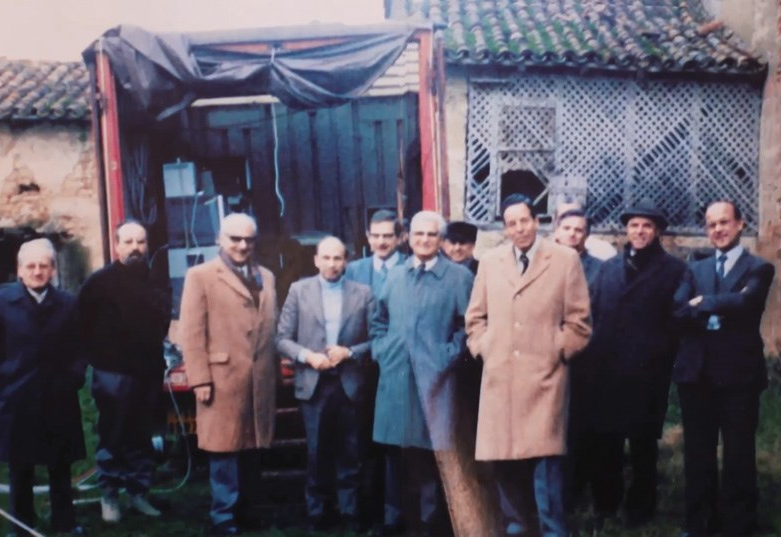
In France, during the late 1970s, two eccentric inventors claimed they could directly detect oil in the subsurface from an exceptional device mounted on board an airplane, resulting in one of the most famous frauds in petroleum exploration history. The fraud had great media and political impact in France at that time, becoming popularly known as “L’affaire des avions renifleurs,” or “The Great Oil Sniffer Hoax.” In May 1976, Elf-Aquitaine signed a top-secret agreement with a company named “Fisalma” for the exclusive use of a supposedly revolutionary method of directly detecting oil in the subsurface from an airplane. The agreement was signed at the headquarters of the Union Bank of Switzerland in Zurich. Fisalma was a Panama-based company, representing the interests of two eccentric inventors: Alain de Villegas, a Belgian aristocrat and civil engineer, and his associate Aldo Bonassoli, an Italian TV repairman. (via the AAPG)
Hi everyone! Mathew Ingram here. I am able to continue writing this newsletter in part because of your financial help and support, which you can do either through my Patreon or by upgrading your subscription to a monthly contribution. I enjoy gathering all of these links and sharing them with you, but it does take time, and your support makes it possible for me to do that. I also write a weekly newsletter of technology analysis called The Torment Nexus.
More than 90 percent of the citric acid used as a food additive comes from black mold
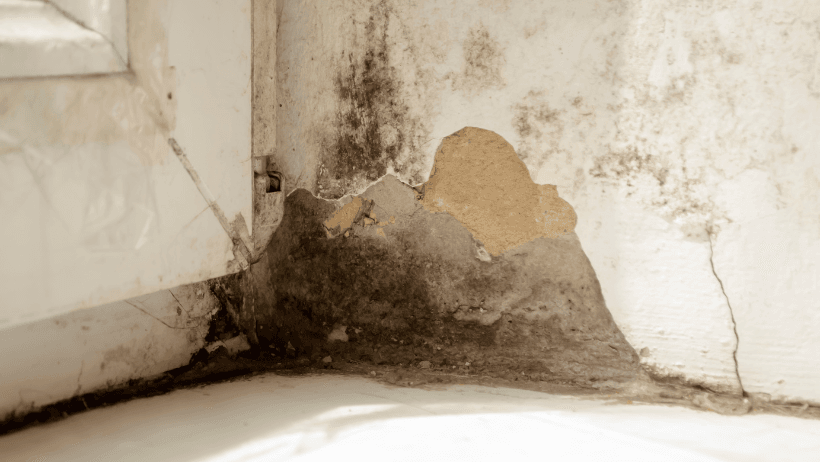
Citric acid naturally exists in fruits and vegetables. However, it is not the naturally occurring citric acid, but the manufactured citric acid (MCA) that is used extensively as a food and beverage additive. Approximately 99% of the world’s production of MCA is carried out using the fungus Aspergillus niger since 1919. Aspergilus niger is a known allergen. In 2016, 2.3 million tons of MCA were produced, predominantly in China, and approximately 70% is used as a food or beverage additive. We present four case reports of patients with a history of significant and repetitive inflammatory reactions including respiratory symptoms, joint pain, irritable bowel symptoms, muscular pain and enervation following ingestion of foods containing MCA. We believe ingestion of MCA may lead to a harmful inflammatory cascade and that its use as a food additive warrants further studies to document its safety. (via PubMed)
An artist used charcoal and chalk create an image on the ice of a frozen Alberta lake
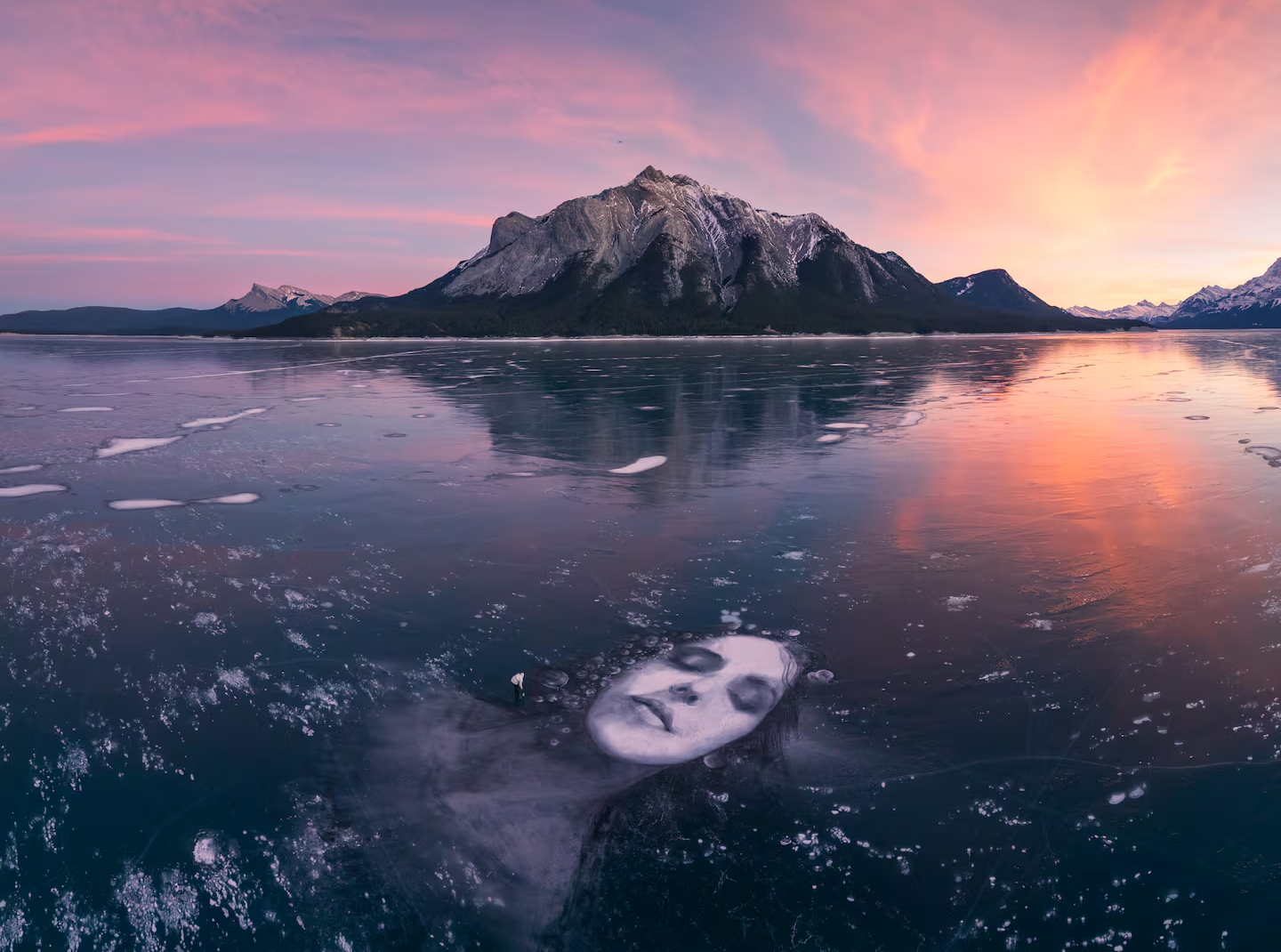
Although Abraham Lake’s methane bubbles have been photographed countless times, their unique beauty was recently captured in a different fashion by an artist from Finland. David Popa is known for his land art, also called earthworks, which he creates by spraypainting a landscape with charcoal and chalk. The result is often a portrait embedded in the earth, visible only from the sky until the elements wipe the canvas clear again. At Abraham Lake, a man-made reservoir and Alberta’s largest lake located in the Rockies, in January, Popa’s timeline to complete two different portraits was entirely dependent on an unusually windless forecast. The first piece, a 24-metre long portrait of a woman appearing to float in or surface from the frozen water, proved to be an overly ambitious concept. “I just couldn’t pull that off, technically, in a single day with the inconsistency that the weather was giving me," he said. “It was miraculous that it didn’t wipe away that night and I had a second day to complete it.” (via CTV)
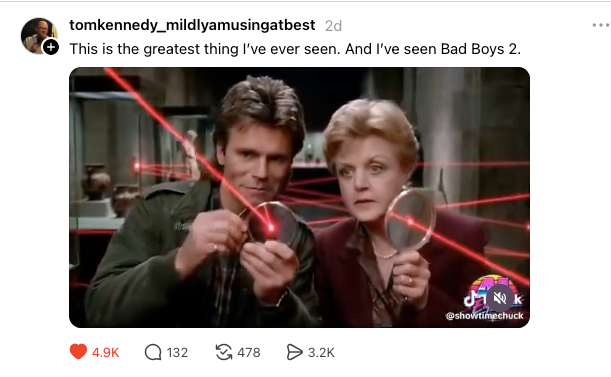
If MacGyver and Murder She Wrote became a single show
Acknowledgements: I find a lot of these links myself, but I also get some from other places that I rely on as "serendipity engines," such as The Morning News from Rosecrans Baldwin and Andrew Womack, Jodi Ettenberg's Curious About Everything, Dan Lewis's Now I Know, Robert Cottrell and Caroline Crampton's The Browser, Clive Thompson's Linkfest and Why Is This Interesting by Noah Brier and Colin Nagy. If you come across something you think should be included here, feel free to email me at mathew @ mathewingram dot com