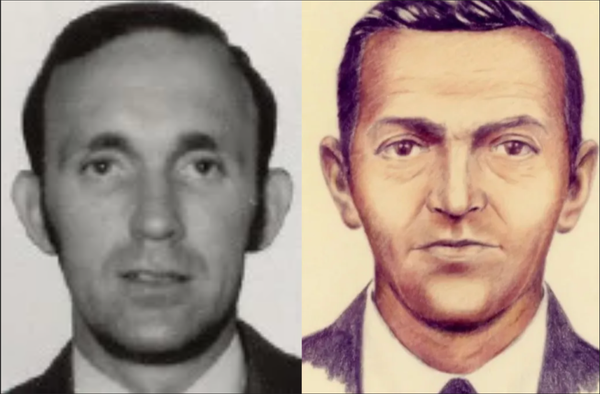
Did a celebrated scientist cover up the poisoning of a baby?


On April 18, 2005, a Canadian woman named Rani Jamieson gave birth to a healthy boy. Afterward, the doctor prescribed her Tylenol No. 3, which combines the mild opioid codeine with acetaminophen. In the next week, Tariq developed normally and surpassed his birth weight. But, at around 6:30 A.M. on April 29th, he stopped eating. Then he stopped breathing. The coroner’s office asked one of Canada’s leading pediatricians and toxicologists, Gideon Koren, to examine Tariq’s file. Koren had been running a program at the Hospital for Sick Children called Motherisk, which provided guidance for pregnant women and new mothers about drugs and breast-feeding. He was widely considered to be among the most capable research scientists in the field. Koren interpreted the toxicology report as a scientific revelation: if mothers with a certain genetic predisposition took even a mild dose of codeine, the amount of morphine that ended up in their breast milk could kill their children. (via The New Yorker)
The world's oldest joke is 3,000 years old and written in cuneiform etched in clay

Cuneiform, meaning “wedge-shaped,” was developed around 3000 B.C. It was likely created by the Sumerian people. They built one of the world’s first civilizations, which was located in what’s now Iraq. But these tablets weren’t strictly business—they also contained literature that lives on today, including the The Epic of Gilgamesh. And some chunks of Cuneiform-inscribed clay seem to bear traces of humor, even if it doesn’t make us chuckle today.Take a 4,000-year-old tablet found in Iraq in the late 19th century, which appears to record the world’s oldest bar joke. Written in Sumerian, it translates to: “A dog walks into a bar and says, ‘I cannot see a thing. I’ll open this one.’” The meaning has puzzled researchers for decades, but it might have something to do with a neglectful guard dog, according to a curator at the Penn Museum. (via Nautilus)
The Tower of London used to house a menagerie before it became a famous prison

When the King of France sent an African elephant to the Tower in 1255, Londoners flocked to see the ‘novel sight’ of the creature from the far side of the world. The elephant lived in a new 40-foot by 20-foot elephant house and was fed a diet of wine and prime cuts of meat. It is claimed to have died just a few years later after drinking too much wine. It was among the first animal inhabitants of the Tower of London. Twenty years earlier, Henry III had started a royal menagerie after being gifted three lions (possibly leopards) by the Holy Roman Emperor Frederick II. In 1277, Edward I created a permanent home for the Menagerie that became known as the Lion Tower. Between 1604 and 1606, James I expanded the animal enclosures, commissioned the building of an exercise yard, a viewing platform and a ‘greate cistern… for the Lyons to drinke and washe themselfes in.’ during the 18th century, the price of admission was three half-pence, or the supply of a cat or dog to be fed to the lions. (via Tower Hamlets Slice)
Hi everyone! Mathew Ingram here. I am able to continue writing this newsletter in part because of your financial help and support, which you can do either through my Patreon or by upgrading your subscription to a monthly contribution. I enjoy gathering all of these links and sharing them with you, but it does take time, and your support makes it possible for me to do that. I also write a weekly newsletter of technology analysis called The Torment Nexus.
Texas still has one remaining hoodoo shop where believers can buy magic potions

Once common in the big cities of the Deep South, places like Stanley Drug often started as regular compounding pharmacies but evolved over time, by popular demand, into purveyors of the sorts of candles, incenses, herbs and holy oils sacred to America’s hoodoo tradition. “Friends and family had always practiced this but I just didn’t know,” says Stanley’s general manager Stephanie May. “Keeping a bowl of lemons by your front door because it protects you is a hoodoo thing. Those bottle trees? Those are to capture evil spirits. And if you drive through Mississippi now you’ll see old TV tubes sitting out in the yard or up in trees. Same thing—to capture evil spirits. Blue around windows and doors? That’s for protection. It’s all around you and you just don’t see it. People are dabbling and you just don’t know until you learn about it.” (Some even believe that most Texan of holiday rituals—the consumption of black-eyed peas, greens and cornbread on New Year’s Day for good luck and prosperity—is a hoodoo ritual. (via Texas Monthly)
She helped invented voice over internet technology and has over 200 patents

Marian Rogers Croak is an American engineer known for her voice over IP (VoIP) related inventions. Croak worked for three decades at Bell Labs and AT&T where she filed over 200 patents, and has worked at Google since 2014 as Vice President of Engineering. While at AT&T, Croak patented the technology that allowed cellphone users to donate money using text messaging. She developed this technology during the aftermath of Hurricane Katrina, and it revolutionized how people donate to charitable organizations when a natural disaster occurs.She was inspired to do this after seeing AT&T develop technology that helped American Idol set up a voting system that relied on text messages rather than voice calls, in 2003. She received the 2013 Thomas Edison Patent Award and through this technology after the 2010 Haiti earthquake, more than $43 million in donations were collected by relief organizations. (via Wikipedia)
Watch a man play the 9-foot-tall sub-contrabass saxophone
Acknowledgements: I find a lot of these links myself, but I also get some from other places that I rely on as "serendipity engines," such as The Morning News from Rosecrans Baldwin and Andrew Womack, Jodi Ettenberg's Curious About Everything, Dan Lewis's Now I Know, Robert Cottrell and Caroline Crampton's The Browser, Clive Thompson's Linkfest and Why Is This Interesting by Noah Brier and Colin Nagy. If you come across something you think should be included here, feel free to email me at mathew @ mathewingram dot com