Climbing Everest has become a magnet for insurance scams


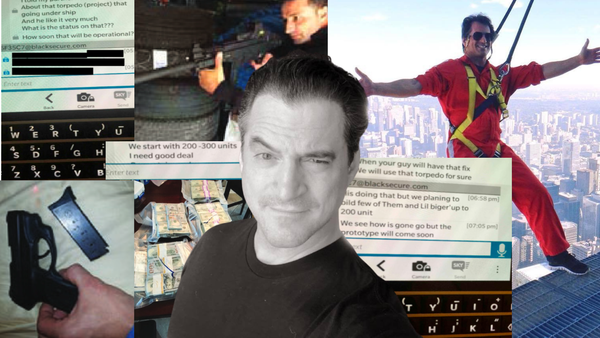
In Nepal, helicopter rescue on high altitude is, by any measure, a genuine lifesaving operation. At high altitude, where oxygen thins and weather changes without warning, the ability to airlift a stricken trekker to Kathmandu within hours has saved countless lives. But threaded through that legitimate system, exploiting its urgency, its opacity, and its distance from oversight, — is one of the most sophisticated insurance fraud networks in the world. Nepal’s fake rescue scam is not new. The Kathmandu Post first exposed it in 2018. Months later, the government convened a fact-finding committee, produced a 700-page report, and announced reforms. In February 2019, The Kathmandu Post published a long investigative report. Last year, Nepal Police’s Central Investigation Bureau reopened the file, and what they found is that the fraud did not stop — instead it was growing. (via Kathmandu Post)
Israel’s mysterious Stonehenge of the East is not alone new research reveals
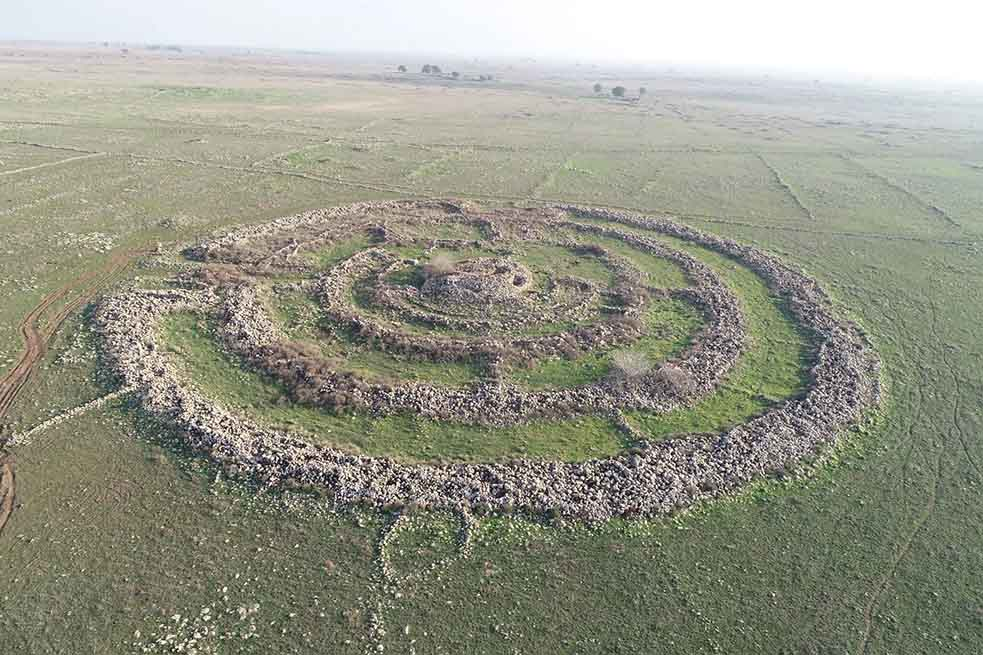
Israel’s strange Wheel of Ghosts, first discovered in 1968, turns out not to be so unusual after all, as new research combining remote sensing and AI now confirms the presence of many similar sites in the region. Situated in the Golan Heights and composed of 40,000 tons of rock, archaeologists estimate the structure to date back between 3,500 and 6,500 years. Known as the “Stonehenge of the East,” the site’s official name is Rujm el-Hiri, and it is cast in a decidedly new light in a recent paper, revealing many similar structures. Existing interpretations have diverged in their explanations of what the Wheel of Ghosts meant to the people who built it. Those explanations run the gamut of what is assumed of these mysterious ancient sites: a ceremonial space, a burial mound, or an astronomical observatory. However, these interpretations all relied on a major assumption that has proven false: that the Wheel of Ghosts is unique to the area. (via The Debrief)
This airline was in business for almost 30 years and never flew a single flight

For 29 years, Baltia Air Lines — later renamed USGlobal Airways — existed as a real company with real investors, real Boeing 747s, and real executives. It never carried a single paying passenger. Igor Dmitrowsky founded the airline in New York City on August 24, 1989, with the idea of running routes between JFK and the Soviet Union. Over the next three decades, the FAA rejected the company's certification application seven times. In 1998, after buying a Boeing 747-200 without having enough capital to operate it, regulators revoked its route authority. The airline eventually bought two more 747-200s between 2009 and 2011. Those were scrapped at a significant loss. Dmitrowsky died in 2016. The company rebranded as USGlobal Airways in 2017 and was delisted from the stock exchange in 2018 for failing to file annual returns. The FAA revoked its air carrier certificate on January 24, 2018. (via Boing Boing)
Hi everyone! Mathew Ingram here. I am able to continue writing this newsletter in part because of your financial help and support, which you can do either through my Patreon or by upgrading your subscription to a monthly contribution. I enjoy gathering all of these links and sharing them with you, but it does take time, and your support makes it possible for me to do that. I also write a weekly newsletter of technology analysis called The Torment Nexus.
Thousands of formerly enslaved people lived in Virginia's Great Dismal Swamp in the 1700s

The first Africans brought to the English colony of Virginia arrived in 1619. These Africans, numbering roughly 20-strong, had been seized from a Portuguese slave ship. The Africans were legally deemed to be indentured servants, since slave codes were not passed in Virginia until 1661. As indentured servants, they were automatically entitled to freedom after the passage of a certain period of time, and were also allowed to purchase freedom as well. Other indentured servants gained freedom by converting to Christianity. Slave labor was used in many efforts to drain and log the Great Dismal Swamp during the 18th and 19th centuries. People who escaped slavery by running away to the countryside came to be known as maroons. Research suggests that thousands lived in the Great Dismal Swamp between about 1700 and the 1860s. (via Wikipedia)
Elizabethan peasants blackened their teeth so they would look like the wealthy
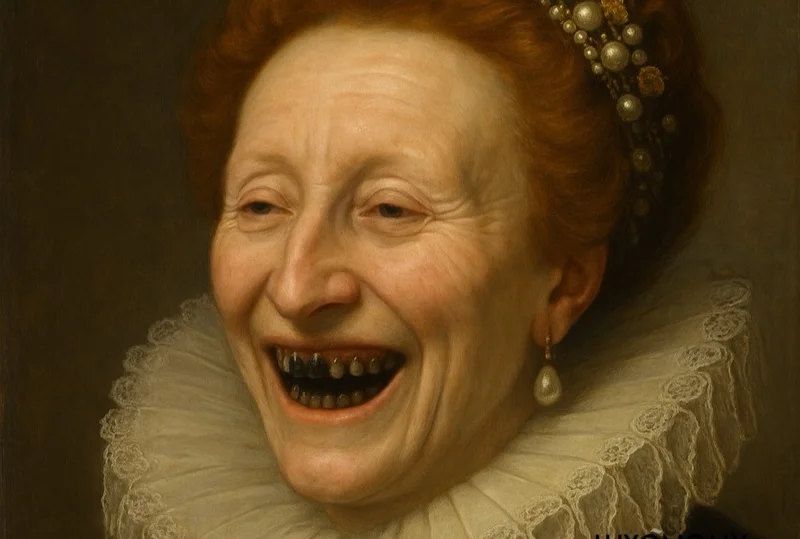
Shakespeare described the reeking breath of his lady love, and the subject came up again in two of his plays. He sets a creepy mood with the “black contagious breath” of the night and includes the line “his breath stinks with eating toasted cheese." Unfortunately, smelly breath was a common problem for that time period, and so were bad teeth. Most people in Early Modern England were missing one or two teeth and they had to deal with a lot of cavities, but the problem was actually worse for the wealthy and especially the queen. Sugar was the hot new fad among the aristocracy in Elizabeth I’s day, but it was only available as an expensive import, so only the wealthy could afford it as an ingredient in their food. Unfortunately for all those lords and ladies, they didn’t realize the dental health implications of sugar consumption. It wasn’t long until black teeth became a symbol of wealth, which gave rise to the perplexing fashion among the lower classes of artificially blackening their teeth to appear richer. (via University Downs)
Eight-time Olympic medalist takes part in parents race at local school

Acknowledgements: I find a lot of these links myself, but I also get some from other places that I rely on as "serendipity engines," such as The Morning News from Rosecrans Baldwin and Andrew Womack, Jodi Ettenberg's Curious About Everything, Dan Lewis's Now I Know, Robert Cottrell and Caroline Crampton's The Browser, Clive Thompson's Linkfest and Why Is This Interesting by Noah Brier and Colin Nagy. If you come across something you think should be included here, feel free to email me at mathew @ mathewingram dot com