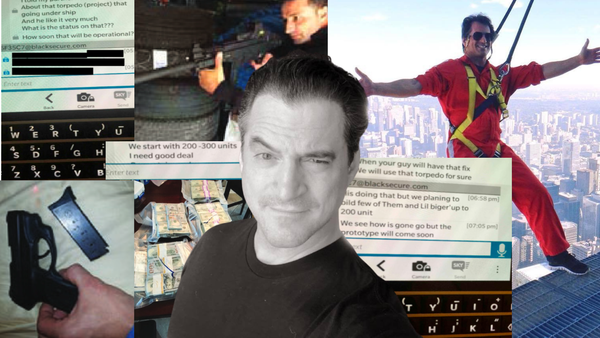
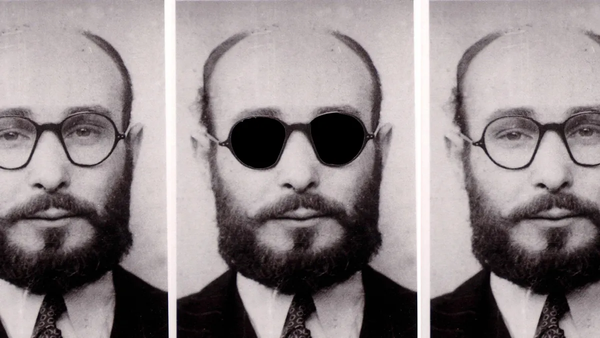
CIA officer says he stopped Iran from getting the nuclear bomb

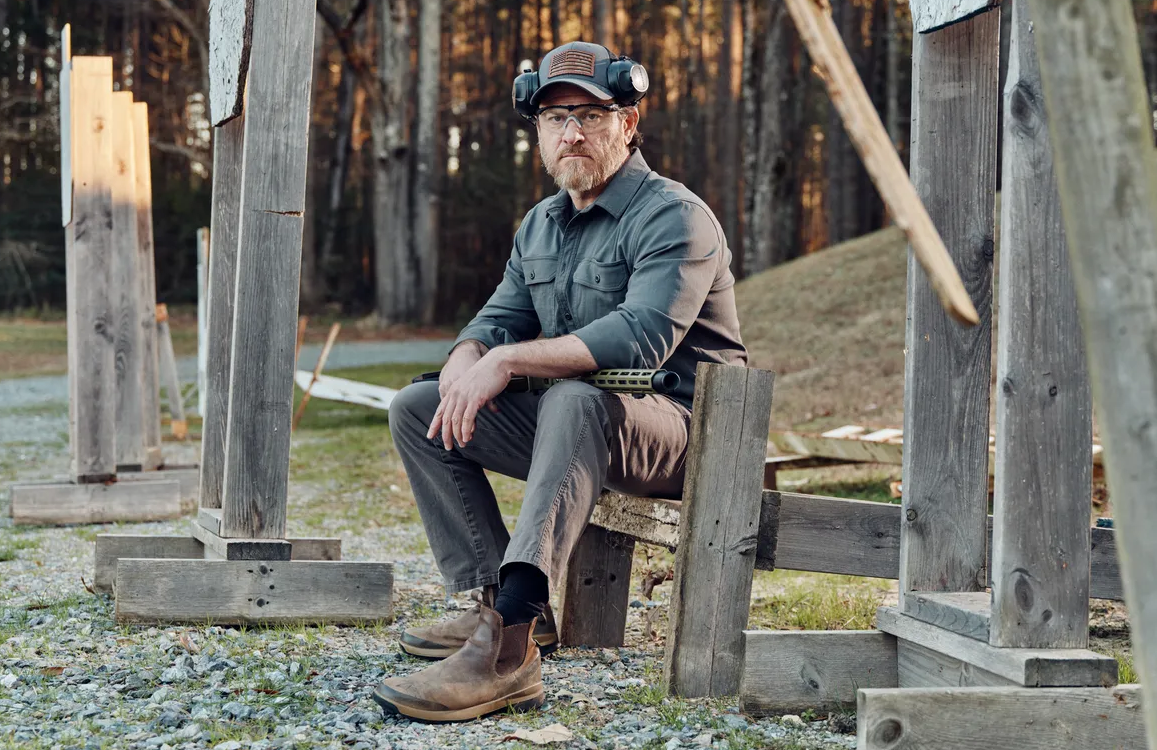
Chalker told me that he wanted to repair his reputation. He had always been an American patriot, he insisted, and to prove it he was willing to talk publicly, for the first time, about his years of clandestine work for the C.I.A. — which, he said, had “prevented Iran from getting a nuke.” He insisted that he had helped obtain pivotal information that laid the groundwork for more than a decade of American efforts to disrupt the Iranian nuclear-weapons program, from the Stuxnet cyberattacks, which occurred around 2010, to the Obama Administration’s nuclear deal, in 2015, to the U.S. air strikes in the summer of 2025. Chalker told me that, as he understood it, the Pentagon had suggested running commando operations to kill key Iranian scientists, as Israel subsequently did. But the C.I.A. proposed recruiting those scientists to defect instead, as U.S. spies had once courted Soviet physicists, and that he was involved in this program. (via The New Yorker)
These snakes become deadly killers by eating poisonous frogs and absorbing their toxins

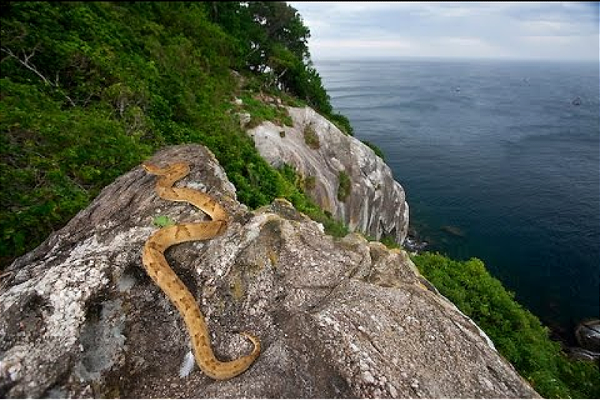
Red-necked keelback snakes are highly toxic—mere drops of their pungent yellow poison could blind a mongoose and stop its heart within minutes. But the snakes don’t make that toxin themselves; rather, they steal it from the poisonous toads they eat.After a red-necked keelback (Rhabdophis subminiatus) eats a true toad (a member of the Bufonidae family), the snake’s intestines soak up the toxic bufadienolide molecules from the amphibian’s skin. The toxins are then shuttled into more than a dozen pairs of storage pockets in the snakes’ necks called nuchal glands. Then the snakes act fearless. They rise and jut their necks at mongooses and other would-be predators as if to say, “Go ahead — I dare you.” That brazen attitude doesn’t last, though. If their dinner has been nontoxic recently — poison-free frogs or fish, for example — these reptiles often hurriedly slither away rather than pick a fight they might lose. (via Scientific American)
If you are an American and need help while in Austria just go to the nearest McDonald's

Americans who find themselves in need of U.S. government assistance while in Austria can seek help at one of almost 200 McDonald's restaurants around the country thanks to a "Memorandum of Agreement" with the fast-food giant, under which restaurant staff will be trained to connect U.S. citizens to the embassy via a new hotline phone number. As of Wednesday, May 15, 2019, American citizens traveling in Austria who find themselves in distress and without a way to contact the U.S. Embassy can enter any McDonald's in Austria, and staff will assist them in making contact with the U.S. Embassy for consular services. The service may to prove useful for Americans who lose their passports and either don't have cellphones that work in Europe, or don't have the means to find a phone number. The U.S. embassy said it wanted to ensure that citizens had every possible option to get in touch should they need to. (via CBS)
Hi everyone! Mathew Ingram here. I am able to continue writing this newsletter in part because of your financial help and support, which you can do either through my Patreon or by upgrading your subscription to a monthly contribution. I enjoy gathering all of these links and sharing them with you, but it does take time, and your support makes it possible for me to do that. I also write a weekly newsletter of technology analysis called The Torment Nexus.
Stone tools from 40,000 years ago have marks that may be a precursor to written language
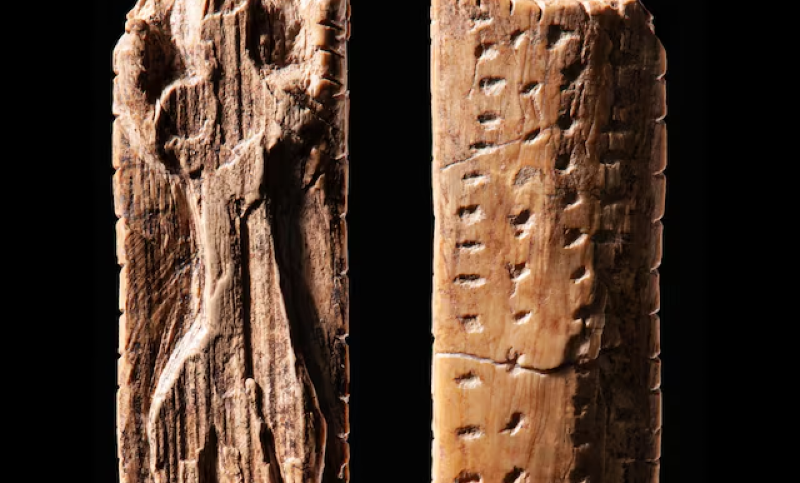
A small object called the Adorant figurine discovered in a cave in Germany in 1979 - crafted roughly 40,000 years ago by some of the earliest people to establish a distinct culture in Europe - bears intriguing sequences of notches and dots. Numerous other objects produced by this same culture exhibit similar marks.New research suggests these marks on objects like this figurine, made of mammoth ivory and depicting a hybrid lion-human creature, fall short of amounting to a written language. But it found that their sequential use on these artifacts displayed properties similar to a script that emerged much later in ancient Mesopotamia, around 3300 BC, that was a forerunner to cuneiform, one of the oldest-known forms of written language. The artifacts date to a time when our species was spreading across Europe after trekking out of Africa, encountering our close relatives the Neanderthals along the way. (via Reuters)
She patented dozens of solar inventions such as a water purification system and a solar oven

Scientist Mária Telkes spent her life chasing the sun. Telkes, who was born in Hungary in 1900, first became interested in solar energy while studying at the University of Budapest. After receiving her doctorate in physical chemistry in 1924, she emigrated to the United States and began work as a biophysicist at the Cleveland Clinic Foundation. In the late 1930s, Telkes studied energy conversion for Westinghouse Electric before joining the Solar Energy Conversion Project, a research unit at the Massachusetts Institute of Technology, in 1939. Throughout her career, Telkes was a pragmatist who operated in the realm of applied science; she was interested in seeing her inventions put to use in the real world. By the time of her death in 1995 she had earned more than 20 patents, most of them for inventions that exploited what she saw as the limitless potential of solar power. “Sunlight will be used as a source of energy sooner or later anyway,” Telkes wrote in a 1951 paper, adding, “Why wait?” (via PBS)
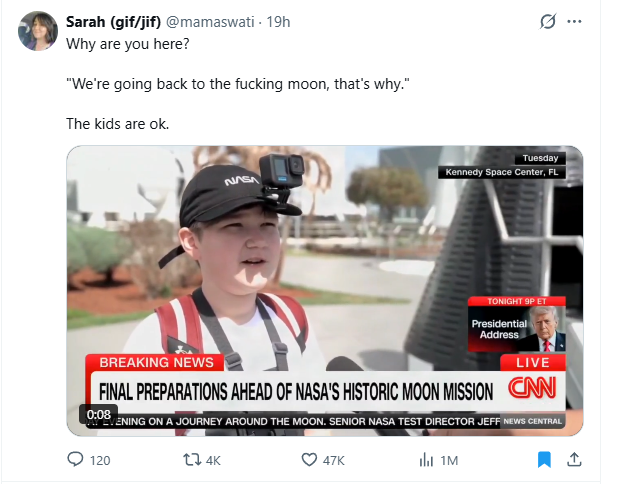
CNN asks teen at Artemis launch site why he is there and gets this answer
Acknowledgements: I find a lot of these links myself, but I also get some from other places that I rely on as "serendipity engines," such as The Morning News from Rosecrans Baldwin and Andrew Womack, Jodi Ettenberg's Curious About Everything, Dan Lewis's Now I Know, Robert Cottrell and Caroline Crampton's The Browser, Clive Thompson's Linkfest and Why Is This Interesting by Noah Brier and Colin Nagy. If you come across something you think should be included here, feel free to email me at mathew @ mathewingram dot com