Choirboy with the voice of an angel became a global conman

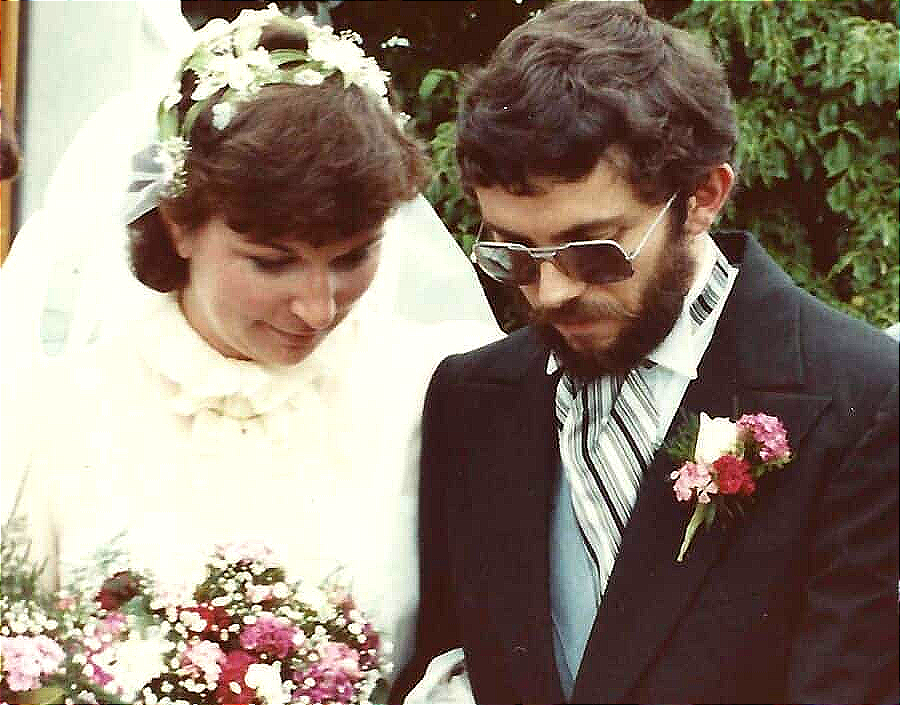
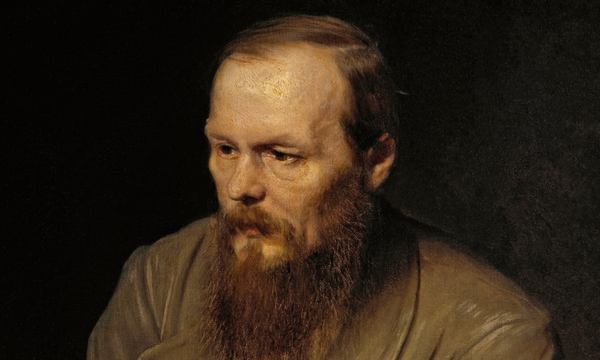
Kenner Elias Jones was a performer from a young age. As a choirboy with "the voice of an angel", aged 19 he carried a cross leading a procession at Prince Charles's 1969 investiture in Jones's Caernarfon hometown, watched by hundreds of millions worldwide. But that flair for putting on a show helped him forge a life of deception and fraud across three continents. The virtuous choirboy persona was perhaps his first con. Another chorister should have carried the cross that day, but Jones approached the bishop and told him all the other boys agreed he should do the job in front of the world's cameras. His first conviction happened in Sheffield in 1973 for obtaining money by deception. A second fraud conviction at the Old Bailey in London in 1975 saw him enter prison for 12 months. Later, facing fraud charges, he fled the UK for a remote part of Kenya where not only did he claim to be an Anglican deacon but also a retired cardiac surgeon. (via the BBC)
He invented a beer that is also a vaccine-delivery system but not everyone likes it
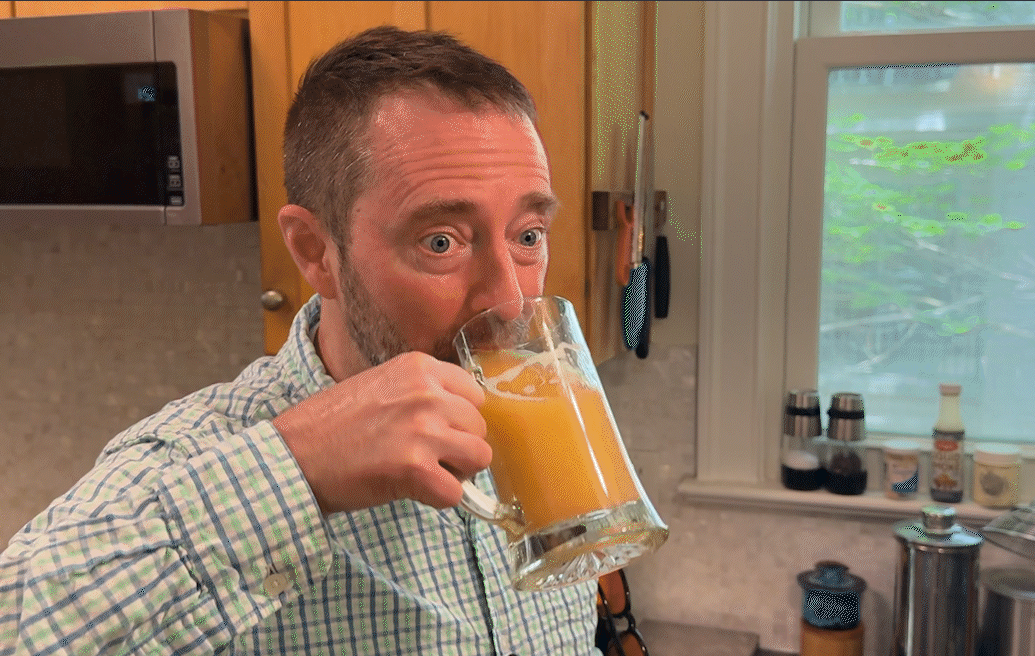
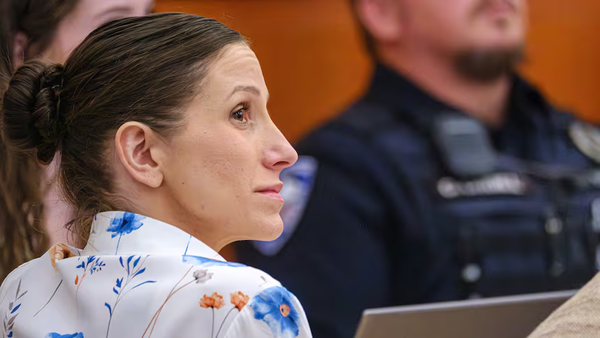
hris Buck stands barefoot in his kitchen holding a glass bottle of unfiltered Lithuanian farmhouse ale. He swirls the bottle gently to stir up a fingerbreadth blanket of yeast and pours the turbulent beer into a glass mug. He has just consumed what may be the world’s first vaccine delivered in a beer. It could be the first small sip toward making vaccines more palatable and accessible to people around the world. Or it could fuel concerns about the safety and effectiveness of vaccines. Buck’s unconventional approach illustrates the legal, ethical, moral, scientific and social challenges involved in developing potentially lifesaving vaccines. Buck isn’t just a home brewer dabbling in drug-making. He is a virologist at the National Cancer Institute in Bethesda, Md., where he studies polyomaviruses, which have been linked to various cancers and to serious health problems for people with weakened immune systems. He discovered four of the 13 polyomaviruses known to infect humans. (via Science News)
Grand Central helped create the system of "air rights" used to spur development across the US
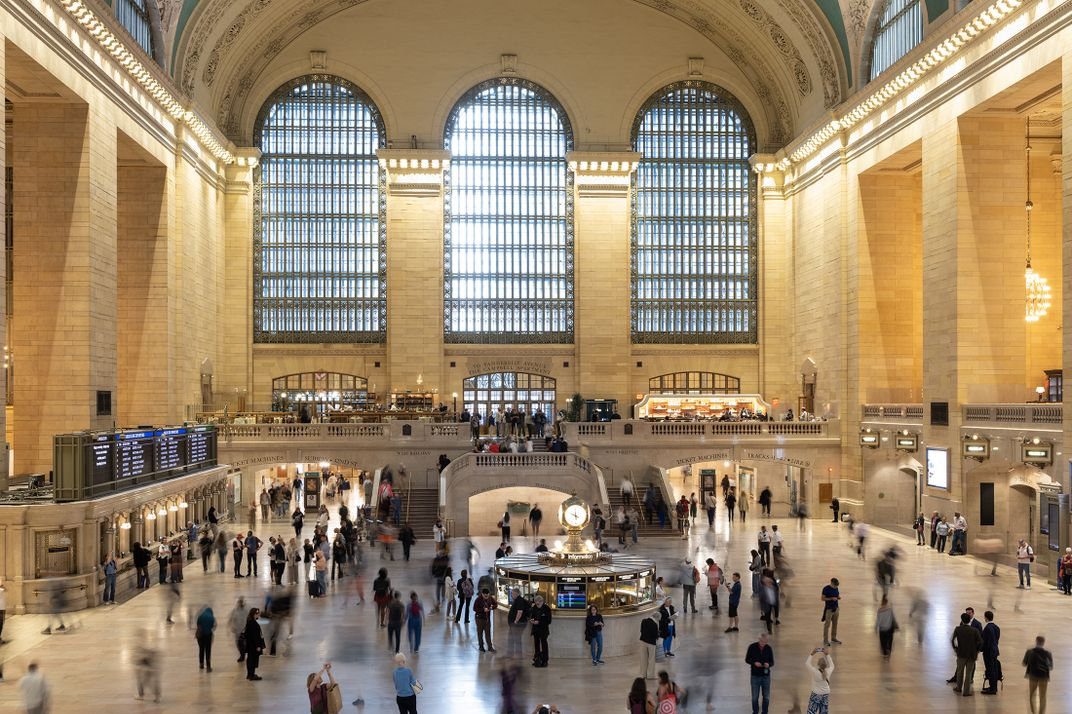
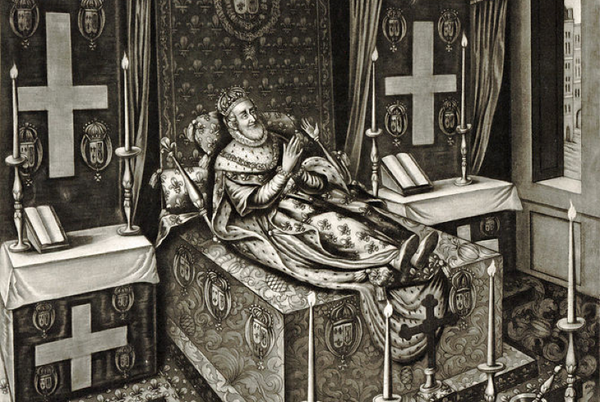
In 1902, engineer William J. Wilgus immediately set his mind to solving the unprecedented problems facing New York's Central station. Wilgus laid out his ambitious scheme in a three-page memo to the Central’s president. First, sink all of the tracks coming into Manhattan deep below ground. In addition, stack them on top of each other to create two levels, one for commuter trains and one for long-distance. And finally, to service the new, underground infrastructure, build a new, larger, even grander terminal. Wilgus estimated a total outlay of $35 million, but followed up with an ingenious way to pay for it. Wilgus proposed using the ancient but rarely implemented concept of air rights, which dated to early English common law. Once the train yards were buried in the ground, Wilgus argued, the resulting real estate could be leased to developers, thus reaping additional millions in perpetuity. (via Scientific American)
Hi everyone! Mathew Ingram here. I am able to continue writing this newsletter in part because of your financial help and support, which you can do either through my Patreon or by upgrading your subscription to a monthly contribution. I enjoy gathering all of these links and sharing them with you, but it does take time, and your support makes it possible for me to do that. I also write a weekly newsletter of technology analysis called The Torment Nexus.
She was a Berkeley hippie but she pioneered the field of plate tectonics
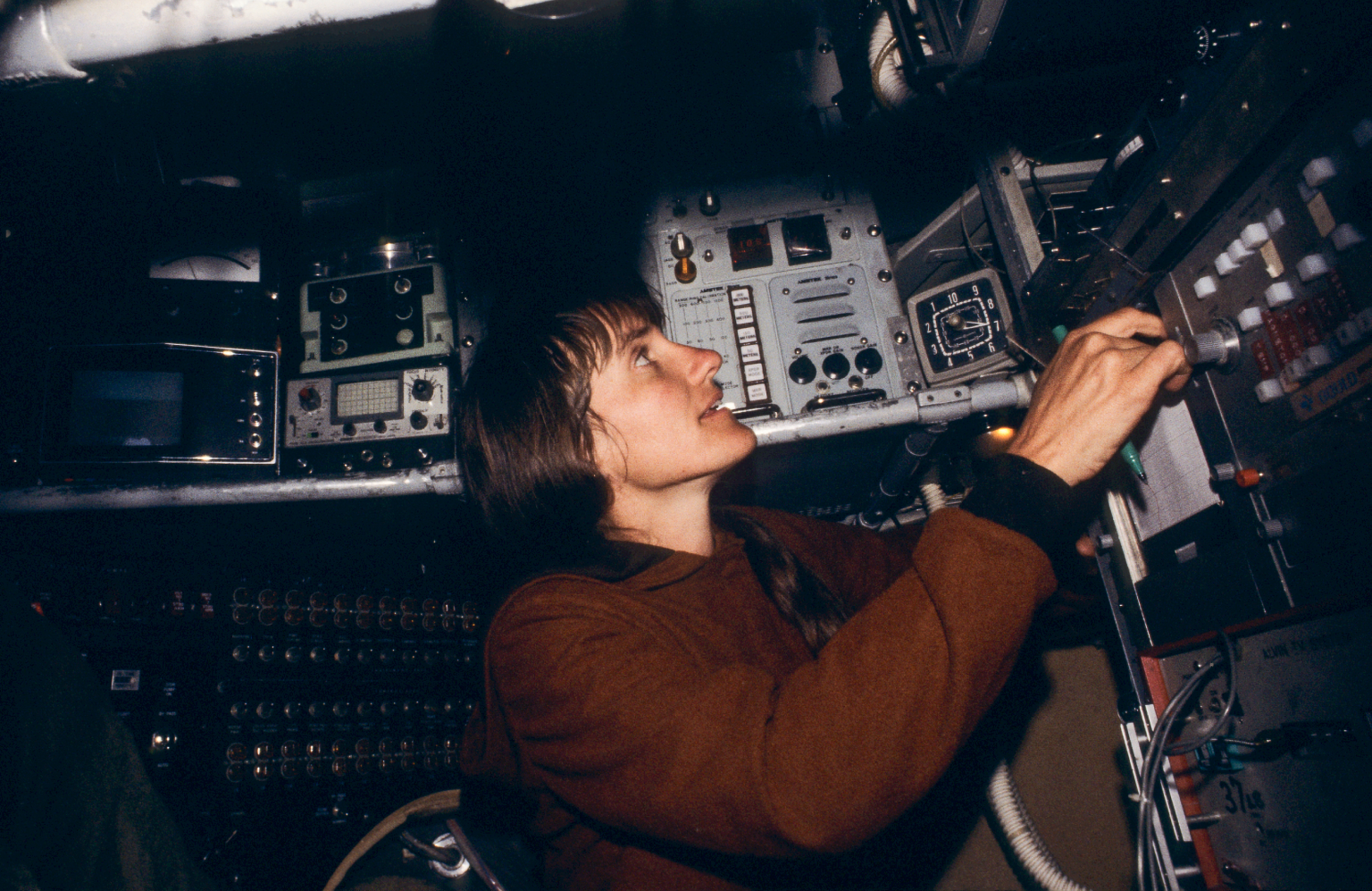
The Scripps Institution of Oceanography in California was in chaos when 24-year-old Tanya Atwater arrived to pursue her graduate studies. It was January 1967, and a buzz of energy filled the air. Long rolls of paper printed with squiggles of magnetic data spooled down the hallways, retrieved from odd corners where they had lain covered in dust. A few weeks earlier, a geophysicist named Fred Vine had visited Scripps to explain a theory so new it didn’t yet have a name. Some called it the Vine-Matthews Hypothesis; others referred to it as seafloor spreading. It was a critical advancement on the old, long-discredited notion of continental drift. The new theory would come to be known as plate tectonics. Tanya Atwater stood out among the other scientists. For one thing, she was a woman in a field dominated by men. She was also a self-described “full-on Berkeley hippie … barefoot, with beads and flowers.” (via High Country News)
Dublin's automated swing bridge didn't work for four years because they lost the remote control
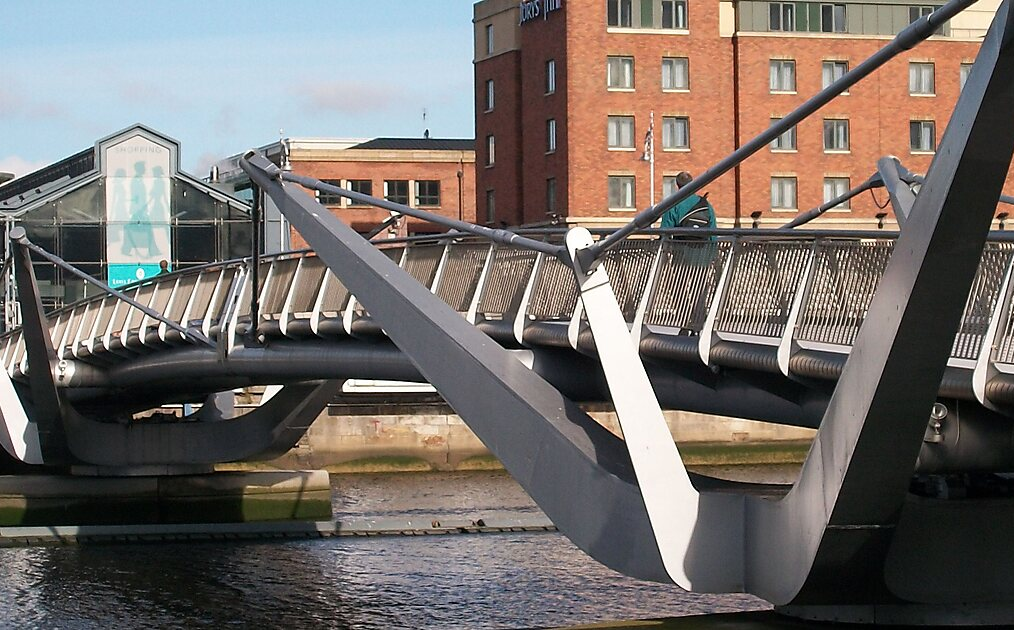
Commissioned in 2002 by the ill-fated Dublin Docklands Development Authority, the footbridge was constructed to improve pedestrian connections in the city during a time of rapid expansion. Spanning the Liffey between the IFSC and City Quay, it’s designed to swing apart to allow sail-craft upriver as far as the Talbot Memorial Bridge. The design includes two 44-metre-long arms, capable of swinging open when required. That operation is controlled by a hand-held remote device, but that device went missing some years ago, meaning openings were no longer possible. The Authority — which is set to be wound-up in the coming months — moved offices several times in the past few years, and it’s understood the remote (which is about the size of a 1990s-era mobile phone) may have been simply misplaced in the move. (via The Journal.ie)
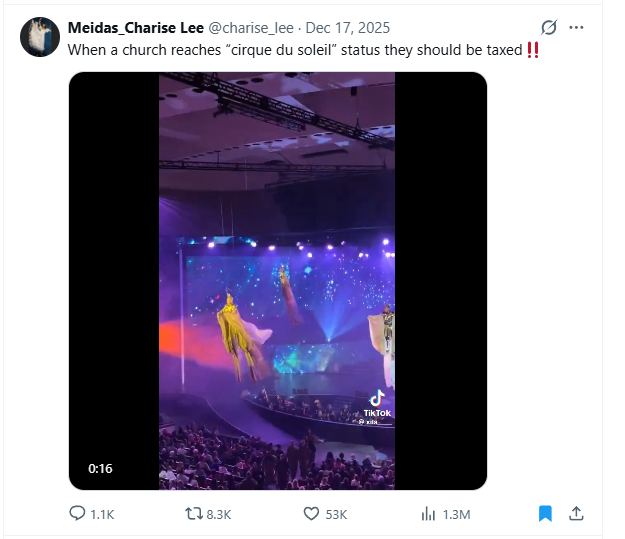
Is it a performance at a US mega-church or is it Cirque du Soleil?
Acknowledgements: I find a lot of these links myself, but I also get some from other places that I rely on as "serendipity engines," such as The Morning News from Rosecrans Baldwin and Andrew Womack, Jodi Ettenberg's Curious About Everything, Dan Lewis's Now I Know, Robert Cottrell and Caroline Crampton's The Browser, Clive Thompson's Linkfest and Why Is This Interesting by Noah Brier and Colin Nagy. If you come across something you think should be included here, feel free to email me at mathew @ mathewingram dot com