Blobs of goo fell from the sky and we still don't know why

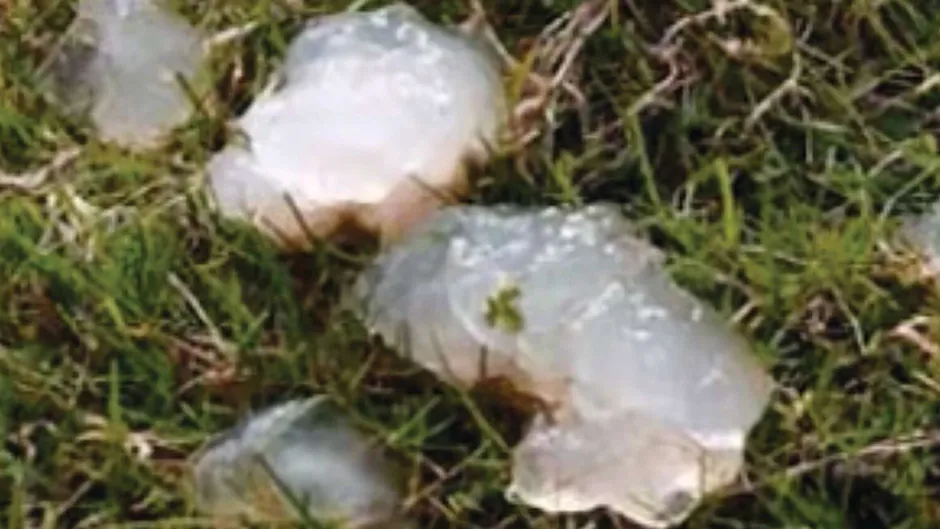
When police officer David Lacey was on patrol on August 7, 1994, and noticed drops hitting his windshield, he didn't think much of it. He turned on his wipers and kept on driving. But the wipers didn’t wipe. The rain — it wasn’t water. It was goo. Lacey immediately began investigating the mystery. He pulled over at a gas station, put on gloves (safety first!), and touched the stuff. It was goopy, translucent, and viscous — not something that typically falls out of the sky. Each blob was about half the size of a grain of rice, but — clearly — not something you should eat. People started failling ill anyway. Lacey himself came down with fatigue and nausea. A resident named Beverly Roberts took some of the goo home for a closer look and within a day was struck with vertigo severe enough to require medical care. Another Oakvillian, Dotty Hearn, was hospitalized with dizziness and nausea. Authorities collected samples of the goo and sent them to labs for analysis. The results only deepened the mystery. (via Now I Know)
Archeologists say cave artists painted in locations that were also conducive to music
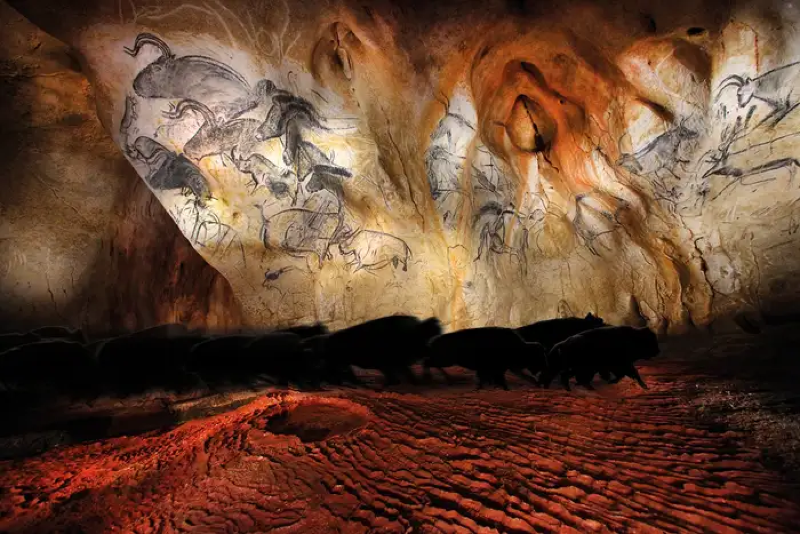
Deep underground, thousands of years of silence are abruptly broken by a researcher singing. His voice seems to awaken the walls of the cavern as the intimate space comes alive with the sound of our ancestors. Then he follows the cave’s resonant response, until the beam of his headlamp falls upon a panel of ancient paintings.This crude experiment, performed decades ago, led to a remarkable discovery: that prehistoric rock art, created from 40,000 to 3,000 years ago, was meant to be heard as well as seen. “The oldest painted sites have this low, strange resonance, where if you sing, suddenly the cave sings back to you,” says Rupert Till at the University of Huddersfield, UK. A seven-year study into the acoustic properties of rock art sites around the globe leaves little doubt that prehistoric artists painted in places where echoes, resonance and sound transmission created otherworldly effects. (via New Scientist)
Maggots are incredibly rich in protein which makes them a perfect superfood for humans
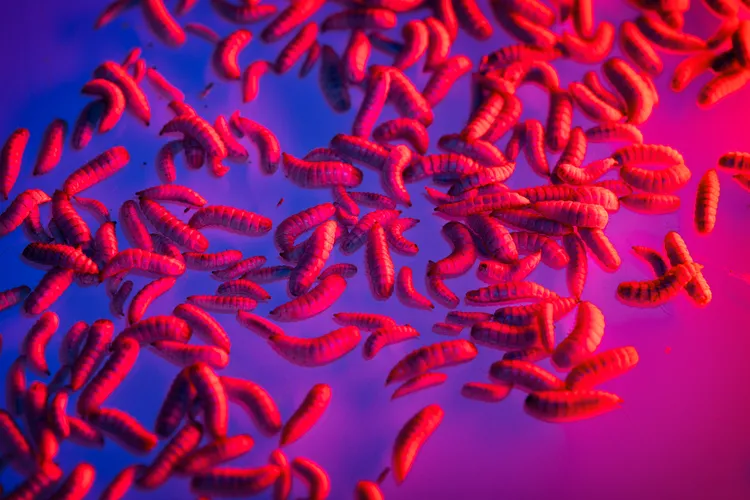
It’s mango season in Kenya. Evidence of this fact is heaped two stories high outside a greenhouse on the outskirts of Nairobi. The mango is waste from a processing plant, but it won’t in fact be wasted, because just beyond the heap, inside that greenhouse, are 128 million creatures that like their food rotten. They are maggots. Specifically, they are larvae of the black soldier fly, being reared by InsectiPro, one of Kenya’s largest black soldier fly farms. Once they mature, the larvae will be made into protein meal, used in animal feed. A 2021 review article counted 950 published papers on the use of edible insects such as the black soldier fly—for fish, for poultry and pigs, for crustaceans, for rabbits. Are maggots the superfood of the future? Nina de Groot, InsectiPro’s head of operations, would say yes. Right now, American adults get about two-thirds of their protein from animal products. Those animals feed on crops like corn, barley and oats, which require huge quantities of land, water, fertilizer and pesticides. (via the Smithsonian)
Hi everyone! Mathew Ingram here. I am able to continue writing this newsletter in part because of your financial help and support, which you can do either through my Patreon or by upgrading your subscription to a monthly contribution. I enjoy gathering all of these links and sharing them with you, but it does take time, and your support makes it possible for me to do that. I also write a weekly newsletter of technology analysis called The Torment Nexus.
Scientists have invented gears that use water instead of metal teeth to turn
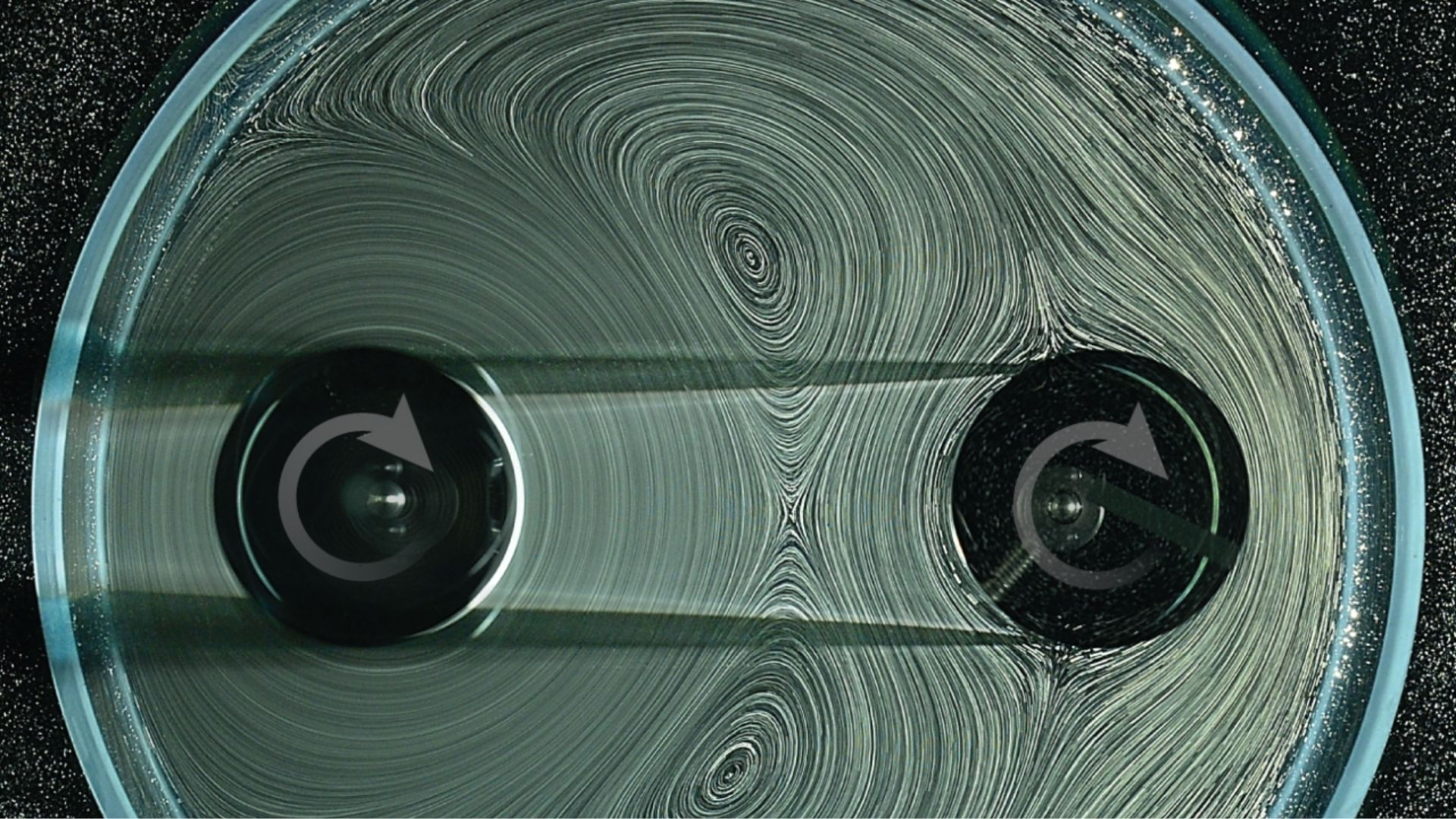
As one of the oldest components of human engineering, gears have driven civilization for thousands of years. But now, engineers at New York University in the US have given gears a new liquid twist. The team has developed a new gear mechanism that uses fluid dynamics rather than interlocking physical teeth to transmit motion. This invention offers a more flexible and durable alternative to the basic mechanical gear design that has remained largely unchanged for a long time. Traditional gears — dating back to 3,000 BCE, early Bronze age — used solid teeth made of metal, wood, or plastic to transfer power. From the chariots of ancient China to the machinery of modern robotics, the rule has been interlock or fail. These systems are prone to breaking, jamming, or failing if they are not perfectly aligned. Hence, the NYU team decided to design a system that functions entirely without gear teeth — and without the components ever actually touching. The researchers proposed that precisely directed fluid flows could mimic the function of physical gear teeth. (via Interesting Engineering)
How did the Chinese gooseberry fruit come to be known as the Kiwi?

As the name suggests, kiwifruit has its roots in China. Its original name in Chinese, mihoutao — or “macaque fruit” — was a reference to monkeys loving the sweet fruit. From there stemmed several other colloquial names for the Chinese gooseberry: monkey peach, macaque pear, vine pear, sun peach and wood berry. When it was brought to New Zealand, people felt it tasted like a little like a gooseberry, a popular fruit at the time. So they started calling the fruit Chinese gooseberries. Despite this, other slang names popped up for kiwifruit, including the delightful hairy berry. In 1904, Isabel Fraser, headmistress of the Wanganui Girls’ College, brought kiwifruit seeds back to New Zealand from her sister’s mission station in China’s Yangtze Valley. While Alexander Allison is credited with growing the first kiwifruit plants, the variety we’re now used to was first developed by Hayward Wright in Avondale, New Zealand, around 1924. This lead to the fruit being referred to as “the Hayward,” which, even today, is used in some circles to refer to the green-variety kiwifruit. (via Zespri)
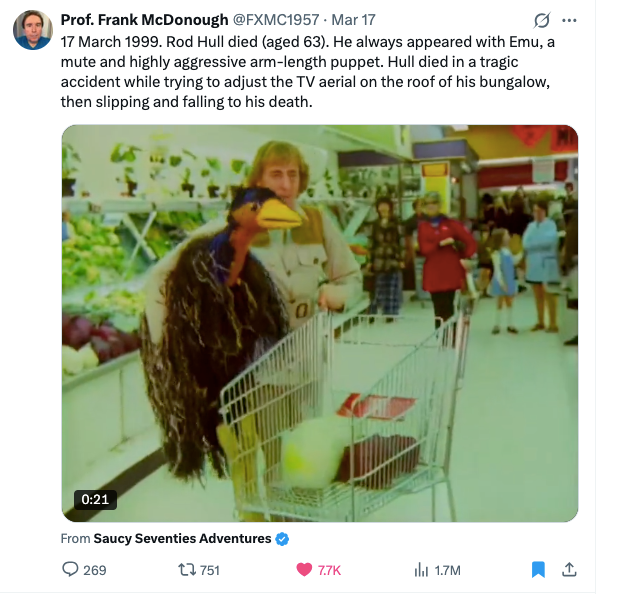
Rod Hall was a comedian who always appeared with Emu, a mute and highly aggressive bird
Acknowledgements: I find a lot of these links myself, but I also get some from other places that I rely on as "serendipity engines," such as The Morning News from Rosecrans Baldwin and Andrew Womack, Jodi Ettenberg's Curious About Everything, Dan Lewis's Now I Know, Robert Cottrell and Caroline Crampton's The Browser, Clive Thompson's Linkfest and Why Is This Interesting by Noah Brier and Colin Nagy. If you come across something you think should be included here, feel free to email me at mathew @ mathewingram dot com