Amelia Earhart sent distress signals that were ignored


Dozens of previously dismissed radio signals were actually credible transmissions from Amelia Earhart, according to a new study of the alleged post-loss signals from Earhart's plane. The transmissions started riding the air waves just hours after the pilot sent her last in-flight message. The study, presented by researchers of The International Group for Historic Aircraft Recovery, sheds new light on what may have happened to the legendary aviator 75 years ago. "Amelia Earhart did not simply vanish on July 2, 1937. Radio distress calls believed to have been sent from the missing plane dominated the headlines and drove much of the U.S. Coast Guard and Navy search," said Ric Gillespie. "When the search failed, all of the reported post-loss radio signals were categorically dismissed as bogus and have been largely ignored ever since," he added. (via NBC News)
Platypus biology turns out to be even weirder than scientists originally thought
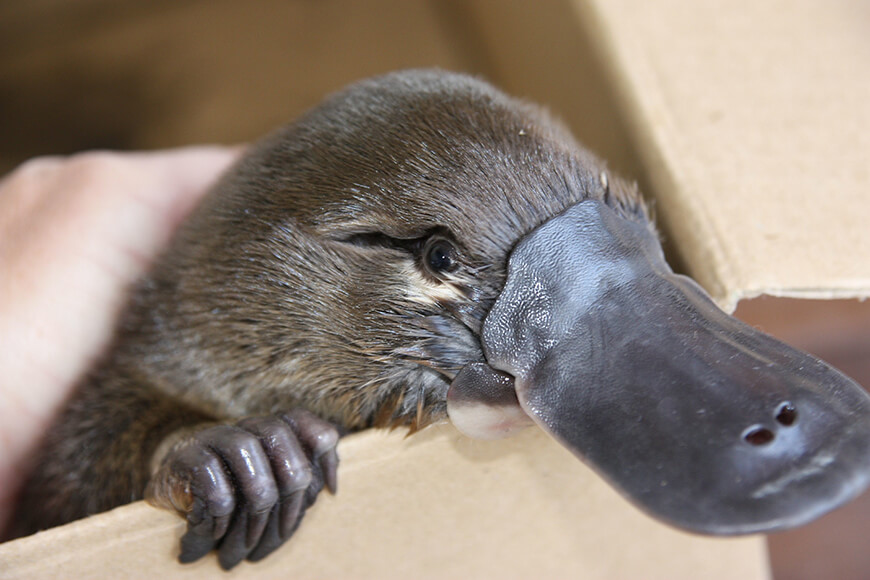
One glance at the platypus and you’ll forgive the naturalists who assumed it was a clever hoax upon first encountering preserved specimens more than 200 years ago. After all, the creatures appear to be a jumble of contradictions—they look like beavers but have duck bills, they’re mammals that lay eggs, and they produce milk without nipples. Platypuses glow under ultraviolet light, sense electricity through their bills, have a bewildering multitude of sex chromosomes, and the males possess venomous spurs behind their legs. Now, new research has added another oddity to the list: biologists from Belgium looked at platypus melanosomes—specialized pigment-bearing organelles inside cells—under an electron microscope. To their surprise, they discovered that the melanosomes were hollow and spherical. Previously, only birds were thought to possess hollow melanosomes, which produce more vibrant iridescent colors. (via Nautilus)
As far as Google Maps is concerned this city in Minnesota doesn't exist
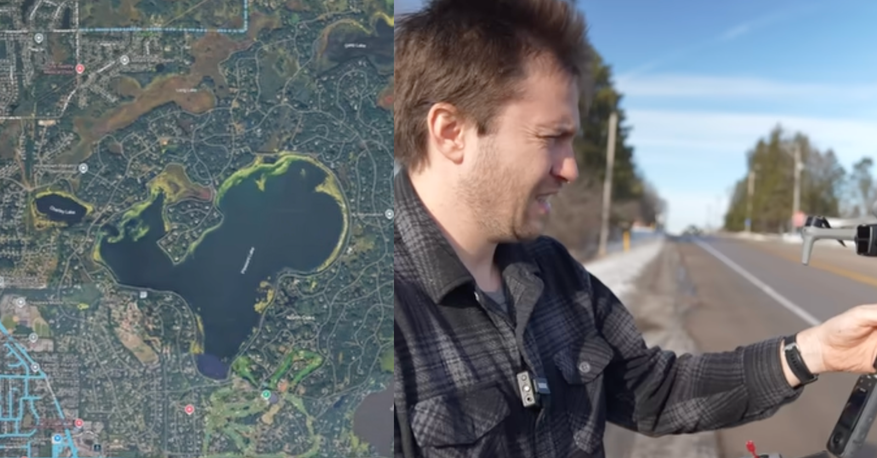
North Oaks, Minnesota is the only city in the United States that is not on Google Maps Street View. YouTube documentarian Chris Parr, who grew up not too far from North Oaks, set out to change that earlier this year. For a brief few days, he literally put North Oaks on the map. And then it was gone again. “It’s known by Minnesotans as a place where executives and CEOs live,” Parr told 404 Media. “Famously Walter Mondale is from North Oaks, but also like United Healthcare executives and Target executives.” North Oaks has managed to largely stay unmapped on Street View because of the way the city handles its streets. In almost every city and town, property owners give an easement to their local government for the roads in front of their homes (or don’t have any claim to the roads at all). In North Oaks, homeowners’ property extends into the middle of the street, meaning there is literally no “public” property in the city, and the roads are maintained by the North Oaks Homeowners’ Association (NOHOA) (via 404 Media)
Hi everyone! Mathew Ingram here. I am able to continue writing this newsletter in part because of your financial help and support, which you can do either through my Patreon or by upgrading your subscription to a monthly contribution. I enjoy gathering all of these links and sharing them with you, but it does take time, and your support makes it possible for me to do that. I also write a weekly newsletter of technology analysis called The Torment Nexus.
A five-year-old girl donated her favorite rock to a museum where it is now on display
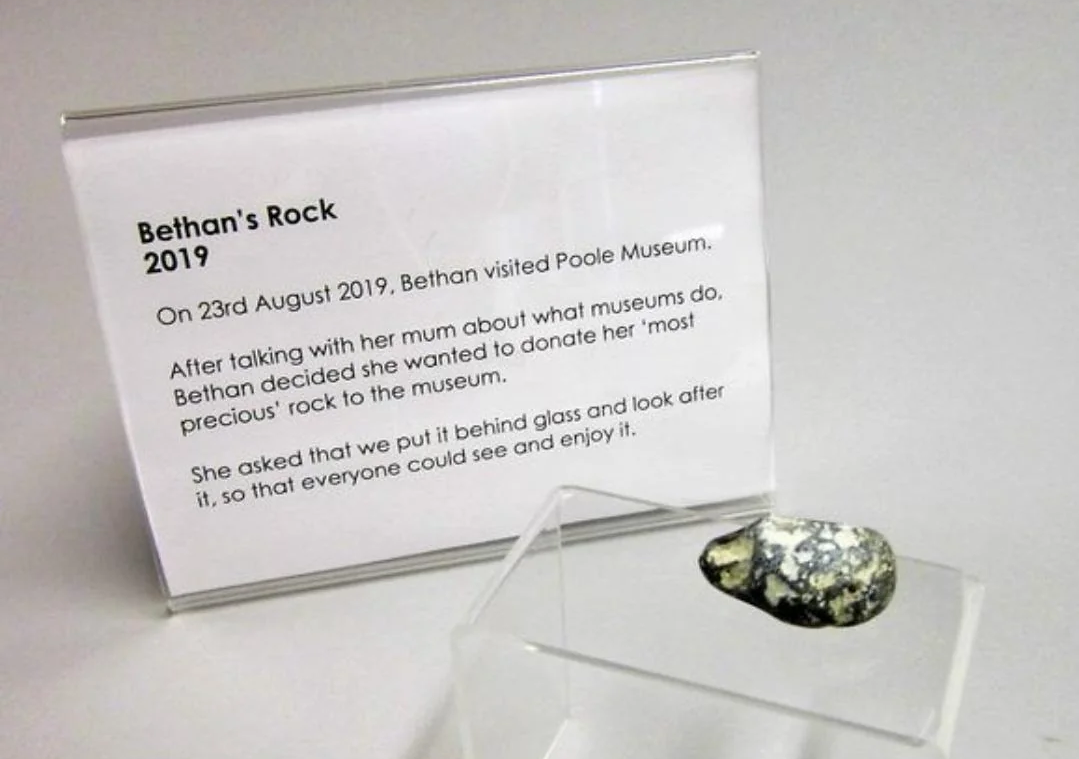
On 23 August 2019, a five-year-old girl named Bethan and her mother visited the Poole Museum in Poole, England. Following a discussion with her mother regarding the function of museums, Bethan chose to donate her favourite rock, originally found on a beach by her grandmother and given to her. As she left the museum, Bethan approached the front desk and asked if they could place the stone behind glass and look after it so that everyone could see and enjoy it. Within weeks, the rock was placed on display in a glass case and labelled "Bethan's Rock – 2019". Bethan's Rock is a small grey and white stone. It is displayed in a glass cabinet, alongside a printed note about the donation. The museum's staff have described the object as highlighting that "treasures don't have to be rare," and the rock is now the museum's most popular exhibit. (via Wikipedia)
Thousands of tons of dust from the Sahara winds up helping the Amazon rainforest

The Sahara Desert is a near-uninterrupted brown band of sand and scrub across the northern third of Africa. The Amazon rain forest is a dense green mass of humid jungle that covers northeast South America. But after strong winds sweep across the Sahara, a tan cloud rises in the air, stretches between the continents, and ties together the desert and the jungle. It’s dust. And lots of it. For the first time, a NASA satellite has quantified in three dimensions how much dust makes this trans-Atlantic journey. Scientists have not only measured the volume of dust, they have also calculated how much phosphorus – remnant in Saharan sands from part of the desert’s past as a lake bed – gets carried across the ocean from one of the planet’s most desolate places to one of its most fertile. The phosphorus that reaches Amazon soils from Saharan dust, an estimated 22,000 tons per year, is about the same amount as that lost from rain and flooding. (via NASA)
What it looks like when world aeronautic champion Svetlana Kapanina is flying

Acknowledgements: I find a lot of these links myself, but I also get some from other places that I rely on as "serendipity engines," such as The Morning News from Rosecrans Baldwin and Andrew Womack, Jodi Ettenberg's Curious About Everything, Dan Lewis's Now I Know, Robert Cottrell and Caroline Crampton's The Browser, Clive Thompson's Linkfest and Why Is This Interesting by Noah Brier and Colin Nagy. If you come across something you think should be included here, feel free to email me at mathew @ mathewingram dot com