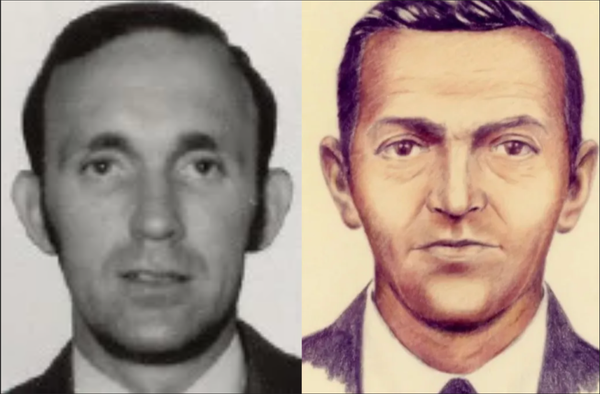
A murder so preposterous that stupidity was used as a defense


Oliver Karafa and Yun Lu “Lucy” Li were a perfect match. Karafa was the consummate pretty boy: his brown hair always coiffed just so, his tennis shoes pristine. With no post-secondary education and little job experience, he told whomever would listen that he was going to be a millionaire before he was 30. His wife, Li, had the looks and dimensions of a Kardashian: arched brows, high cheekbones, Barbie waistline. Her chosen path to fame was TikTok. She was part of a set of fraternal triplets who posed in lingerie and spoke little. Karafa and Li came from well-off families, and they wanted to expand on what their parents had achieved. Whereas that success had required sacrifice, however, Karafa and Li were looking for shortcuts. When Karafa’s and Li’s ambitions were threatened, they would go to horrific lengths to protect them. (via Toronto Life)
This Malaysian businessman stole $4.5 billion from a state company and then disappeared
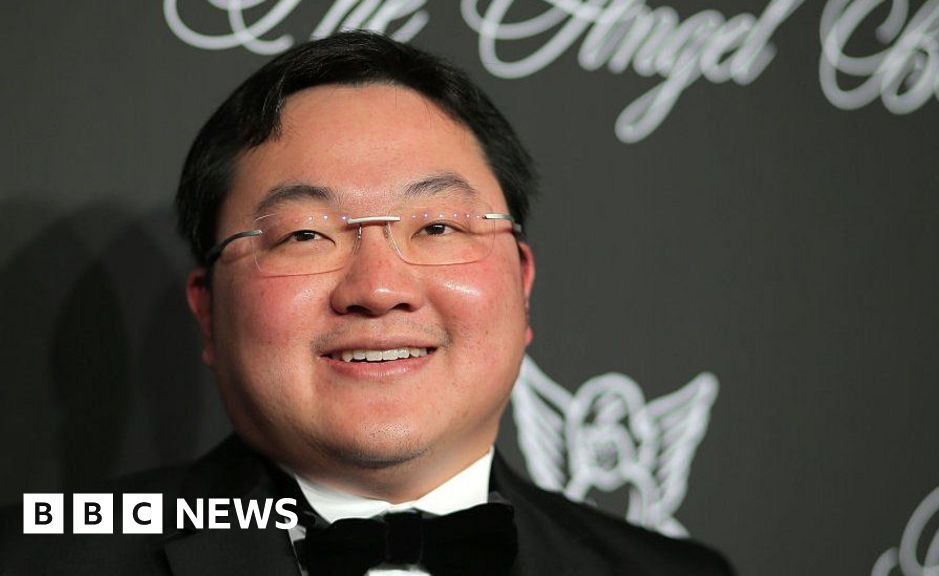
Taek Jho Low is a Malaysian businessman and fugitive who has been wanted by Interpol since 2016 for his key role in the 1MDB scandal. Low is alleged to have stolen over US$4.5 billion from the state-owned company. He has maintained his innocence and contends that Malaysian authorities are engaging in a campaign of harassment and political persecution due to his prior support of former prime minister Najib Razak. Low allegedly purchased a US$325,000 white Ferrari as a wedding gift for Kim Kardashian in 2011. The Department of Justice (DoJ) was reported to have sought restitution from other famous celebrities who had received gifts from Low, among them Leonardo DiCaprio, who has since returned the Picasso and Basquiat paintings he was given; and Miranda Kerr who returned diamond jewellery with a value of US$8 million. (via Wikipedia)
A French hospital had to be evacuated after a live artillery shell was found inside a patient

A man sparked an evacuation at a French hospital after doctors discovered an eight-inch-long live World War I artillery shell in his rectum. The unnamed 24-year-old rushed to the Rangueil Accident and Emergency unit in Toulouse, in the south-west of the country, late on Saturday night. Emergency surgery was carried out, and the object was found to be an artillery shell dating back to the First World War. Worse still, it had not exploded, and so bomb disposal experts had to be called to diffuse the shell, with the fire brigade standing by. Staff and patients were evacuated from Rangueil Hospital, and a security perimeter was set up around the accident and emergency unit, before the pointed 1918 shell, which was almost 8 inches long and just over an inch in circumference, was declared safe. There was no explanation why the shell ended up in the man’s body, but media speculated it might have had something to do with his social life. (via the Daily Mail)
Hi everyone! Mathew Ingram here. I am able to continue writing this newsletter in part because of your financial help and support, which you can do either through my Patreon or by upgrading your subscription to a monthly contribution. I enjoy gathering all of these links and sharing them with you, but it does take time, and your support makes it possible for me to do that. I also write a weekly newsletter of technology analysis called The Torment Nexus.
The Rosicrucians were the first conspiracy theory of the modern age in the 1700s
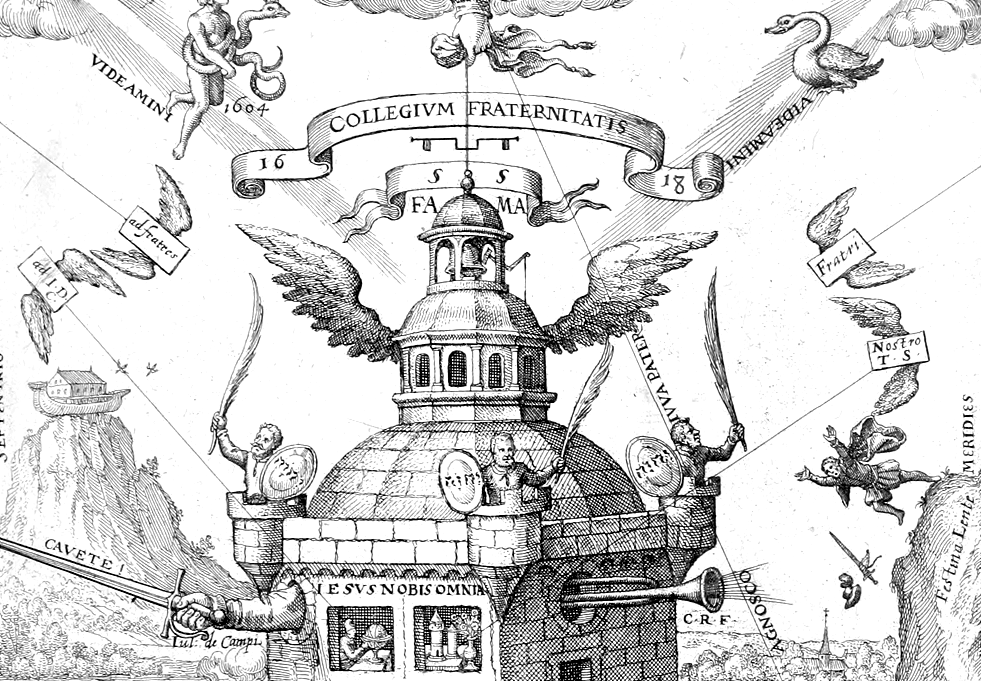
Over a period of several years in the early seventeenth century, there appeared in Western Europe three manifestos laying out the history of the theretofore unheard-of Rosicrucian order, whose secret directorate was said to employ powerful magical-scientific techniques. This naturally led to quite a bit of public speculation, which gradually abated in the absence of further pronouncements. It wasn’t until the sixties that the British historian Dame Frances A. Yates breached the actual nature and extent of the thought movement that informed both the manifestos and its audience. She demonstrates that the texts were written as anti-Hapsburg, proreformist propaganda drawing on doctrines associated with the sixteenth-century philosopher Francis Bacon, and that this was understood by commentators on both sides. Enthusiasts would directly implement those proposals by founding the Royal Society, establishing the primacy of science. Rather than being a footnote to premodern folly, the Rosicrucian affair turns out to sit at the narrative center of the modern world. (via Paris Review)
With his metal detector he discovered an 800-year-old seal with a secret message
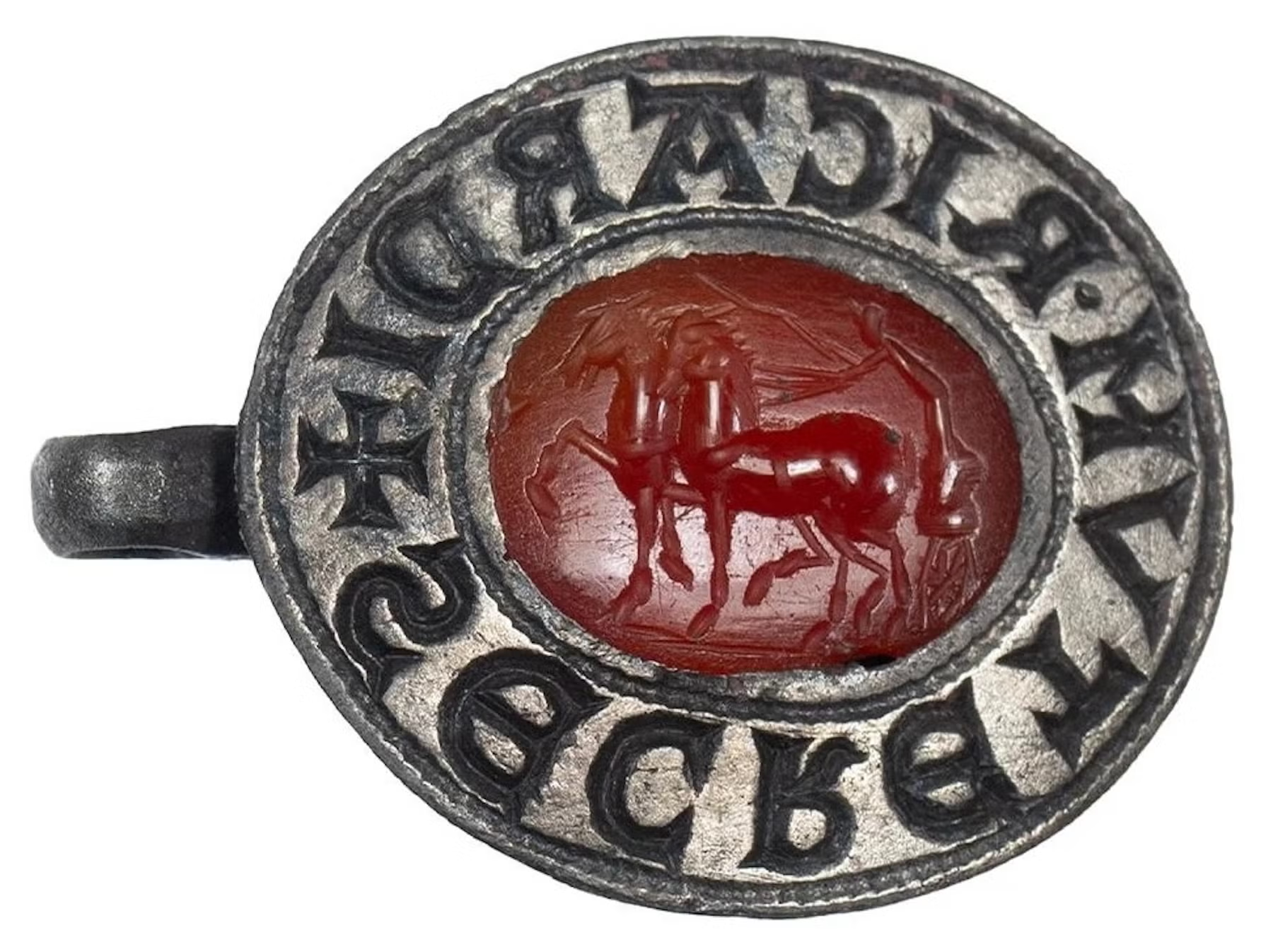
The silver contained in a buried object led a metal detectorist to uncover a fascinating relic in Essex County, England in 2024. Once it was dug out of the ground and cleaned, the detectorist could see that the object was a seal composed of an engraved red gemstone inlaid in a silver base. Realizing its potential value, the detectorist turned the ancient object over to local authorities. Easily the most striking element of the seal is its central red gemstone, which is likely from the Roman era. The intaglio is a semiprecious carnelian stone engraved with the figure of a charioteer driving two horses and holding reins and a whip in hand. The figure is depicted on a “small cart of a racing chariot, presumably in a circus,” according to information about the find in Great Britain's Portable Antiquities Scheme database. The silver features the inscription “+SECRETVM•RICARDI” which translates as “Richard’s secret,” clearly indicating ownership by an individual named Richard. (via Popular Mechanics)
Black Pearl is a keyboard-playing miniature therapy horse
Acknowledgements: I find a lot of these links myself, but I also get some from other places that I rely on as "serendipity engines," such as The Morning News from Rosecrans Baldwin and Andrew Womack, Jodi Ettenberg's Curious About Everything, Dan Lewis's Now I Know, Robert Cottrell and Caroline Crampton's The Browser, Clive Thompson's Linkfest and Why Is This Interesting by Noah Brier and Colin Nagy. If you come across something you think should be included here, feel free to email me at mathew @ mathewingram dot com